





Why You’ll Love This Recipe
- You can assemble this cheese board in minutes with no cooking, so it suits stress-free entertaining at any time.
- The mix of British and European cheeses gives guests everything from creamy Brie to punchy Stilton.
- A starter portion of 50 to 80 g of cheese per person keeps the amount you buy, and the salt and saturated fat, under control.
- The step-by-step formula adapts the board for vegetarian, gluten-free and pregnant guests from one shop.
🏆 Why this board works for home entertaining
There is no oven and no timing to watch, so you can talk to your guests while the board comes together. Guests build their own plates, so a mix of flavours and textures keeps a mixed group happy without a menu planned around each person.
Cheese itself contains no gluten, and most cheese is now vegetarian. The things to choose carefully are the crackers and any ready-made pickles or chutneys.
Easier, faster prep than cooking a starter
Assembling a cheese board skips cooking entirely, which saves time and washing-up. You only slice, arrange or unwrap, with no baking and no precise timings. The washing-up is one board, a few small bowls and some knives.
More variety and flexibility than a standard buffet
Three to five cheeses with different accompaniments mean everyone can find something to enjoy. Cheese, bread, fruit and nuts can all be scaled up or down for the size of the group, and each one can be swapped for a dietary need. A mild cheese for a cautious eater and a strong blue for the enthusiast sit happily on the same board.
Lower waste and better portion control than shop-bought cheese selections
You can buy only what you need, choosing the types and amounts for your guest list. A ready-made selection has fixed contents, so you pay for cheeses your guests may not touch. Buying by weight against your guest count cuts both cost and waste.
👀 Prep time, nutrition and shop-bought alternatives at a glance
A homemade board takes about 15 minutes to assemble, and you choose every cheese yourself. Pre-packed selections save a little time but fix the cheeses for you.
Two Tesco selections show what shop-bought boards contain per 30 g piece. Lower is better for fat, saturates and salt.
- Tesco Classic Cheese Selection (Brie, mature Cheddar, Red Leicester): 10.5 g fat, 6.9 g saturates, 0.59 g salt.
- Tesco Finest Luxurious Cheese Selection (figures for the Montagnolo Affiné in the box): 12.6 g fat, 8.4 g saturates, 0.60 g salt.
What this shows: The Finest Luxurious Montagnolo piece has about a fifth more saturates than the Classic (8.4 g against 6.9 g), while the salt is almost identical. Neither pack is a light option, so the choice of cheese matters less than the amount you put out. Boxed boards such as Butlers Perfect British Cheeseboard and Noel Charcuterie & Cheese Grazing Board list figures cheese by cheese, so read the per 100 g line for each one before you buy.
🧀 Ingredients for a balanced spread, plus swaps for every diet
A balanced board has 3 to 5 cheeses: a hard, a soft, a blue, a semi-hard or washed-rind, and a wild card. This list serves 8 as a starter, with 540 g of cheese in total (about 67 g each).
This table shows what to use in place of each ingredient, and what changes when you do.
| Ingredient to swap | Use instead, and how much | What changes |
|---|---|---|
| Cheddar, Brie, Red Leicester (vegetarian guests) | The same cheeses, with the vegetarian logo or “vegetarian rennet” on the pack | Nothing in taste; check each pack, because the name alone does not tell you |
| Brie, Stilton (vegan guests) | 100 g nut-based or coconut-based vegan cheese, in place of one of the five | Milk-free; quality varies, so taste it before serving |
| Water biscuits, baguette (gluten-free guests) | 30 gluten-free crackers, or rice cakes | Removes wheat; fruit and vegetable sticks work as extras |
| Brie, Stilton (pregnancy) | 100 g mature Cheddar or Red Leicester, in place of each | Hard cheese is fine; the rule is in the pregnancy section below |
| Brie, Stilton (lactose-intolerant guests) | 100 g aged hard cheese such as mature Cheddar, Parmesan or Manchego | Very low in lactose; label them so guests can find them |
| Walnuts (nut-free) | 100 g extra grapes, plus celery sticks and radishes | Removes tree nuts; adds fresh crunch |
| Branded cheeses (budget) | Supermarket own-brand cheeses | Often just as good, and cheaper |
This board contains milk in every cheese, gluten in the water biscuits and baguette, and tree nuts in the walnuts. Each has a swap in the table above.
👩🍳 How to assemble a cheese board: step-by-step for any occasion
Space the cheeses out on your largest board first, then fill the gaps with crackers, fruit and extras. You need a large wooden board, slate or platter, one small knife per cheese so flavours do not mix, and small bowls for chutney, olives and nuts.
-
Step 1Place the five cheeses evenly around the board with space between them. Cut a slice or wedge from each so guests know where to start, and leave the Brie whole.
-
Step 2Put one small knife beside each cheese, so the blue never travels to the Cheddar and each flavour stays clean.
-
Step 3Pile the water biscuits and bread in clusters in the gaps, or in a basket beside the board. Aim for 3 to 5 crackers or 2 to 3 slices of bread per person.
-
Step 4Tuck grapes, apple and pear slices and dried apricots or figs between the cheeses, so every cheese has something sweet within reach.
-
Step 5Fill small bowls with chutney, olives and cornichons and set them on the board. Wet items poured straight onto the board turn it messy.
-
Step 6Scatter the walnuts for crunch, tuck in the rosemary and add the honeycomb or a drizzle of honey.
-
Step 7Stand back and fill any bare patches with grapes. Leave enough room to reach each cheese, then put out small plates and napkins, with chalk labels if you like.
💡 Top tip: Take the cheese out of the fridge 30 to 60 minutes before guests arrive. Cold cheese has less flavour, so a short wait makes the whole board taste better.
👨👩👧👦 Scaling for 4, 8 or 12 guests, budget choices and leftovers
Keep the cheese weights in proportion, so a smaller or larger board follows the same pattern:
These are starter amounts, 50 to 80 g per person. Buy a little extra for a party, because people eat more than you expect. Change the amount for the meal:
- Starter or nibbles: 50 to 80 g per person.
- Lunch or light dinner with bread and salad: 100 to 150 g per person.
- After-dinner cheese course: 40 to 60 g per person.
On a budget, choose three cheeses: Cheddar, Brie and Stilton cover most bases. Use own-brand cheeses and the crackers and fruit you already have.
Leftovers become lunch. Grate hard cheese into pasta, toasties and omelettes. Melt Brie on toast or in a baked potato. Crumble blue cheese into salads or sauces, or turn the ends into a cheese sauce, mac and cheese or cheese scones.
🩺 Nutrition And GoodFor Score
A 30 g piece of cheese, about the size of a matchbox, is the reference portion used by My Health London’s dairy guide, which summarises the Eatwell Guide. A 60 g starter serving is two of them. Use the per 100 g line on the pack to compare cheeses, then weigh what you actually put out.
🥗 Nutrition example: A 60 g portion of Tesco Classic Cheese Selection is two 30 g pieces: 246 kcal, 21 g fat and 1.18 g salt. That is double the per 30 g figures of 123 kcal, 10.5 g fat and 0.59 g salt. Crackers, olives and chutney add more, so weigh the cheese before you put it out.
Children, people watching blood sugar, adults watching fat and salt, pregnant guests and people with allergies each need slightly different choices.
For children and toddlers: portion and salt guidance
The NHS favours lower-fat dairy options and watching portions. Fill most of a child’s plate with fruit and vegetable sticks, with a small amount of cheese alongside. The sources used here give no child-specific cheese portion or salt limit, so compare packs on the per 100 g salt line.
For people managing blood sugar
Cheese is very low in sugar (Tesco Classic has 0.1 g per 100 g). The sugar on a board sits in the chutney, dried fruit and honey, so check the sugars line per 100 g on the chutney jar and use them sparingly.
Salt and fat for adults: how the board fits official advice
The NHS counts more than 17.5 g fat, 5 g or more saturates and more than 1.5 g salt per 100 g as high, and says most cheeses contain 20 to 40 g fat per 100 g. Tesco Classic has 35 g fat, 23 g saturates and 1.97 g salt per 100 g. That is double the high line for fat, more than four times it for saturates and above it for salt.
The Eatwell Guide advises smaller amounts of full-fat cheese eaten less often, or reduced-fat hard cheese, which the NHS says usually has 16 to 22 g fat per 100 g. The Eatwell Guide also suggests grating cheese rather than slicing it, because it helps you control the amount.
The British Heart Foundation says cheese is usually high in saturated fat and salt. Fruit and nuts on the board do not cancel that out, so portion size still matters.
Pregnancy: safe cheese choices with the Food Standards Agency rules
The Food Standards Agency advises pregnant women to avoid soft mould-ripened cheeses and blue cheeses because of the risk of listeria, a harmful bacterium, unless they are cooked until steaming hot. That rules out Brie, Camembert and Stilton on a cold board. Hard cheeses such as mature Cheddar and Red Leicester are fine.
Allergies: managing milk, wheat, nut and other risks
Check the allergy information on every pack, including any “may contain” line. Chutneys, crackers and ready-made selections are where hidden allergens turn up. Give anyone with an allergy their own knife and a separate corner of the board.
🥡 Storing leftovers and how long each cheese keeps
Wrap each leftover cheese separately in wax paper or baking parchment, then loosely in a plastic bag, and refrigerate. Keeping them apart stops flavours transferring.
- Hard cheese: 2 to 3 weeks. Cut off any surface mould and use the rest.
- Soft cheese: 5 to 7 days.
- Blue cheese: 1 to 2 weeks.
Leftover grapes, apple and bread become snacks, salad toppings or the base for a toastie.
🧩 Common mistakes and how to fix them
Overcrowded or bland cheese selection
If every cheese is white and mild, or nothing is blue or tangy, guests lose interest. Mix textures and milk types, and read the pack front for a strong flavour note such as “mature” or “smoked”. Stick to five cheeses at most.
Serving cheese too cold or too soon
Use the 30 to 60 minute warming rule from the tip above. Cut only a wedge from each cheese at first and leave some whole, so the rest does not dry out on the board.
Soggy crackers and limp accompaniments
Tough crackers and limp fruit let down a good board. Store crackers, bread and cut fruit dry in separate airtight tubs, clip opened crackers into a resealable pack, and slice the fruit at the last moment.
Cross-contamination (allergens/gluten)
Crumbs, knives and juices that travel between sections make a board unsafe for gluten or nut allergies. Use separate tongs and knives, and keep the allergen-free section physically apart.
✅ Quick check:
- One knife per cheese, one spoon per bowl
- Gluten-free crackers in their own bowl, put out first
- Nuts in a bowl, never scattered loose
- Every pack’s allergy line read before it goes on the board
🔍 How GoodFor Scores
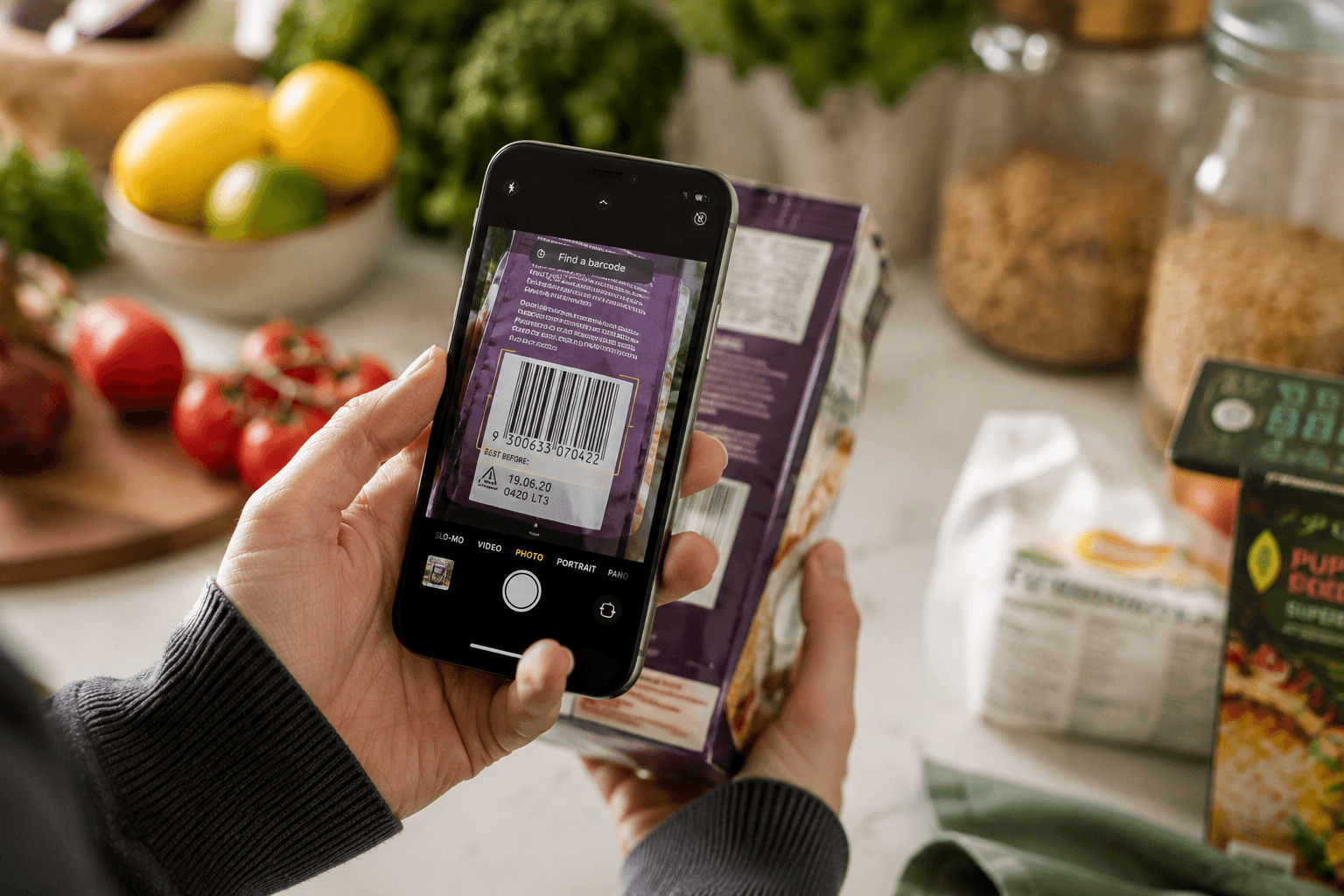
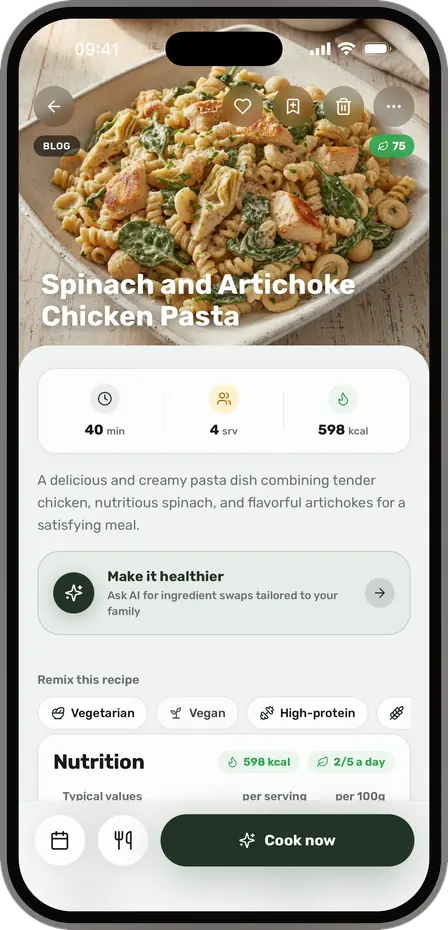
GoodFor is a food and drink scanning app for iOS and Android, used by thousands of users. Scan the barcode on each cheese, cracker or chutney and it shows the ingredients, additives, sugar, salt and saturated fat. It gives one 0-100 score alongside Nutri-Score and the NOVA processing group, with every deduction listed.
NOVA groups food by how processed it is, from 1 (unprocessed) to 4 (ultra-processed). GoodFor flags the group on every scan.
Nutri-Score grades the overall nutritional quality of a food from A (best) to E, per 100 g. GoodFor shows it on every scan.
Scores adjust to each family profile’s allergies, preferences and health goals. Smart Basket scores the whole shop for every profile at once, which helps when one trolley must suit a pregnant guest, a child with a nut allergy and a parent managing diabetes. GoodFor gives general nutrition information, not medical advice.
Frequently Asked Questions
At your next shop or gathering, do these three things
- Choose three to five contrasting cheeses, checking each for the vegetarian or allergy label your guests need.
- Wash grapes, slice fruit and fill bowls ahead, then assemble the board and bring the cheese to room temperature just before serving.
- Use one knife per cheese, serve crackers and nuts separately, and label any swaps made for guests with allergies or dietary needs.
If you want to compare cheeses before they go in the trolley, GoodFor shows the salt and saturated fat of any pack when you scan the barcode.


Make safer everyday choices