





Why You’ll Love This Recipe
- This lasagne recipe gives you a classic, family-style dish with a rich Bolognese and creamy white sauce in under two hours.
- Each batch serves 6-8, so it suits family dinners, batch cooking or freezing ahead for busy weeks.
- You get a golden, bubbling top and deep savoury layers from everyday supermarket ingredients.
- Per serving (6 portions), you get around 35 g of protein and 4 g of fibre.
- Vegetarian, lighter and gluten-free swaps are all included, so every household can enjoy it together.
🧂 Why homemade gives you control over salt, fibre and sugar
Shop lasagnes are not salt bombs, but nearly all sit above the low-salt line. Across the Tesco lasagnes checked in 2026, salt runs from 0.30 to 0.58 g per 100 g. The NHS calls more than 1.5 g per 100 g high and 0.3 g or less low, so all but one land in the middle band. Adults are advised to eat no more than 6 g of salt a day in total.
Cooking it yourself gives you control, not an automatic win. You choose the stock, the cheese and every pinch of salt, and you decide whether sugar goes in. On the Tesco Calorie Controlled Lasagne, the first three ingredients are water, tomato purée and cooked pasta, so meat does not always lead the list.
How the salt compares with shop lasagnes
Portions add up even when the per-100 g figure looks modest. Tesco Hearty Food Co. Lasagne has 0.58 g per 100 g, which is 2.32 g in its 400 g pack, nearly two fifths of an adult’s 6 g day. Tesco Lasagne Al Forno has 0.56 g per 100 g, or 1.96 g in a 350 g portion.
At home, salt is the one number you set. There is no bacon or pancetta, and the stock cube and Parmesan already carry salt, so taste each sauce at the end before adding more.
Where the fibre comes from
The onion, carrot and celery base supplies the fibre, and a tin of lentils adds more. Tesco Calorie Controlled Lasagne lists 1.4 g fibre per 100 g, or 4.5 g in its 328 g portion. This recipe gives 4 g per portion, close to that product, and lentils or an extra carrot take it further.
The 3.1 g per 100 g figure belongs to Tesco fresh lasagne sheets, which are pasta alone. A “source of fibre” claim needs at least 3 g per 100 g under the claims regulation kept in UK law, so the 1.4 g lasagne could not carry it.
Control over added sugar
Some published lasagne recipes add sugar or redcurrant jelly to the Bolognese. This one needs neither, because slowly fried onion, carrot and tomato give enough sweetness. Its 12 g of sugars per portion come from tomatoes, milk and vegetables.
Tesco lasagnes list 2.2 to 2.7 g sugars per 100 g, and the nutrition line cannot split natural from added sugars, so read the ingredients for sugar or syrup. “No added sugar” does not mean “sugar-free”, because milk, onions and tomatoes always bring natural sugars.
📊 Time, nutrition and how this homemade lasagne compares with supermarket options
Shop lasagnes in the table run from 288 to 617 kcal and from 1.15 to 2.32 g of salt per portion. Timing is 30 minutes of prep, about 45 minutes on the hob and 40-45 minutes in the oven, roughly two hours in all. Prices change too often to print, so cost the ingredients against your own basket.
Each row below is one portion. Lower is better for energy, fat and salt. Higher protein keeps you fuller.
| Per portion | Portion size | Energy (kcal) | Protein (g) | Fat (g) | Salt (g) |
|---|---|---|---|---|---|
| This recipe, 1 serving | 1/6 of the dish | 550-600 | 35 | 28 | 1.8 |
| Tesco Calorie Controlled Lasagne | 328 g | 288 | 18.1 | 5.4 | 1.34 |
| Tesco Calorie Controlled Beef Lasagne | 380 g | 389 | 23.7 | 10.1 | 1.15 |
| Tesco Hearty Food Co. Lasagne | 400 g | 529 | 32.1 | 20.2 | 2.32 |
| Tesco Lasagne Al Forno | 350 g | 617 | 36.0 | 33.6 | 1.96 |
| Tesco Vegetarian Vegetable Lasagne | 375 g | 321 | 12.7 | 9.2 | 1.83 |
| Cathedral City Cheesy Lasagne | 400 g | 583 | 33 | 29 | 1.9 |
What this shows: This recipe is as rich as the heaviest shop trays, with similar energy, fat and protein. Its 1.8 g of salt is just under the richer trays (1.83 to 2.32 g) and about half a gram or more above the calorie-controlled ones. A sixth of the dish is a generous portion, so serve smaller slices with vegetables, or use the lighter swaps below.
🔄 Try instead: Pick up Tesco Calorie Controlled Beef Lasagne instead of Tesco Lasagne Al Forno. It has 0.30 g salt per 100 g against 0.56 g, about half. On the pack, look for 0.3 g or less per 100 g, the low-salt line. Scan both in GoodFor and the salt and saturated fat lines show before either goes in the trolley.
🥄 Ingredients, swaps and why each one counts for nutrition
Bolognese
- 30 ml (2 tbsp) olive oil
- 1 large onion, finely chopped
- 2 garlic cloves, crushed
- 2 carrots, finely chopped or grated
- 2 celery sticks, finely chopped
- 500 g beef mince (5-10% fat)
- 800 g chopped tomatoes (2 x 400 g tins)
- 30 ml (2 tbsp) tomato purée
- 1 beef stock cube, crumbled (or 300 ml beef stock)
- 150 ml red wine (optional, or use more stock)
- 5 ml (1 tsp) dried oregano or mixed herbs
- 1 bay leaf
- Salt and black pepper
White sauce
Assembly
- 9-12 dried no-pre-cook lasagne sheets
- 100 g cheddar, grated (or mozzarella, or a mix)
- 50 g Parmesan, grated
- 1 baking dish, about 20 x 30 cm
The vegetable base gives fibre and sweetness, and 5-10% fat mince keeps saturates down. Beef, butter and cheese are the main saturated-fat sources, and the cheese is also where salt builds up.
Use this table for every substitution, choosing the row that matches your household.
| Ingredient to swap | Use instead | What changes |
|---|---|---|
| 500 g beef mince | 500 g Quorn or soy mince, or 2 x 400 g tins lentils, drained | Meat-free, about 400-450 kcal a portion. Cheese and béchamel still add fat |
| 500 g beef mince | 2 courgettes, 1 aubergine, 2 peppers and 200 g mushrooms, chopped and fried | Vegetable version, about 400-450 kcal a portion |
| 500 g beef mince | 500 g turkey or chicken mince | Leaner and milder in flavour |
| Beef mince (10% fat) | 5% fat mince, 75 g cheese in total, 50 g butter, 50 g flour, 750 ml semi-skimmed milk | Saves about 100-150 kcal and 10 g fat a portion; the sauce is slightly thinner |
| 75 g plain flour | Gluten-free plain flour, or 60 g cornflour | Removes gluten from the sauce |
| Dried lasagne sheets | Gluten-free sheets | Removes wheat. Check the pack for the Crossed Grain symbol and the “may contain” line |
| 150 ml red wine | 150 ml extra stock | No alcohol, and it suits children |
Allergens in the classic dish are wheat (gluten) in the sheets and flour, milk in the butter, milk and cheese, and egg in some sheets. Stock cubes and sauces can add others, and sulphites must be declared above 10 mg/kg, so check the wine label.
🍲 Lasagne recipe: step-by-step method for perfect layers and a golden top
Dried no-pre-cook sheets skip the boiling stage and soften in the sauce, as long as every sheet is covered.
-
Step 1 ⏱️ 10 minutesHeat the oil in a large pan over a medium heat. Fry the onion, garlic, carrots and celery gently for 10 minutes, stirring now and then, until soft.
-
Step 2 ⏱️ 10 minutesTurn up the heat, add the beef mince and break it up with a wooden spoon. Fry for 10 minutes until browned all over.
-
Step 3 ⏱️ 30 minutesStir in the tomatoes, purée, stock, wine if using, oregano and bay leaf, and season. Simmer gently for 30 minutes, stirring occasionally, until thick. Taste, then remove the bay leaf.
-
Step 4 ⏱️ 1-2 minutesMelt the butter in a saucepan over a medium heat. Whisk in the flour and cook for 1-2 minutes until it smells biscuity, not raw.
-
Step 5 ⏱️ 8-10 minutesAdd the milk a little at a time, whisking constantly. Keep whisking over a medium heat for 8-10 minutes until the sauce coats the back of a spoon, then season and add nutmeg.
-
Step 6Heat the oven to 180°C (160°C fan), Gas Mark 4. Spread a thin layer of Bolognese in the dish, then sheets, a third of the remaining Bolognese and a third of the white sauce. Repeat twice.
-
Step 7Top with a final layer of sheets, then the rest of the white sauce spread right to the edges. Scatter over the cheddar and Parmesan. You want 3-4 layers of pasta.
-
Step 8 ⏱️ 25 minutesCover loosely with foil and bake for 25 minutes. Remove the foil and bake for 15-20 minutes until golden and bubbling. Stand for 10 minutes before cutting.
The roux, which is butter and flour cooked together, stops the white sauce tasting floury. The full 30-minute simmer thickens the Bolognese so the layers hold. Foil stops the top burning before the middle is hot, and the 10-minute stand lets the layers set so the slices stay neat on the plate.
👨👩👧👦 Make this work for your family: batch cooking, ahead or for every diet
You can assemble and chill the lasagne up to 24 hours ahead, or freeze it unbaked for three months. Do not bake it first in either case.
- Fridge: Cover tightly with cling film or foil. Bake straight from the fridge and add 10-15 minutes, or leave it out for 30 minutes first and bake as normal.
- Freezer: Wrap well in cling film and foil. Bake from frozen, covered, at 180°C for 1 hour, then uncovered for 30 minutes until a knife shows it is steaming hot through. Or defrost overnight in the fridge and bake as normal.
🥗 Nutrition example: Double every quantity and split it between two dishes. You cook once and get 12 portions: bake one dish tonight and freeze the other. Each portion keeps the same 550-600 kcal and 1.8 g salt as the single batch, so one evening’s cooking covers two family dinners.
If two diets share the table, bake a gluten-free or meat-free dish alongside, using the swaps table above, and label each one before it goes in the freezer.
🩺 Nutrition per serving against NHS and FSA guidance, and who this suits
Check the figures per portion, because portion size changes everything. The NHS advises checking energy and nutrients per portion and eating foods high in fat, salt or sugar less often and in small amounts. A British Dietetic Association catering example of beef lasagne had 0.51 g salt per 100 g, which is 1.2 g in a 227 g portion, a fifth of an adult’s daily limit from one plate. The Eatwell Guide treats lasagne as a combination dish, so judge it by its parts: pasta, meat, cheese, white sauce and vegetables.
For children under 5 and family meals
Serve a small portion with plenty of vegetables, and keep a child’s slice smaller than an adult’s. Use stock instead of wine for the Bolognese, and taste before adding salt.
For salt and blood-pressure management
One portion has 1.8 g of salt, about 30% of the adult 6 g limit, leaving 4.2 g for everything else that day. A second helping takes you to 3.6 g. On shop packs, a red front-of-pack salt light means high, so choose by the 0.3 and 1.5 g per 100 g lines above, and cut the salt in both sauces first.
For pregnancy, allergy and dietary needs
The main allergy risks are wheat (gluten), milk and egg, so use the gluten-free swaps and read every “may contain” line. Lasagne is not singled out for pregnancy in the guidance reviewed, so the usual food-safety rules apply: cook and reheat until piping hot throughout. If you count carbohydrate, look at total carbohydrate in the section below, not just sugars, because pasta, flour and milk contribute even with no sugar added.
❄️ Storage, reheating, freezing and serving ideas for a balanced plate
Keep baked lasagne covered in the fridge for up to 3 days. To reheat, use the oven at 180°C for 20-30 minutes under foil until the centre reaches 75°C, the minimum the FSA advises for reheated food. The microwave works but makes the top less crisp. Freeze before baking, as above.
For the plate, add steamed or roasted broccoli, green beans or courgettes, or a green salad of rocket, lettuce, tomatoes and cucumber with balsamic. Garlic bread is the classic side, and chips are a children’s favourite. A big pile of vegetables adds volume without more cheese or béchamel, and it moves the plate towards your five portions a day.
✅ Quick check:
- Cool leftovers quickly and refrigerate within 2 hours.
- Label and date anything going in the freezer.
- Check the centre is piping hot before serving.
- Do not reheat more than once.
🚦 Common mistakes with lasagne and how to fix them
Hard sheets, watery layers and flat flavour are the usual complaints, and each has a cause you can fix before baking.
Why does the pasta stay hard?
The top layer hardens if sauce stops short of the dish edge, so check every corner before it goes in. Sheets can be broken to fit, but do not overlap them much, because overlapped parts stay stiff. If you find firm patches after baking, cover with foil and bake another 10-15 minutes.
Why is my lasagne watery or splitting?
Too loose a sauce is the usual cause, so thicken both: simmer the Bolognese the full 30 minutes and whisk the white sauce until it coats the spoon. Cutting the bake short or skipping the 10-minute stand leaves the layers sliding.
Why does it taste bland or bitter?
Sweating the onion, carrot and celery for the full 10 minutes rounds the flavour and supplies the sweetness that added sugar would otherwise give. Tomatoes that have not cooked down taste sharp, so keep to the full simmer.
Nutrition And GoodFor Score
UK law requires energy, fat, saturates, carbohydrate, sugars, protein and salt on pre-packed food, normally per 100 g and often per portion. Per sixth of this dish, saturates are about 14 g, carbohydrate 42 g (12 g of it sugars) and fibre 4 g, alongside the energy, protein, fat and salt in the table above. These figures are for 6 portions with 10% fat mince, and cutting into 8 portions, using 5% mince or using less cheese all change them.
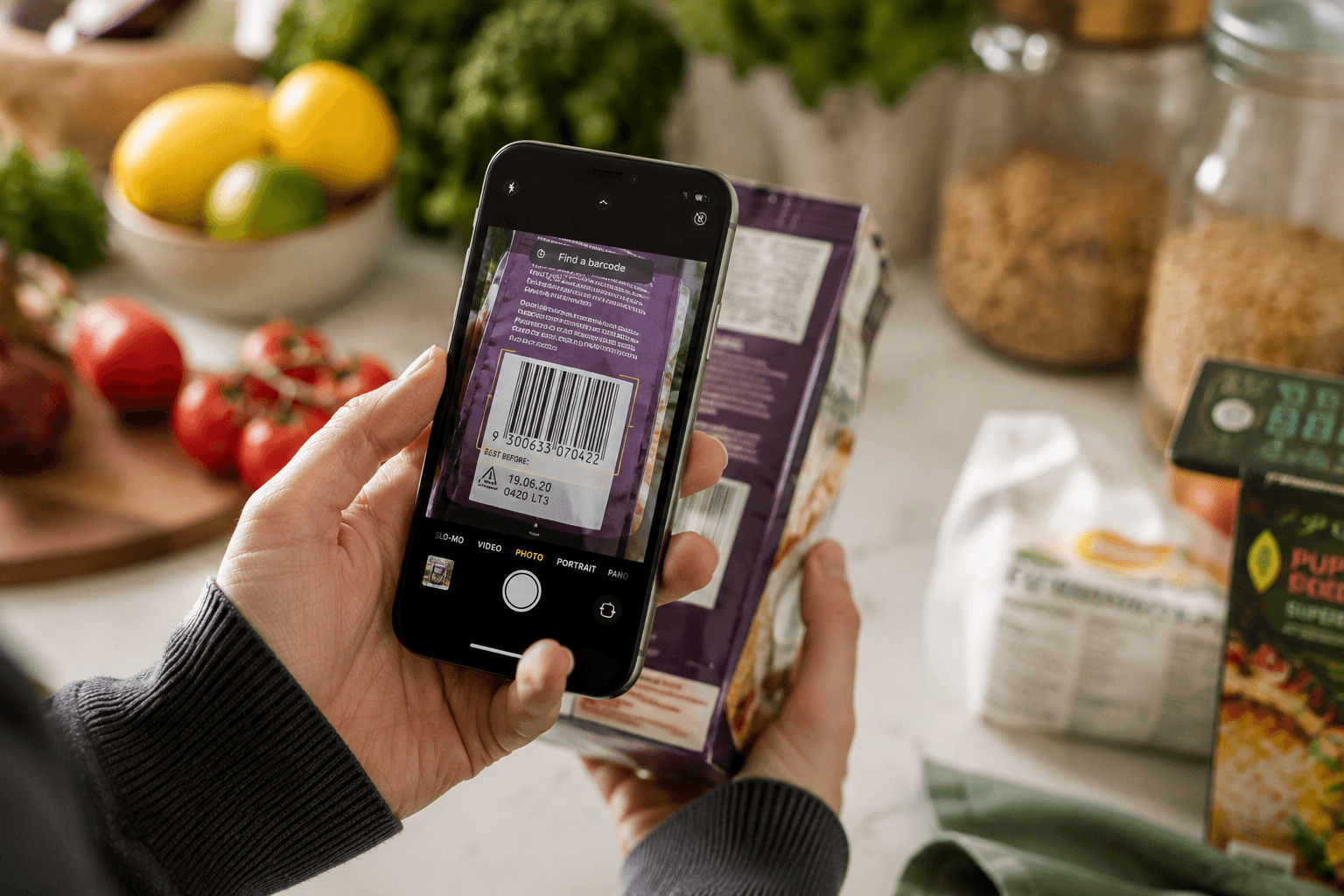
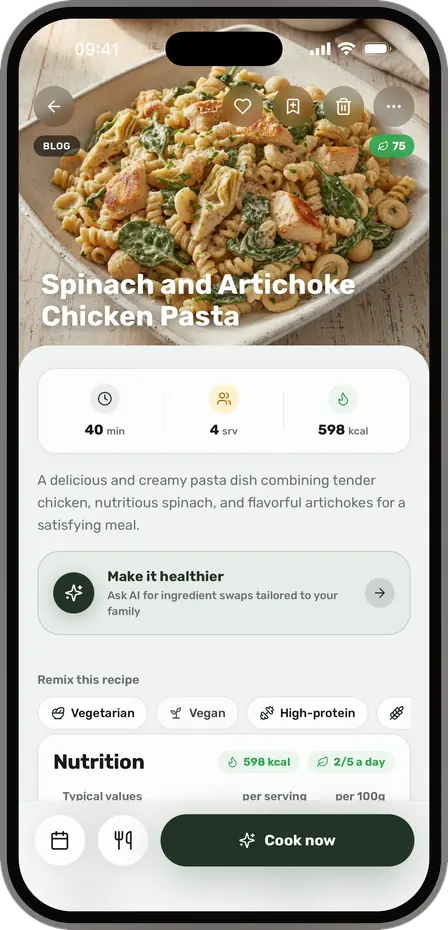
GoodFor is a UK food and drink scanning app used by thousands of users. Scanning a shop lasagne gives a 0-100 score with the reasons, plus Nutri-Score (A to E) and the NOVA processing group (1-4), so salt, sugar and saturated fat sit beside the degree of processing. Each of up to five family profiles holds its own allergies, preferences and goals, and a recipe imported from the web is scored in the same way. GoodFor gives general nutrition information, not medical advice.
NOVA groups food by how processed it is, from 1 (unprocessed) to 4 (ultra-processed). GoodFor flags the group on every scan.
Nutri-Score grades the overall nutritional quality of a food from A (best) to E, per 100 g. GoodFor shows it on every scan.
Frequently Asked Questions
At your next shop or family meal: three things to try
- Choose a shop lasagne with salt at 0.3 g or less per 100 g if you want a lower-salt option.
- Add an extra carrot, celery stick or a tin of lentils to stretch the filling and lift the fibre.
- Serve smaller slices with a big side of broccoli or salad.
If you want to check a shop lasagne before it goes in the trolley, GoodFor shows its ingredients, additives, salt and saturated fat, with the reasons behind the score.


Make safer everyday choices