




Why You’ll Love This Recipe
- You get proper lamingtons with crisp coconut and rich chocolate icing, made from scratch in a couple of hours.
- The classic sponge turns out light and airy, and it holds its shape when dipped.
- Each lamington has 2 g of fibre, but its sugar and saturated fat are higher than a shop piece, so it is a proper treat.
- The recipe batch-makes 16, and you control every allergen for safer school or fete baking.
- It is a true Aussie classic, perfect for Australia Day, bake sales and any homemade celebration.
🏡 Why this version is right for Australian family bakers
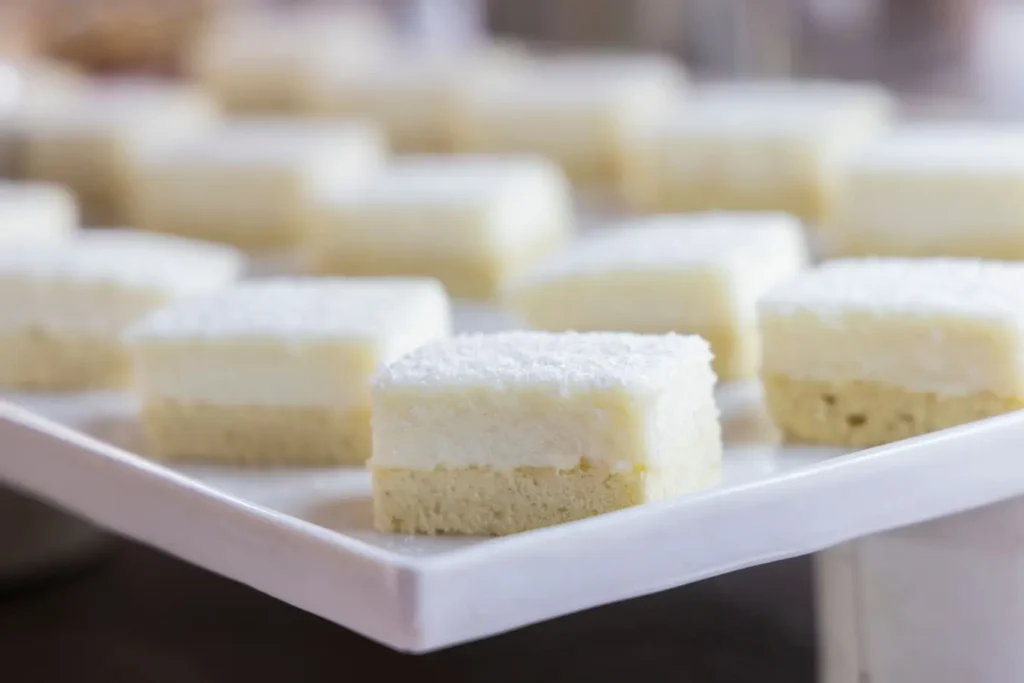
The lamington is named after Lord Lamington, Queensland’s governor from 1896 to 1901, and it became a fixture at Country Women’s Association (CWA) fetes and Australia Day tables. This version follows the traditional build: a light, firm sponge, chocolate icing and a coconut coat, cut into 16 pieces from one 20 cm × 30 cm tray.
Jam, cream and pink strawberry versions exist. The plain classic has the fewest ingredients to check when other people’s children are eating it.
Baking beats buying for three reasons:
- You read every pack, so allergen control is yours.
- You set the piece size, which matters because commercial lamingtons differ in size and make-up (the table below compares them per piece).
- You can plan the batch: 16 pieces per tray, a sponge baked a day ahead, and a freezer for events weeks away.
Count your guests first, then decide between one tray and two.
It brings crisp coconut and classic lamington taste, only fresher
Homemade lamingtons have a crisp coconut coating because of two choices: a firm, day-old sponge that takes a thin coat of icing, and a fresh pack of desiccated coconut. Open a new pack on baking day.
Handling and cooling steps for sponge that holds together
Cut and dip only when the sponge is completely cool, ideally dried overnight or well chilled, as Australian lamington recipes instruct. Warm or soft sponge falls apart in the icing. Dip with two forks, one under and one over, so the cake does not sit in the icing and soak it up. Bake the day before you plan to ice.
Homemade means clear allergen control for safer school and party batches
A homemade batch lets you check every allergen in every ingredient. The ACT Government’s food labelling guidance lists the allergens Australian packaged food must declare: peanuts, tree nuts, crustacea, fish, mollusc, milk, egg, sesame, soy, wheat and lupin. A classic lamington already contains wheat, egg and milk.
“Nut-free” only holds if every ingredient and every surface is nut-free. Read the allergen statement on each pack, including the “may contain” line (precautionary allergen labelling). Cross-contact is a particular risk with bagged coconut, cocoa and icing sugar, so check those three first.
Fibre and sugar: where it lands on the nutrition panel
Icing sugar and coconut are the main sources of sugar and saturated fat, so “homemade” does not mean lighter by itself. Compare pieces, not recipes: recipes yield anywhere from 15 to 24 pieces, so a smaller piece has less energy simply because it is smaller.
Label claims have legal meanings too. Healthdirect gives “low sugar” as under 2.5 g sugars per 100 g. The Woolworths lamingtons in the table below carry 34 to 40 g per 100 g, and a homemade piece is in the same range.
📊 At a glance: nutrition per lamington versus supermarket
Piece size, energy, sugars and fat vary widely between lamingtons, so this table compares one piece of each. Lower is better for energy, sugars and saturated fat. Higher is better for fibre.
| Lamington, per piece | Piece size | Energy (kJ / kcal) | Sugars (g) | Fat / saturated fat (g) | Fibre (g) |
|---|---|---|---|---|---|
| This recipe, 1 serving (estimate) | 1 of 16 pieces | 1,170 / 280 | 32 | 12 / 9 | 2 |
| Woolworths Lamingtons | 50 g | 670 / 160 | 17.2 | 3.3 / 2.4 | 2.0 |
| Woolworths Jam Filled Lamingtons | 58 g | 782 / 187 | 23.0 | 3.4 / 2.8 | 1.9 |
| Woolworths Lamington Fingers | 19 g | 255 / 61 | 6.5 | 1.5 / 1.2 | 0.7 |
| Tasti Made Simple Wholefood Bar, Lamington | 30 g | 531 / 127 | 13.4 | 5.1 / 1.7 | 3.2 |
What this shows: A homemade piece is the biggest and sweetest here. Its 32 g of sugars is nearly double a 50 g Woolworths Lamington, and its saturated fat is almost four times higher. Fibre is about level, at 2 g against 2.0 g. Part of the gap is size, because the 19 g Lamington Fingers are small in every column. Treat a homemade piece as a proper treat, and cut it smaller if you want it nearer a shop piece.
🥄 Ingredients, group by group, and what to swap for allergies or diet
Sponge
Chocolate icing
- 500 g icing sugar
- 50 g cocoa powder
- 150 ml boiling water
- 50 g butter, melted
Coating
- 300 g desiccated coconut
| Ingredient to swap | Use instead, and how much | What changes |
|---|---|---|
| Self-raising flour, 150 g | 150 g certified gluten-free self-raising flour blend; add ½ tsp xanthan gum if the blend does not include it | Removes wheat; the sponge is slightly denser |
| Butter, 100 g in the sponge and 50 g in the icing | Same weight of a dairy-free spread; check the pack | Removes milk; the flavour is a little less buttery |
| Eggs, 4 | No tested swap in this recipe | The whisked eggs give the sponge its structure, so do not use this batch for an egg allergy |
| Icing sugar, 500 g | A brand with no “may contain” statement for nuts or gluten | Same taste; removes a cross-contact risk |
| Desiccated coconut, 300 g | A pack with a clear allergen statement, never coconut flakes | The pack decides the allergen risk; flakes are too coarse to coat evenly |
As written, this batch contains wheat (gluten), egg and milk (butter). It is not suitable unchanged for anyone avoiding those three, and every swap above brings its own pack label to check.
🍫 Lamington recipe: step-by-step for the perfect batch
Baking at 180°C and cooling overnight is standard in Australian lamington recipes for the best texture.
-
Step 1Preheat the oven to 180°C (160°C fan-forced). Line a 20 cm × 30 cm tin with baking paper, letting it overhang the long sides so the cooled sponge lifts out easily.
-
Step 2 ⏱️ 5 to 7 minutesWhisk the eggs and caster sugar with electric beaters for 5 to 7 minutes, until the mixture is thick, pale and leaves a ribbon trail when you lift the beaters.
-
Step 3Sift the self-raising flour over the egg mixture and fold in gently with a large metal spoon, cutting down and turning until no dry flour shows.
-
Step 4Pour the melted, cooled butter and vanilla down the side of the bowl and fold just until combined. Overmixing knocks out the air and makes the sponge dense.
-
Step 5 ⏱️ 25 to 30 minutesPour the batter into the tin, level the top and bake for 25 to 30 minutes, until golden and springy and a skewer in the centre comes out clean.
-
Step 6 ⏱️ 10 minutesCool in the tin for 10 minutes, then turn out onto a wire rack and cool completely. Wrap the sponge and leave it overnight for the firmest texture.
-
Step 7Sift the icing sugar and cocoa into a bowl, add the boiling water and melted butter, and stir until smooth. It should pour, and coat the back of a spoon.
-
Step 8Cut the cooled sponge into 16 even squares, four across and four down. Pour the icing into a wide shallow bowl and tip the coconut into a shallow dish.
-
Step 9Using two forks, dip a square into the icing just long enough to coat every side, let the excess drip off, then roll it in the coconut until covered.
-
Step 10 ⏱️ 15 minutesSet each lamington on a wire rack as you finish, then refrigerate for 15 minutes until the icing is set and the coconut no longer shifts.
💡 Top tip: Set the icing bowl, coconut dish and wire rack side by side, so each square travels one short path: dip, drain, roll, rest. Pausing halfway is what lets the sponge soak up icing and break.
👨👩👧👦 Make it work for your family: scaling, make-ahead and remixes
A sponge baked ahead is also the easiest one to handle, so plan the baking and the dipping as two jobs on two days.
- Bigger or smaller: bake two trays for a large event, or halve every quantity for a small batch.
- Raspberry jam: the traditional filling, about 150 g (method in the FAQ below).
- Minis: cut the sponge 5 × 5 for 25 party-size pieces.
🥗 Nutrition example: A school-fete tray cut into 16 pieces carries roughly 512 g of sugars in total (16 × 32 g, before any jam). Cut the same tray 5 × 5 into 25 minis and each piece has about 20 g, so guests eat less sugar per lamington.
🥗 Nutrition per lamington and who this batch suits (Australian guidance)
The Australian Dietary Guidelines class cakes as discretionary foods, to be eaten “only sometimes and in small amounts” by adults and children alike. The energy here comes mainly from added sugars (icing sugar and jam if used) and saturated fat (coconut and butter). The per-piece figures are in the table above.
The guidelines say frequent added sugars contribute to tooth decay and weight gain. Australia’s guideline is to limit foods with added sugars, and it sets no daily gram cap by age. WHO advises keeping free sugars under 10% of daily energy, as FSANZ’s sugar page explains.
The “sugars” line on a Nutrition Information Panel counts natural and added sugars together. On a bought sponge or jam, check the ingredient list as well: sucrose, glucose, dextrose and golden syrup all count as sugar.
What the numbers mean for children and young adults
No official gram limit per lamington exists, so judge by how often, not only how much. The guidelines place cakes among discretionary foods for children too. One piece at a fete or birthday is the occasion they have in mind, and a tin on the bench all week is not.
Cooking for lower sugar, saturated fat or allergies
Cutting the icing sugar to 400 g lowers sweetness, but the lamington stays far above the low-sugar line of 2.5 g per 100 g, and the thinner icing may not set as firmly. The simplest real reduction is a smaller piece, such as the 5 × 5 mini cut. Any swapped ingredient needs the same pack check described in the allergen section.
✅ Quick check:
- Is this a sometimes food, not a daily snack?
- Have you read the ingredient list and “may contain” line on every pack?
- Is the piece size right for your event, not just for the whole recipe?
🧊 Storage, freezing and safe serving for home, school and events
Store plain lamingtons in an airtight container at room temperature for up to 3 days. If the icing softens in warm weather, refrigerate them and bring them out 30 minutes before serving.
Cream-filled versions are perishable, so keep them in the fridge and eat them sooner. Freeze finished lamingtons for up to 3 months and thaw them at room temperature for 1 to 2 hours. For a school event, transport them chilled and keep your ingredient labels so any allergy question has an answer.
💡 Top tip: Freeze lamingtons in a single layer on a tray first, until solid (about 2 hours), then move them into a container or bag. They keep their shape and do not stick together when thawed.
❗ Mistakes with lamingtons and how to fix them
Most Australian recipes treat handling, icing and coconut as the three traps. Each has a quick fix.
Sponge crumbles when dipping
The sponge is too fresh or was left in the icing too long. Chill it for a few hours, or use the day-old sponge, and keep each dip brief.
Chocolate icing not setting on the cake
The icing is mixed too thin, or the cake was not cool. Stir in more icing sugar a spoonful at a time until it coats the back of a spoon.
Coconut won’t stick properly
The icing has dried on the surface, or the square is not fully covered. Work faster, or stand the icing bowl in a larger bowl of hot water for a minute.
⚠️ Watch out: Crumbs collect in the icing and make later lamingtons look speckled. Lift them out with a spoon every few pieces, and do not re-dip a piece that has already crumbled.
📊 Nutrition And GoodFor Score
A classic homemade lamington is a sometimes food, and GoodFor does not dress it up as anything else. GoodFor is a food and drink scanning app used by thousands of users. Its 0-100 score comes from nutrient levels per 100 g against official thresholds, the degree of processing, additive risk ratings and the profile’s own allergies and goals, with every deduction listed.
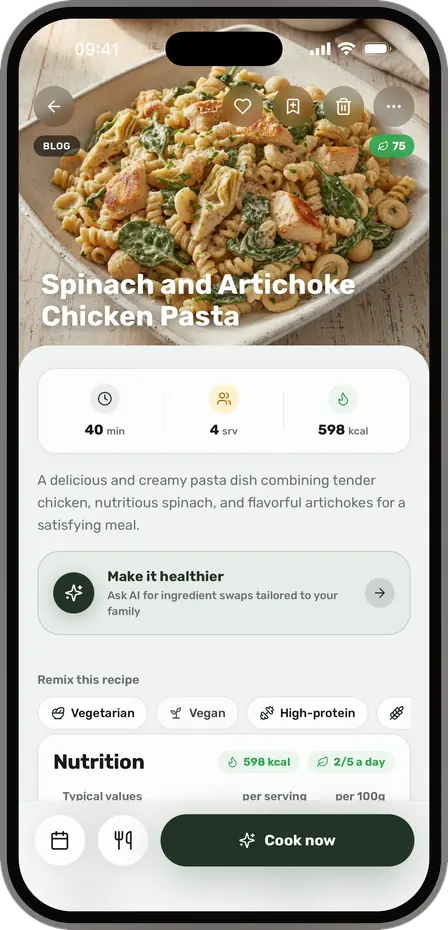
Recipe import extracts a recipe’s ingredients and scores it, so the sugar and saturated fat from the icing sugar, butter and coconut appear as the reasons behind the number. On a family profile with gluten, egg or dairy allergies, those ingredients are flagged unless you swap them. Smart Basket scores the whole shop for every profile at once, so the ingredients for this batch can be checked together.
Frequently Asked Questions
Before your next lamington batch: three steps for safer, tastier homemade treats
- Read every ingredient label, including the “may contain” line, to control for allergens and cross-contact.
- Bake the sponge a day ahead and dip it only when it is completely cold.
- Choose your piece size for the event: 16 for a standard tray, or 25 minis for school and party plates.
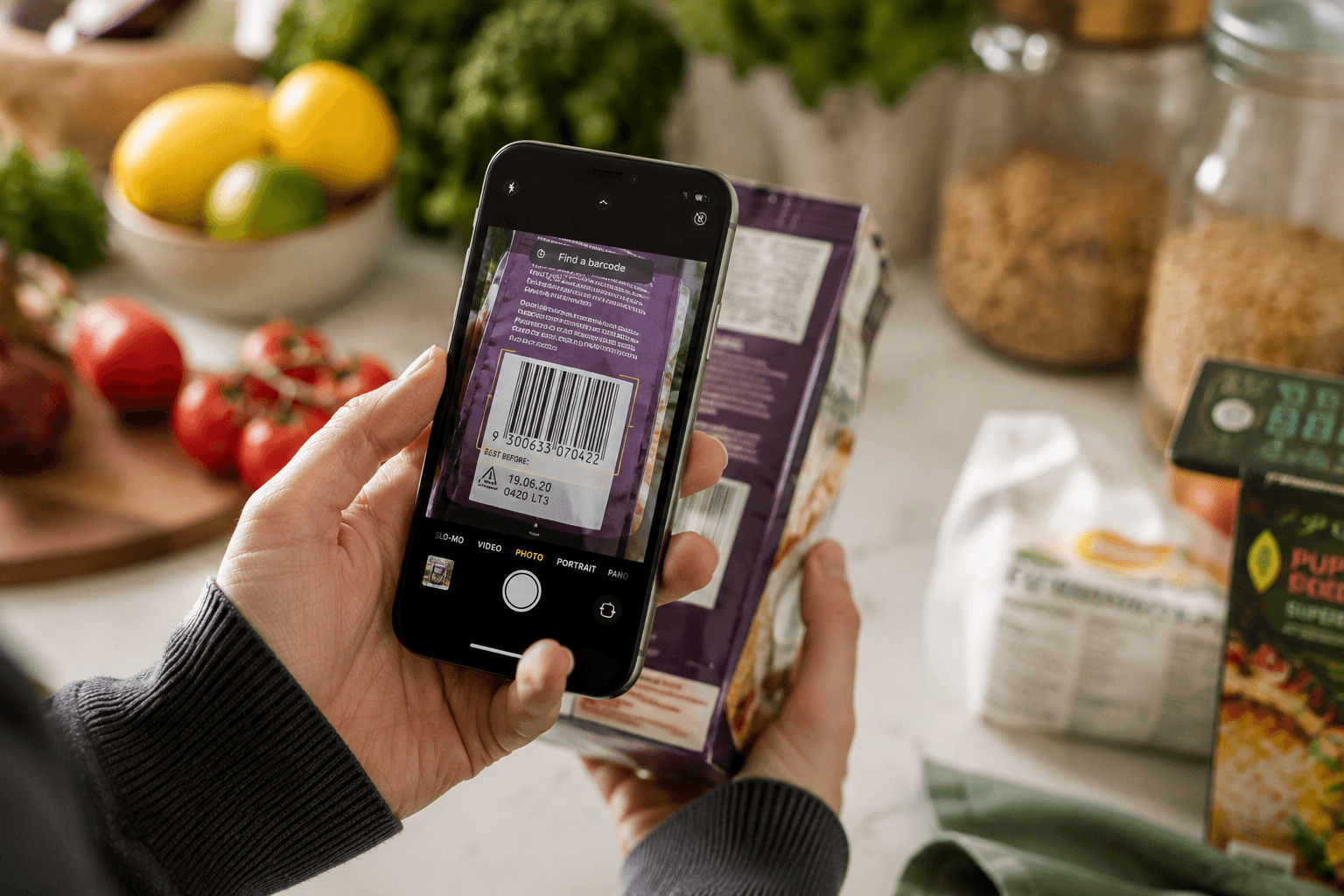
When you scan a pack in GoodFor, it shows the ingredients and any allergen flags for each family profile.


Make safer everyday choices