





Why You’ll Love This Recipe
- You can make these carrot cake energy bites in 15 minutes, with no baking and no waiting for them to set.
- They are sweetened only with dates, with no flour, added sugar, syrup or honey.
- Oats, dates and carrots all bring fibre, which helps towards a child’s daily fibre target.
- The recipe adapts to nut-free, dairy-free, vegan and gluten-free households with simple swaps.
- One batch makes 20 bites that chill in the fridge or freeze for family snacks and lunchboxes.
🥕 Why a homemade batch keeps allergens and sugar in your hands
When you make the bites yourself, you choose the ingredient list and the preparation method. You can also label the box and keep it separate from other foods to suit your child.
The government’s allergy safety in schools statutory guidance (2026) says lunchbox food should be clearly labelled for the intended child. The School Food Standards allergy guide asks schools to run allergy-aware policies and check product labels. A snack made from packs you have read yourself fits that approach.
Lower in sugar and higher in fibre than most carrot cakes
These bites rely on whole oats and dried fruit for sweetness and fibre. Dates still contain sugar, but they bring fibre with them.
The NHS recommends higher-fibre, wholegrain starchy foods and advises eating foods high in fat, salt and sugar less often. The British Nutrition Foundation gives average daily fibre targets of 15 g for ages 2 to 5, 20 g for ages 5 to 11, 25 g for ages 11 to 16 and 30 g for adults. Compare any snack’s fibre line with your child’s figure, not an adult’s.
Adapts easily for allergies and school policies
You can adapt the recipe to leave out nuts, dairy or gluten, and you can read every packaged ingredient label at home. A “nut-free” label alone is not enough. Nuts are one of 14 regulated allergens, and Food Standards Agency (FSA) consumer advice says packs can carry “may contain” wording because of cross-contamination. Check that wording on every pack you buy.
The School Food Standards allergy guide expects schools to consult parents and label lunchbox food clearly. Ask the school for its allergy policy before you rely on a swap, because the policy decides what is accepted.
You choose every ingredient
You read each ingredient list yourself, so nothing is added that you did not choose. One batch of 20 bites stretches a handful of cupboard ingredients across a week of snacks.
Quicker to make than baked energy snacks
These bites need only grating, pulsing and rolling. There is no oven time and no cooling, so you can make, box and serve them within the 15 minutes of prep.
⏱️ At a glance: time, servings, nutrition vs shop-bought
Tesco’s two Finest carrot cakes list 30.0 g sugars per 100 g, with fibre of 1.7 g and 2.7 g per 100 g. Ready-made cake needs no preparation. Cake mixes need mixing and baking, while these bites need 15 minutes and no oven.
The table compares one portion of each product. Lower is better for energy, sugars and fat. Higher is better for fibre.
| Product | Portion | Energy (kcal) | Sugars (g) | Fibre (g) | Fat (g) |
|---|---|---|---|---|---|
| This recipe, 1 bite | Weigh your own bite | Depends on your packs | Depends on your packs | Depends on your packs | Depends on your packs |
| Tesco Finest Free From Carrot Cake | 67 g slice (1/6 cake) | 276 | 20.1 | 1.1 | 13.7 |
| Tesco Finest Carrot Cake | 68 g slice (1/6 cake) | 263 | 20.4 | 1.8 | 11.6 |
| Betty Crocker Country Carrot Cake Mix, prepared | 68 g (1/12 cake) | 226 | 16.5 | 0.9 | 11.0 |
| Creative Nature Free From Carrot Cake Mix, prepared | 60 g serving | 168 | 12 | 1.6 | 8.4 |
What this shows: A single shop slice gives about 20 g of sugars and only 1.1 to 1.8 g of fibre. Against the 15 g daily target for ages 2 to 5, that is roughly 7% to 12% of the fibre. The “sugars” line on a label means total sugars, not only added ones. We have not worked out nutrition for the homemade bites because it depends on your ingredients, so add up the labels on your own packs and compare per 100 g.
🛒 Ingredients, dietary swaps and why each earns its place
Each ingredient does a job, so you know what a swap will change:
- Oats: bulk and fibre.
- Carrots: moisture, colour and a small amount of vitamin A.
- Dates: bind the mixture and add sweetness.
- Walnuts or pecans: healthy fat, flavour and protein.
- Greek or dairy-free yoghurt: binds and softens.
- Cinnamon and ginger: the classic carrot cake taste.
Most swaps use the same amount as the original. Pick the row that matches the allergy or need in your household.
| Ingredient to swap | Use instead | What changes |
|---|---|---|
| 60 g walnuts or pecans (tree-nut allergy) | 60 g sunflower or pumpkin seeds | Slightly less creamy but still crunchy; removes tree nuts |
| 60 g Greek yoghurt (milk allergy, vegan) | 60 g coconut or soya yoghurt, or 1 tbsp nut butter | Texture stays similar and the flavour shifts slightly; soya yoghurt adds soya and nut butter adds nuts |
| 150 g dates | 150 g prunes, raisins or dried apricots | Less sweet, different colour and a slightly different bind |
| 200 g rolled oats (coeliac disease) | 200 g certified gluten-free oats | Same texture; look for “gluten-free” on the pack |
What this shows: Only the seeds and the yoghurt change which allergens are in the bites. Seeds remove tree nuts, while soya yoghurt adds soya and nut butter adds nuts. Check the pack of whatever you choose.
As written, the recipe contains:
- tree nuts (walnuts or pecans)
- milk (yoghurt)
- oats, which UK guidance lists with cereals containing gluten
It contains no egg, so it suits an egg allergy. It is vegan once the yoghurt is swapped.
👩🍳 How to make carrot cake energy bites at home
You need a food processor and a few basic tools, and no oven.
-
Step 1 ⏱️ 2 minutesGrate the carrots and squeeze them hard in a clean tea towel to remove excess liquid. This takes about 2 minutes, and wet carrot is the usual cause of soggy bites.
-
Step 2Tip the oats, dates and nuts or seeds into the food processor bowl, with the dates torn into pieces so they do not clump on the blade.
-
Step 3 ⏱️ 1 minutePulse for about 1 minute until everything is finely chopped, with no large pieces of nut or date left.
-
Step 4 ⏱️ 1 minuteAdd the carrot, yoghurt, cinnamon, ginger and salt if using, then pulse for about 1 minute until the mixture holds together when pressed between your fingers.
-
Step 5 ⏱️ 10 minutesRoll the mixture into 20 balls, each about the size of a walnut. This takes roughly 10 minutes.
-
Step 6Pack the bites into an airtight container and chill until needed. They can be eaten straight from the fridge.
💡 Top tip: Wet your hands lightly under the cold tap before rolling. The sticky date mixture then slides off your palms instead of clinging. If it still sticks, chill the bowl for 10 minutes first.
👨👩👧👦 Make it work for your family: scaling, batching, remix versions
You can double or halve the mixture, and it takes well to remixing with raisins, chopped apple or sultanas for variety. One batch of about 20 bites fits a typical family’s week of snack boxes.
🥗 For Example: A double batch uses 400 g oats, 240 g carrots, 300 g dates, 120 g nuts or seeds and 120 g yoghurt, and makes about 40 bites. Freeze half on a tray for lunchboxes. A half batch (100 g oats, 60 g carrots, 75 g dates) gives 10 bites.
🥗 Nutrition, who it suits and official UK targets
Oats, carrots and dates give the bites wholegrain fibre, in line with the NHS Eatwell Guide. The Guide recommends at least 5 portions of fruit and vegetables a day and prefers wholegrain starchy foods. The NHS counts 80 g of vegetables or 30 g of dried fruit as one portion.
“No added sugar” does not mean “sugar free”. The British Nutrition Foundation reports that “sugar-free” requires less than 0.5 g sugars per 100 g, and “high fibre” requires at least 6 g per 100 g. A bite made of dates will never be sugar free. If you change the recipe, read the ingredient list for syrups or honey. Use the age-specific fibre targets above to judge how much one bite adds for your child.
For toddlers and young children: portion size, choking risk and sugar
For children aged 2 and over, the UK reference value limits free sugars to no more than 5% of daily energy. The NHS advises keeping dried fruit to mealtimes, because the sugars can damage teeth. Serve the bites at the end of a meal rather than as all-day grazing. Our suggestion, not an official portion, is one or two bites for ages 2 to 5.
Whole or chunky nuts are a choking hazard for under-5s, so the nuts here are processed fine, or replaced with finely ground seeds. Dates make the bites sticky, so offer water and let your child sit down to eat.
⚠️ Watch out: Break one bite in half before serving to a child under 5 and look for hard nut or date pieces. Pulse the mix again if you find any. Keep children seated and supervised while they eat.
For blood-sugar management: ingredients and energy release
Dates concentrate sugars into a small volume, so portion size matters even though the bites are made from whole foods. Oats add fibre, but no sugar or glycaemic figures were available for this recipe. If you manage diabetes, follow the plan your diabetes team has set.
Salt, additives and suitability in pregnancy
The recipe works with no added salt and no artificial preservatives, so leave the pinch of salt out if you prefer. Sweetened yoghurts or salted nut butters add sugar or salt. UK food labelling guidance requires an ingredients list including additives, and products with sweeteners must say “with sweetener(s)”, so check both. If you are pregnant, check the pack of any yoghurt for pasteurisation.
Allergy safety, “free-from” claims and label checks
FSA guidance treats a “free-from” claim as a guarantee, and a recipe is not legally “free-from” unless the ingredients, equipment and preparation are all controlled for cross-contamination. Do not describe your home bites that way. “May contain” warnings are not a legal requirement, but they signal a risk the manufacturer has assessed.
Check every pack against the 14 regulated allergens. The statutory schools guidance sets “gluten-free” at no more than 20 ppm (parts per million) gluten, and “very low gluten” at up to 100 ppm.
🧊 Storage, freezing and safe handling at home and for school
Keep the bites in a sealed container in the fridge and eat them within a few days, because they contain carrot and yoghurt. In hot weather, pack an ice pack if you send them to school. The government’s statutory guidance says lunchboxes should be clearly labelled for the intended child. Add the child’s name, the contents and any allergy information, and follow your school’s policy.
To freeze, spread the bites on a tray, then move them to a bag or box once firm. Defrost them in the fridge.
❗ Fixing bites that are too wet, too dry or crumbly
Most problems come down to moisture, so adjust a little at a time.
The mixture is too wet or too dry
Oats absorb moisture gradually, so wait a minute before you judge it. Too wet usually means too much carrot juice, so add a handful of oats or chill the bowl. Too dry usually comes from under-mixing or firm dates, so add a spoonful of yoghurt, a dash of water or a few more dates.
The bites won’t hold together
The mixture needs enough sticky date or yoghurt to bind. Pulse for longer until it clumps. If it still crumbles, mix in half a spoon of yoghurt.
Colour, taste or texture problems
Cinnamon and ginger can overwhelm if you overdo them, so taste before rolling and adjust. Old carrots or very dry dates also change the flavour.
Nutrition And GoodFor Score
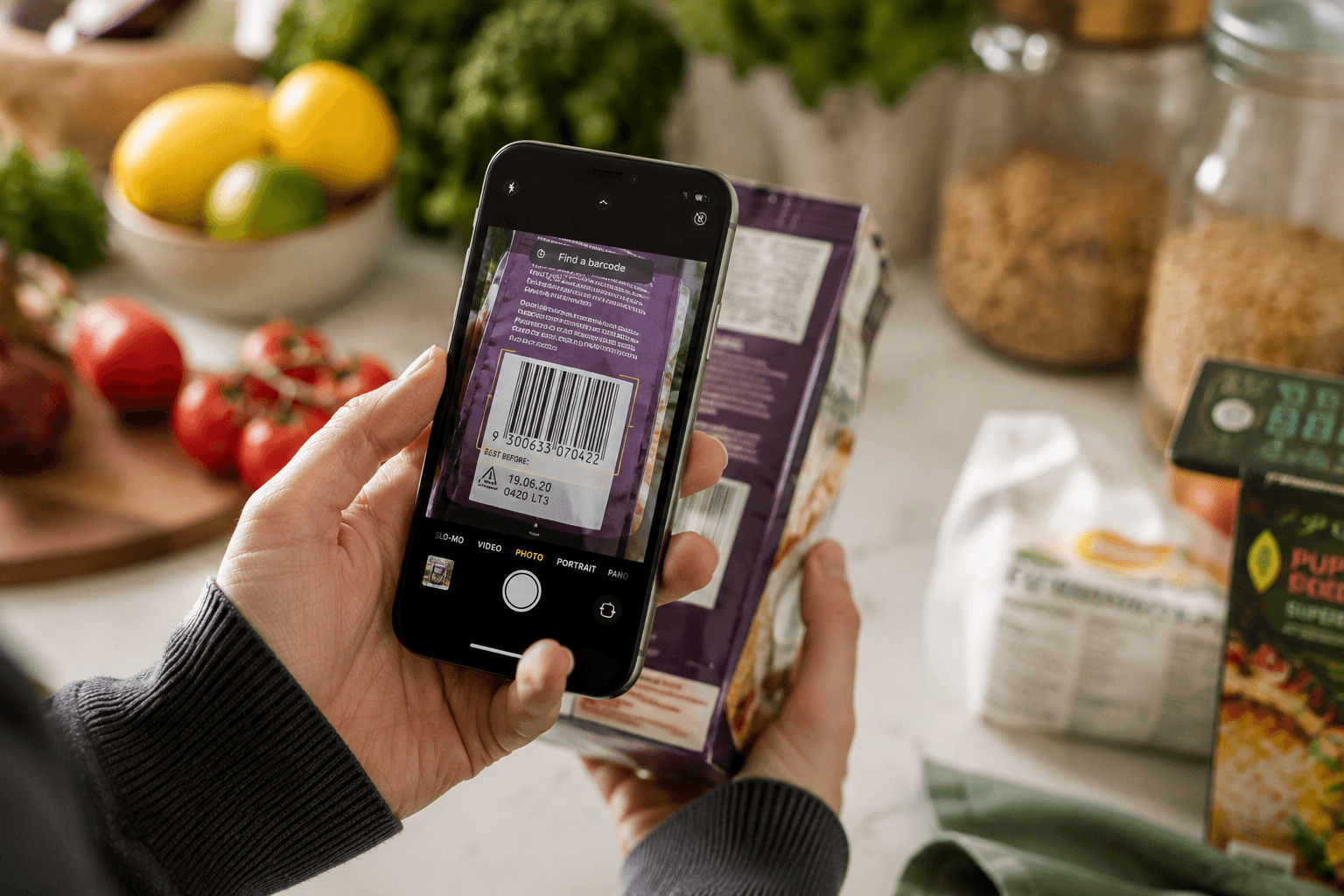
Nutrition for these bites depends on the ingredients you choose, so GoodFor scores the packs you buy rather than the finished bite. Scan the oats, dates, yoghurt or any swap and you get a 0-100 score, with the ingredients, additives, sugar, salt and saturated fat behind it. You also see Nutri-Score (A to E) and the NOVA processing group (1 to 4). Each family profile carries its own allergies and preferences, with a warning on every scan.
NOVA groups food by how processed it is, from 1 (unprocessed) to 4 (ultra-processed). GoodFor flags the group on every scan.
Nutri-Score grades the overall nutritional quality of a food from A (best) to E, per 100 g. GoodFor shows it on every scan.
Frequently Asked Questions
Next time you make a batch
- Check each pack of oats, yoghurt and seeds or nuts for allergens and label wording before you start.
- Grate the carrots and squeeze out as much liquid as you can with a clean tea towel.
- Pack the finished bites into a named, sealed box in the fridge, or freeze them for later in single layers.
When you buy the oats, dates and yoghurt, GoodFor shows an allergen flag for each family profile when you scan the packs.


Make safer everyday choices