

Why You’ll Love This Recipe
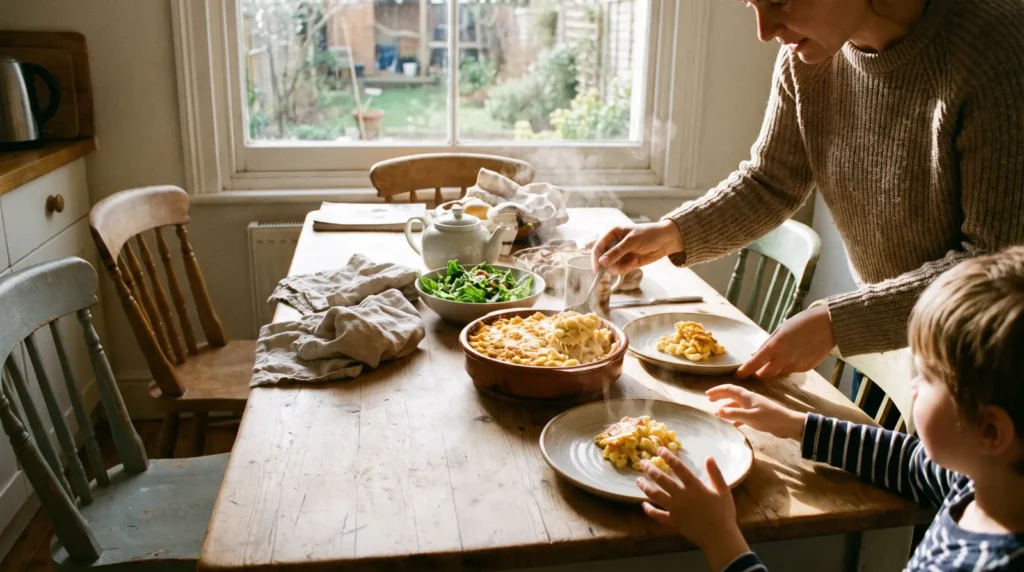
- Ready in 30 minutes on the hob, with a classic roux-based cheese sauce that coats every piece of pasta.
- Made with real mature cheddar, and an optional golden breadcrumb topping if you want it baked.
- Gives about 28 g protein per generous serving, similar to a whole chilled supermarket macaroni cheese.
- Nutrition is shown per portion, with clear swaps for lower fat, gluten-free, dairy-free and vegetable-packed versions.
- Child-friendly, reliable and easy to adjust for allergies or dietary goals.
🧀 Why this version is better for your family than shop-bought
The roux thickens the milk before any cheese goes in, so the sauce clings to the pasta instead of pooling. A sealed pack is a fixed recipe, but this one bends to your household. Cheese, milk and pasta can each be swapped for an allergy or a nutrition goal, and the swaps table in the ingredients section has the quantities.
Shop macaroni cheese is usually under the “high salt” line on a per-100 g basis. Tesco’s chilled packs have about 0.5 g salt per 100 g, well under the NHS line of 1.5 g. The difference is portion size: a whole 400 g pack puts more salt on the plate than a quarter of this recipe (figures in the table below). You also control the seasoning here, because the cheese is already salty.
Protein and calcium per portion, against shop-bought
A generous serving gives about 28 g protein and 550 mg calcium. A half tin of shop macaroni cheese gives 4.8 to 7.4 g protein, so this is nearly four times the top figure. Shop labels rarely show calcium, because it is not part of the required nutrition list.
Cheese supplies the protein and calcium, and also the saturates. A chilled whole-pack portion lands close to this recipe on protein and saturates.
Creamier sauce without split or grainy texture
Stir the cheese into the sauce after the pan leaves the heat. Cheese that gets too hot squeezes out its fat and tightens its protein, which makes a sauce greasy, grainy or stringy. The roux holds the milk together while the cheese melts gently in the leftover heat.
Adaptable for allergies and dietary goals
Gluten-free pasta, gluten-free flour or cornflour, dairy-free spread and milk, or reduced-fat cheddar all work in this base. On prepacked food, wheat and milk must be shown in the ingredients list, so free-from versions are easy to spot. A shop pack cannot be adapted to your child, but this recipe can.
👀 At a glance: nutrition compared with shop-bought
This table compares one stated portion of each product, so the portions differ in weight. Lower is better for energy, saturates and salt. Higher is better for protein and fibre.
| Product, stated portion | Energy (kcal) | Protein (g) | Saturates (g) | Salt (g) | Fibre (g) |
|---|---|---|---|---|---|
| This recipe, 1 serving | 620 | 28 | 17 | 1.2 | 3 |
| Tesco Macaroni Cheese, whole 400 g pack | 675 | 31.5 | 16.7 | 1.94 | 5.4 |
| Tesco Macaroni Cheese, half of a 750 g pack (375 g) | 647 | 29.0 | 17.0 | 1.87 | 5.2 |
| Tesco Finest Macaroni Cheese, whole 400 g pack | 723 | 31.6 | 18.4 | 2.31 | 6.3 |
| Tesco Macaroni Cheese in Sauce, half tin (193 g) | 174 | 4.8 | 1.9 | 1.17 | 1.5 |
| Heinz Macaroni Cheese, half tin | 171 | 7.4 | 2.1 | 1.5 | 0.6 |
What this shows: This recipe has about three fifths of the salt of the Tesco 400 g pack (1.2 g against 1.94 g), with similar protein and saturates. A half tin has far less of everything, but it is a much smaller portion. The chilled packs have more fibre, so serve this with a vegetable.
🥄 Ingredients, with swaps for allergies and dietary needs
| Ingredient to swap | Use instead, with quantity | What changes |
|---|---|---|
| Macaroni | Gluten-free pasta (Tesco Free From or Asda ranges), or the same 400 g of penne, fusilli or shells | Removes wheat only if you pick gluten-free. Other shapes cook the same way, and larger ones hold more sauce. |
| Butter | Dairy-free spread such as Vitalite or Flora Pure, or olive oil, same weight | Removes milk. Flavour is less rich. |
| Plain flour | Gluten-free plain flour, or 30 g cornflour for the 50 g flour | Removes wheat. Cornflour thickens more strongly, so use less. |
| Whole milk | Unsweetened oat or soy milk, barista type | Removes milk. The barista kind stays smoother when heated. |
| Mature cheddar | Reduced-fat cheddar, vegan cheese such as Violife (grated), or Red Leicester or Double Gloucester | Reduced-fat has at least 30% less fat than standard. Vegan cheese melts less smoothly, so add 1-2 tbsp nutritional yeast for a cheesy flavour. Red Leicester and Double Gloucester taste milder. |
| Breadcrumbs | Gluten-free crumbs such as Schär, or leave them out | Removes wheat. Leaving them out cuts fat and gives no crunch. |
| Mustard and nutmeg | Leave out | Only flavour changes. Check the mustard label for wheat if you use it. |
| Topping cheese | Any cheese from the cheddar row above | Same changes as above. |
The main allergens are wheat (pasta, flour, crumbs) and milk (milk, butter, both cheeses). Each swap changes the nutrition too, so recheck the figures if you change several.
🍲 Mac and cheese recipe: step-by-step stovetop and baked method
-
Step 1 ⏱️ 8-10 minutesBoil a large pan of salted water, add the macaroni and cook for 8-10 minutes until just tender with a little bite. Drain well and set aside.
-
Step 2 ⏱️ 1-2 minutesWhile the pasta cooks, melt the butter in a large saucepan over a medium heat. Stir in the flour and cook for 1-2 minutes until it smells biscuity.
-
Step 3 ⏱️ 5-7 minutesAdd the milk a little at a time, whisking constantly so no lumps form. Keep whisking over a medium heat for 5-7 minutes until the sauce coats the back of a spoon.
-
Step 4Take the pan off the heat. Stir in the cheddar, Parmesan, mustard and nutmeg until melted and smooth, then taste and season. Go easy on salt, as cheese is salty.
-
Step 5Tip the drained pasta into the sauce and stir gently until every piece is coated. For the stovetop version, serve straight away, piping hot.
-
Step 6To bake, heat the oven to 180°C fan (200°C, gas mark 6) and tip the mixture into a greased 20 x 30 cm ovenproof dish.
-
Step 7 ⏱️ 20-25 minutesToss the breadcrumbs with the melted butter and 25 g cheese, scatter over the top and bake for 20-25 minutes until golden and bubbling.
-
Step 8 ⏱️ 5 minutesRest the baked dish for 5 minutes before serving, because the sauce is very hot.
💡 Top tip: Add the cheese in three handfuls, stirring each until it melts before adding the next. Cheese dumped in all at once cools the sauce unevenly and leaves clumps that are hard to smooth out.
👨👩👧👦 Make it work for your family: batch cooking, make-ahead, remix versions
A full recipe serves 4 as a main or 6 as a side. The nutrition figures here are for a quarter, so a sixth is about two thirds of that (around 413 kcal). Spoon the cooled mac and cheese into single-portion tubs, so a weekday dinner is one tub, not a whole dish (fridge and freezer times are below).
For fussy eaters, blend cooked cauliflower or butternut squash into the sauce before the pasta goes in. It adds vegetables and creaminess. Stir in cooked chicken, bacon, tuna or salmon to turn leftovers into a second meal.
🥗 Nutrition per portion against NHS and FSA guidance
Toddlers and young children: portion size and fat
NHS guidance says a low-fat diet is not suitable for under-5s, so skip the reduced-fat swaps for them. Children under 11 should have less saturated fat than adults. The Eatwell Guide does not apply under age 2, and from 2 foods high in fat or salt should be offered less often and in small amounts. No official portion exists for mac and cheese.
Lowering salt and saturated fat for adults and teens
Each serving has 1.2 g salt, a fifth of the 6 g daily maximum the NHS sets for adults and children over 11. It also has 17 g saturates. The NHS calls a food high in salt above 1.5 g per 100 g, and high in saturates at 5 g or more per 100 g. Those lines apply per 100 g, not per portion, so a large portion can still add a lot.
Most cheese holds 20-40 g fat per 100 g, while reduced-fat hard cheese holds 16-22 g. Semi-skimmed milk, reduced-fat cheddar and no crumb topping all bring the figures down.
Pregnancy: checking the cheese
This recipe uses only mature cheddar and Parmesan. If you are pregnant and want to add blue or soft cheese, check the NHS pregnancy food advice on cheese first.
Gluten-free and dairy-free allergy adaptations
Plain pasta, flour and crumbs contain wheat and gluten. Butter, milk and both cheeses contain milk. The swaps table in the ingredients section has the replacements.
⚠️ Watch out: A “free from” pack can still carry a “may contain” warning. Read the ingredients list for wheat and milk, then the “may contain” line, on every pack, even your usual brand. Recipes change.
🥶 Storage, reheating and serving suggestions
Mac and cheese keeps for 3 days in the fridge or 3 months in the freezer, in sealed tubs. Reheat a covered dish in the oven at 180°C for 15-20 minutes, or microwave single portions. It must be piping hot all the way through, especially with added chicken, bacon or fish.
Serve it with a green salad, coleslaw or steamed broccoli. For children, add carrot sticks, cucumber or cherry tomatoes.
✅ Quick check:
- Cool it quickly before it goes in the fridge
- Use airtight tubs and write the cooking date on the lid
- Thaw frozen portions in the fridge, not on the worktop
- Never refreeze a portion once it has thawed
❗ Common mistakes and easy fixes
Sauce turns grainy or splits
Overheating after the cheese goes in is the usual cause. Take the pan off the heat and whisk briefly until smooth.
Pasta goes mushy or dry
Cook the pasta until it still has a little bite, because it keeps softening in the sauce and in the oven. Make sure every piece is generously coated before baking.
Topping won’t go crispy
Toss the breadcrumbs in melted butter until every crumb is shiny. Bake uncovered at 180°C fan or higher.
Sauce too thick or too thin
Loosen a thick sauce with a splash of milk. If it is too thin, simmer a few minutes more or stir in extra cheese off the heat.
Nutrition And GoodFor Score
One quarter of the recipe (stovetop, whole milk, cheddar) gives about:
- 620 kcal
- 28 g protein
- 28 g fat, of which 17 g saturates
- 64 g carbohydrate, of which about 10 g sugars, mostly milk lactose
- 3 g fibre
- 1.2 g salt
- 550 mg calcium
These figures vary with portion size, milk, cheese and whether you add the crumb topping.
GOV.UK sets the legal label list as energy, fat, saturates, carbohydrate, sugars, protein and salt per 100 g, while fibre and calcium are optional. Under the British Nutrition Foundation’s summary of the claim rules, this dish earns neither a “high protein” nor a “source of fibre” claim. Protein is 28 g x 4 kcal = 112 of 620 kcal, or 18%, and “high” needs 20%. Fibre is about 0.5 g per 100 kcal, and “source” needs at least 3 g per 100 g or 1.5 g per 100 kcal.
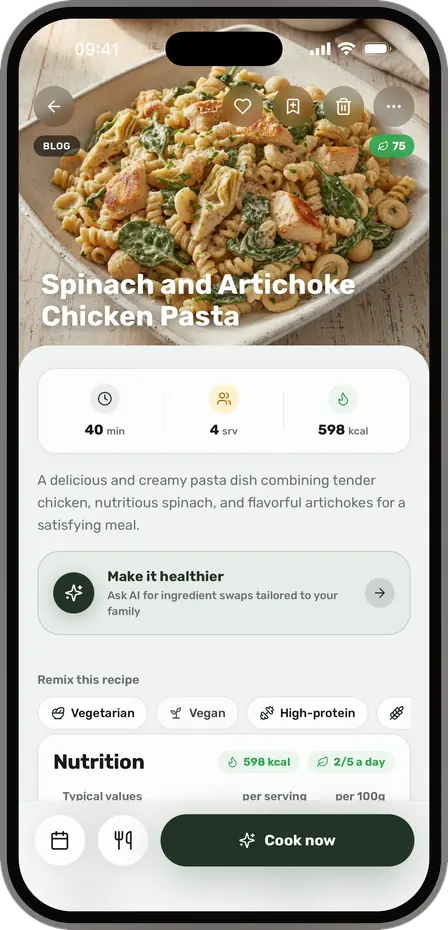
GoodFor is a food and drink scanning app, used by thousands of users. It scores each product 0-100 from nutrient levels per 100 g, processing, additives and your family profile’s allergies and goals, and lists every deduction. It can also import a recipe, score it and show it in cooking mode.
Frequently Asked Questions
🍳 Next time you make mac and cheese: three ways to make it suit your family
- Swap the pasta, milk or cheese for a free-from or lower-fat version that matches your household’s allergies or nutrition goals.
- Portion leftovers into labelled tubs the same day you cook.
- Serve each portion with broccoli or salad, as the homemade dish has less fibre than the chilled packs.
If someone in your home has a wheat or milk allergy, GoodFor family profiles can flag those allergens on every scan before the shopping goes in the trolley.


Make safer everyday choices