





Why You’ll Love This Recipe
- You get the classic shepherd’s pie flavour: tender lamb mince, golden mash and a gravy-rich filling the whole family loves.
- It takes about an hour and a quarter from basic ingredients, and you can make it ahead or freeze it for busy weeks.
- Each serving has around 30 g of protein, and the salt can be up to about a third lower than the saltiest shop-bought pie compared below.
- Swaps for beef, veggie mince or extra veg suit meat eaters, vegetarians and fussy children alike.
- Nutrition, allergens and storage are all explained for UK kitchens, so everyone can tuck in with confidence.
🥣 Why this version is a comforting family dinner you control
This recipe packs onion, carrot, celery and peas under the mash, and you set the salt yourself, which a shop-bought pie never lets you do. It is a one-dish dinner of protein, vegetables and potato, so the plate needs little else.
Shop pies are built to a price and a shelf life. The Tesco pies compared below list mashed potato, potato, then milk or water as their first three ingredients, and Charlie Bigham’s lists potatoes, lamb, carrots. Ingredient lists run from heaviest to lightest, so potato leads. At home you decide how many vegetables go in, and how much salt, butter and cheese.
Lamb is red meat, and the NHS advises cutting back on red and processed meat if you eat a lot of it. That does not rule the pie out. Portion size and how often you serve it matter, and the adult section below shows how.
Treat this as a comfort dinner, not a diet dish. Most of the fat comes from lamb, butter and cheese, and the lighter versions are in the ingredients section.
Lower in salt than shop-bought shepherd’s pies
Each portion can come out up to about a third lower in salt than the saltiest Tesco pie, depending on your seasoning and stock. At about 1.5 g a portion, it matches the lowest Tesco shepherd’s pie and sits below the Finest pies at 2.02 g and 2.22 g per pack.
Stock cubes and Worcestershire sauce add most of the salt in the pan. Use a reduced-salt stock cube, measure the sauce and taste before adding any salt.
More protein and veg per portion than the ready meal
With 500 g lamb mince plus carrots, onion, celery and peas, each serving gives about 30 g protein. The shop pies in the table give 16.5 g to 23.3 g, so the plainest Tesco pie has little more than half as much.
Fibre is about 6 g a serving, level with the best shop pie at 5.9 g and ahead of Charlie Bigham’s 3.9 g. The lamb supplies the protein, and the vegetables and peas supply the fibre.
Freezer-friendly and batch-cook tested, so you save time and money
This pie is freezer-friendly: assemble it now, freeze it unbaked for up to 3 months and bake it straight from frozen. Cool the filling and mash fully first, then wrap the assembled pie tightly in cling film and foil.
To bake, keep the foil on and cook at 180°C (160°C fan) for 1 hour. Remove the foil and give it 20-30 minutes more, until it is steaming hot in the centre. One cooking session can fill the freezer with a second dinner for the price of the ingredients and a dish.
Clearer allergen and nutrition labelling for confident family meals
Cooking at home means you know every allergen in the pie, because you chose each ingredient. A packaged pie must emphasise the 14 regulated allergens in its ingredients list, but you are still reading a list someone else wrote. In this recipe:
- Wheat (gluten): the plain flour, and possibly the stock cube.
- Milk: butter, whole milk and the optional Cheddar.
- Celery: the celery sticks, and often the stock.
- Fish: some Worcestershire sauces contain anchovy, so read the label.
A “may contain” warning is not a legal requirement. It should be used only where a real cross-contamination risk remains, so a stock cube without one is not guaranteed safe. Read the ingredients every time.
🕒 At a glance: time, cost and nutrition compared to the supermarket
Making this pie at home takes about 70-80 minutes and gives more protein per portion than the Tesco and Charlie Bigham’s pies below, with salt and cost in your control. This table compares one portion of each pie. Lower is better for calories and salt, and higher is better for protein and fibre.
| Product | Portion | Calories (kcal) | Protein (g) | Salt (g) | Fibre (g) |
|---|---|---|---|---|---|
| This recipe, 1 serving | One quarter of the pie | 550-600 | 30 | 1.5 | 6 |
| Tesco Shepherds Pie | 367 g pack | 358 | 16.5 | 1.50 | 5.9 |
| Tesco Finest Shepherd’s Pie | 377 g pack | 396 | 20.8 | 2.02 | 4.9 |
| Charlie Bigham’s Shepherd’s Pie | 325 g pack | 377 | 23.3 | 1.72 | 3.9 |
What this shows: The home pie has the most protein, about 30 g against 16.5 g to 23.3 g. Its salt is the same as the lowest shop pie and about a quarter below the Finest. It is also the biggest portion, so the calories are higher. Serve a smaller square with extra peas or greens for a lighter plate, and compare the cost per portion on the shelf against the four portions this recipe gives.
🥔 Ingredients, with swaps that keep the texture
Four ingredients decide the result: 500 g lamb mince, 900 g floury potatoes, a thick gravy base and 50 g butter.
For the filling
For the topping
- 900 g floury potatoes (about 6 medium; Maris Piper, King Edward or Rooster), peeled and chopped
- 50 g butter
- 50-100 ml whole milk
- 50 g Cheddar, grated (optional)
Lamb mince at 10-20% fat gives the flavour, while 5% fat makes a lighter but drier pie. Floury potatoes mash fluffy, but waxy ones such as Charlotte go gluey. Lamb makes this a shepherd’s pie. Beef makes it a cottage pie, and the two names are often used interchangeably.
This table shows what to use in place of each ingredient, and what changes in the pie.
| Ingredient to swap | Use instead, with quantity | What changes |
|---|---|---|
| 500 g lamb mince, 10-20% fat | 500 g lamb mince, 5% fat | Lighter and a little drier |
| 500 g lamb mince | 500 g beef mince, 5-10% fat, with beef stock | Cottage pie. Similar nutrition, slightly lower fat with 5% mince |
| 500 g lamb mince | 400 g tin green or brown lentils, drained, plus 200 g chopped mushrooms, with vegetable stock | Vegetarian. About 350-400 kcal a serving. Check the Worcestershire sauce for anchovy |
| 500 g lamb mince | 500 g Quorn or soy mince, with vegetable stock | Vegetarian and milder in flavour. Check the pack’s allergens |
| White potatoes | Half or all sweet potato, boiled and mashed | Sweeter and more colourful. Similar calories, slightly more fibre and vitamin A |
| 50 g butter, whole milk, Cheddar | 25 g butter, semi-skimmed milk, no cheese | Together with 5% mince, saves about 100-120 kcal and 8 g fat a serving |
| 50 g butter, whole milk | Dairy-free spread and unsweetened oat drink, same amounts | Removes milk. Skip the Cheddar too |
| Cheddar on top | Stir 50 g into the mash instead | Adds about 50 kcal a serving and more richness |
| 2 tbsp plain flour | 2 tbsp gluten-free plain flour | Removes wheat. Check the stock and sauce labels too |
| 300 ml stock | Reduced-salt stock cube, same volume | Less salt, same flavour |
What this shows: The biggest saving comes from 5% mince, less butter, semi-skimmed milk and no cheese together: about 100-120 kcal and 8 g fat a serving. Change one thing at a time so the pie still tastes familiar to your family.
👩🍳 Method: shepherd’s pie step by step
This method takes you from browning the lamb to a golden, ruffled top in about 75 minutes.
-
Step 1 ⏱️ 10 minutesHeat the olive oil in a large, deep pan over a medium heat. Add the onion, carrots and celery and fry gently for 10 minutes until soft but not coloured.
-
Step 2 ⏱️ 8-10 minutesTurn up the heat and add the lamb mince, breaking it up with a wooden spoon. Brown for 8-10 minutes until no pink remains, and spoon off excess fat for a leaner pie.
-
Step 3 ⏱️ 1 minuteSprinkle over the flour and cook for 1 minute, stirring. Add the tomato purée, stock, Worcestershire sauce and herbs, then season with pepper and taste before adding salt.
-
Step 4 ⏱️ 15-20 minutesSimmer gently for 15-20 minutes until the gravy is thick. Stir in the frozen peas for the final 2 minutes, then taste and adjust.
-
Step 5 ⏱️ 15-20 minutesMeanwhile, boil the potatoes in salted water for 15-20 minutes until a knife slides in easily. Preheat the oven to 200°C (180°C fan).
-
Step 6 ⏱️ 1 minuteDrain the potatoes, return them to the hot pan and let them steam dry for 1 minute. Mash with the butter and milk and season. Stop as soon as the mash is smooth.
-
Step 7Spread the filling in a 2-litre baking dish (about 20 x 30 cm) and spoon the mash on top. Spread it to the edges, rough up the surface with a fork and add the Cheddar if using.
-
Step 8 ⏱️ 25-30 minutesBake for 25-30 minutes until golden and bubbling at the edges. If the top is still pale, grill for 2-3 minutes, watching closely so it does not burn.
-
Step 9 ⏱️ 5 minutesLeave the pie to stand for 5 minutes before serving. This lets the filling settle and makes it easier to cut into neat portions.
💡 Top tip: Make the fork ridges deep, in short strokes across the whole surface. The peaks go golden and crispy, and they are the best bits. A flat, patted-down top stays pale.
👨👩👦👦 Make it work for your family: batch cooking, scaling and swaps
You can assemble the pie, cover it and chill it for up to 24 hours before baking. Allow about 10 extra minutes if it goes into the oven straight from the fridge. For longer, freeze it unbaked as described above.
To scale up or down, multiply every ingredient weight and choose a dish to match. Swapping the lamb for lean beef, veggie mince or lentils lowers saturated fat, as the swaps table shows.
🥗 Nutrition example: Doubling the recipe means 1 kg lamb mince and 1.8 kg potatoes in a 3-4 litre dish. Cut it into 8 generous portions, or up to 12 smaller ones. Each of the 8 still has 125 g lamb (1,000 g ÷ 8). Alternatively, bake one pie and freeze the second.
🍽️ Nutrition per portion against UK guidance and who can enjoy it
Each portion, one quarter of the dish, gives about 550-600 kcal, 30 g protein and 1.5 g salt. The figures are calculated from 15% fat lamb, 900 g potatoes, 50 g butter, 100 ml milk, the 50 g of Cheddar and every vegetable listed. The rest of the panel:
- Fat: about 25 g, of which saturates about 11 g, from the lamb, butter and Cheddar.
- Carbohydrate: about 50 g, of which sugars about 8 g, from the potato, vegetables and milk.
- Fibre: about 6 g, from the vegetables and peas.
Cutting the same pie into six portions instead of four trims each plate by a third.
Toddlers and young children: making pie safe and suitable
Serve children a smaller portion and fill the rest of the plate with vegetables such as peas, broccoli or green beans. The British Dietetic Association analysed one original shepherd’s pie recipe at a 528 g serving and found 716 kcal and 23.7 g saturates, which shows how energy-dense a big adult helping can be. No official portion size exists for children, so judge by age and appetite and let them ask for more.
Managing salt and red meat for adults
The NHS says that if you eat more than 90 g of red or processed meat a day, cooked weight, you should cut down to 70 g. This recipe uses 125 g raw lamb mince per adult portion. It shrinks as it cooks, but one portion still takes up much of a 70 g day. If you eat this pie often, serve smaller portions with more vegetables, or use the leaner or vegetarian swaps. Salt added at the table comes on top of the 1.5 g.
Shepherd’s pie in pregnancy: safety and comfort food
No pregnancy-specific guidance for shepherd’s pie exists, so general food-safety rules apply. Cook the lamb until no pink remains and the pie is steaming hot in the centre. Follow the chilling and reheating rules in the storage section.
Allergy-aware pie: flour, milk and possible fish
Tell everyone at the table what is in the pie, because home cooks are not required to emphasise allergens the way packaged-food makers are. The four allergen sources are listed above. Every swap brings its own label to read, including veggie mince and gluten-free flour. Skipping the Cheddar removes one milk source, but the butter and milk remain.
- ✅ Quick check:
- Is the stock cube free of anything someone at the table avoids?
- Is each child’s portion smaller, with extra vegetables?
- Is the pie steaming hot in the centre before it is served?
❄️ Storage, reheating, freezing and what to serve alongside
Put leftovers in the fridge within 2 hours of cooking, and eat them within 48 hours or freeze them, as UK government food-safety guidance advises. Spread the pie in a shallow container so it cools quickly. Freeze either the raw assembled pie or cooked leftovers. Defrost leftovers fully in the fridge before reheating.
To reheat, cover with foil and heat in the oven at 180°C (160°C fan) for 20-30 minutes until steaming hot throughout. The microwave is safe but leaves the mash soft rather than crisp.
⚠️ Watch out: Cool the pie before it goes in the freezer, but never leave it standing out for hours. Reheat leftovers once only. After that, finish them or throw them away.
Steamed or roasted peas, carrots, broccoli, green beans or cabbage suit it best. Pickled red cabbage is the traditional Northern English side, and crusty bread and extra gravy mop up the rest. The pie is already a full meal, so a green salad is plenty.
🛠️ Common mistakes and how to fix them
The three most common mistakes are a watery filling, a gluey mash and a pale top. A watery filling happens when the gravy is not reduced, so simmer it uncovered for 5-10 more minutes before topping.
Gluey mash comes from overworking the potatoes. Use a masher or ricer rather than an electric whisk. A pale top is usually a smooth, flat surface, so ruffle it and use the grill rescue in step 8.
A bland filling needs flavour, not more salt. Add a splash more Worcestershire sauce or a pinch more herbs, tasting as you go.
Nutrition And GoodFor Score
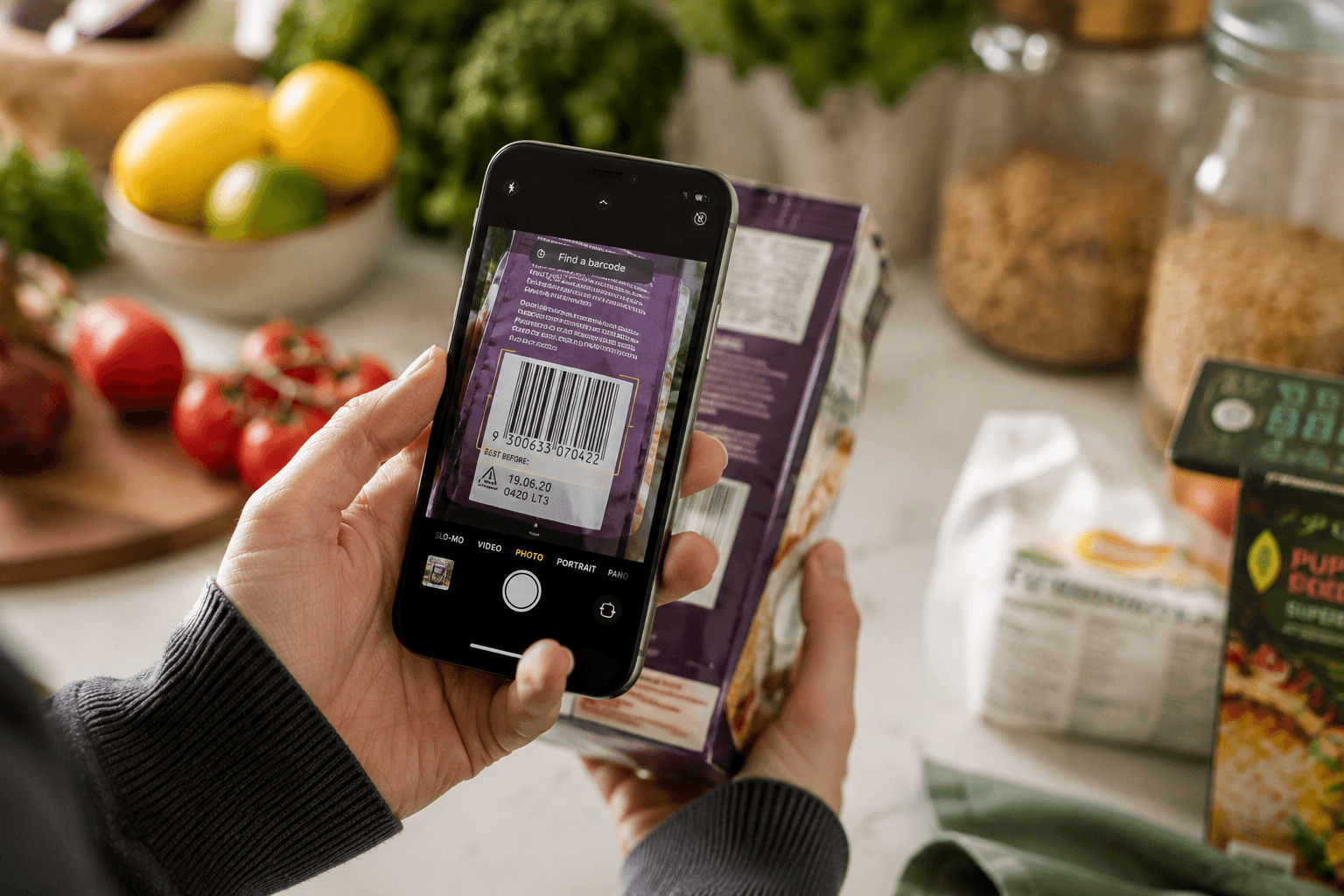
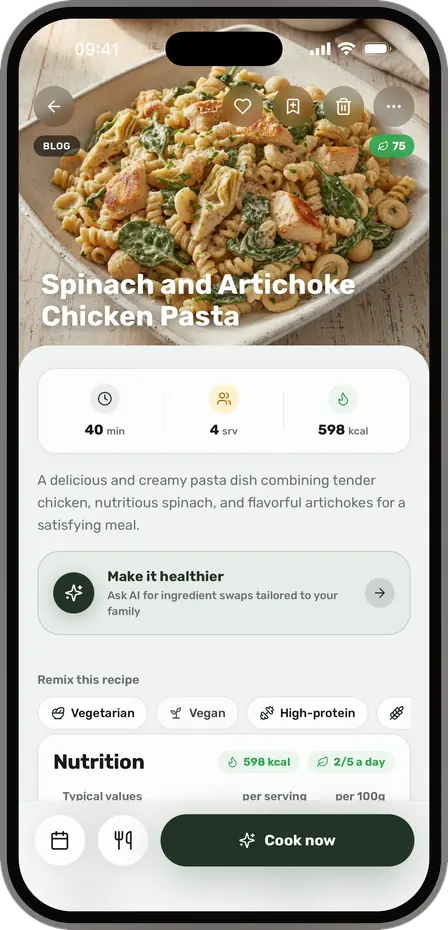
The Eatwell Guide advises choosing lean mince and eating less red meat, so the 5% fat and vegetarian swaps fit it best. GoodFor is a UK food and drink scanning app, used by thousands of users, that scores food from 0 to 100. Its recipe import extracts the ingredients and scores the recipe. Set a profile with gluten, dairy or fish allergies and the pie is flagged where an ingredient does not fit. Every scan also shows Nutri-Score and the NOVA processing group, and Lumi, the in-app food coach, can find alternatives that keep your preferences and goals.
NOVA groups food by how processed it is, from 1 (unprocessed) to 4 (ultra-processed). GoodFor flags the group on every scan.
Nutri-Score grades the overall nutritional quality of a food from A (best) to E, per 100 g. GoodFor shows it on every scan.
Frequently Asked Questions
At your next family shop or batch-cook session
- Pick up lean lamb mince, floury potatoes and extra vegetables, and choose stock and sauce with clear allergen labelling.
- Assemble the pie ahead, cover and freeze it unbaked for a back-up dinner that is ready in under 90 minutes.
- Serve child-sized portions with extra greens, and use the swaps table to match any allergies or dietary needs in your family. Smart Basket in GoodFor scores the whole shop for every family profile at once, and shows the swap that lifts it most.


Make safer everyday choices