





Key Takeaways
- Edamame are immature green soybeans with about 12 g protein and 5 g fiber per 100 g cooked, according to USDA FoodData Central.
- Edamame is a complete plant protein, meaning it has all nine essential amino acids, and the FDA authorizes a heart-health claim for soy protein as part of a diet low in saturated fat.
- Soy is a top US allergen, so check the ingredient list and the “Contains: soy” line before buying or serving edamame.
- For young children, serve only the shelled beans, never the pod, and mash or halve them for children under 5 to reduce choking risk.
- Edamame is low in saturated fat and a strong source of folate, vitamin K and manganese, which makes it a nutrient-dense choice for plant-based diets.
🌱 What edamame is, how it is served, and where you find it in US stores
Edamame are whole, young, green soybeans, picked before they mature, usually steamed or boiled and sold frozen in the pod or shelled. You will find them in the freezer aisle and as a side at sushi restaurants and poke counters. Edamame is a legume, a type of soybean, and is neither a nut nor a pea.
Edamame: the definition, origin, and meaning
Edamame translates from Japanese as “beans on branches” and names young green soybeans harvested before full maturity. It is a traditional East Asian food, now sold under that name in US groceries and restaurants. Botanically it is Glycine max, the same species as the mature yellow soybeans used for most soy products, but picked while still green and soft.
Types of edamame: pods vs. shelled beans
US stores and restaurants sell edamame either as whole pods or shelled. Pods are fuzzy and bright green, and only the beans inside are eaten. Shelled edamame come in frozen bags, ready for salads, stir-fries or snacking, while pods are usually served salted as a snack or side.
Where to buy edamame in the United States
Frozen edamame, in pods and shelled, sits in the freezer aisle at Walmart, Kroger, Trader Joe’s, Whole Foods and Safeway, and at Asian supermarkets. Fresh edamame is rarer, found at farmers’ markets or Asian grocers. Look for “edamame,” “green soybeans” or “shelled edamame” on the label.
Edamame on menus and food labels
On a US menu, “edamame,” “soybeans” or “steamed soybeans” means these young beans, usually steamed and salted, listed as a small plate, appetizer or side, sometimes with garlic or chili. On packaged foods, edamame appears in the ingredient list. Under FDA rules, soy must be declared either in that list or in a “Contains: Soy” statement beside it.
🍽️ Edamame nutrition facts per 100 g (cooked, shelled)
100 g (a little over ½ cup) of cooked, shelled edamame provides roughly 120 calories and 12 g plant protein. The figures come from USDA FoodData Central’s entry for frozen, prepared edamame, which lists 121 kcal and 72.8 g water per 100 g.
The table below lists what 100 g of cooked, shelled edamame contains. Higher is better for protein, fiber and omega-3. Lower is better for calories, sugars, saturated fat and sodium.
| Nutrient | Per 100 g cooked shelled edamame |
|---|---|
| Calories | 121 kcal |
| Protein | 11.9 g |
| Total carbohydrate | 9.9 g |
| Sugars | 2.2 g |
| Dietary fiber | 5.2 g |
| Total fat | 5.2 g |
| Saturated fat | 0.6 g |
| Omega-3 (alpha-linolenic acid) | 358 mg |
| Omega-6 | 1,790 mg |
| Sodium | 5 to 10 mg |
What this shows: A 100 g portion gives about 12 g protein and 5 g fiber for only 121 kcal and 0.6 g saturated fat. Sodium is very low until you add salt. Use these per 100 g figures to compare edamame with other foods, and weigh your portion before you log it.
Per 100 g, edamame supplies these shares of the % Daily Value (the share of a day’s needs on the Nutrition Facts label):
Magnesium, potassium, calcium, copper, thiamine and riboflavin are also present, with small amounts of vitamins C and E. Values shift with brand and preparation.
💪 How the body uses edamame: protein, fiber, and micronutrients
A 100 g serving of shelled edamame supplies about 12 g complete protein and 5 g dietary fiber, which is why a small bowl fills you up and supports muscle.
Protein and edamame as a complete plant-based source
Edamame stands out among plant foods because its protein contains all nine essential amino acids, the ones your body cannot make. That is rare in plants; quinoa and buckwheat are the other familiar examples. The protein supports muscle maintenance and repair.
Cleveland Clinic reports that a full 160 g cup of cooked edamame gives 18.5 g protein and 224 kcal. Log a cup, not a handful, when you count protein.
Fiber and digestion
Edamame delivers about 5 g dietary fiber per 100 g, close to a fifth of an adult’s daily target. Fiber slows digestion, supports regularity, helps manage blood sugar and cholesterol, and promotes fullness. If you are not used to much fiber, build up the portion over a week, since a big jump can cause gas or bloating.
Key vitamins, minerals, and healthy fats in edamame
Folate is the standout nutrient in a 100 g portion. Iron depends on who is eating: about 10% of the Daily Value for women and about 25% for men.
The fat is predominantly unsaturated, including plant omega-3 (alpha-linolenic acid) alongside omega-6. That is the fat type that supports heart and cell health.
🩺 Edamame and your health: what US authorities and research say
The FDA allows a heart-disease claim for soy protein, and the American Heart Association and the Academy of Nutrition and Dietetics both include soy foods among healthy plant-based proteins in a balanced diet.
Edamame and heart health: FDA soy health claim
The FDA authorizes a qualified health claim under 21 CFR 101.82: 25 g of soy protein a day, as part of a diet low in saturated fat and cholesterol, may reduce the risk of coronary heart disease. The wording is “may reduce,” not “prevents.” Soy protein may help lower LDL (“bad”) cholesterol, most clearly when it replaces animal protein.
Edamame holds about 12 g soy protein per 100 g, so one portion supplies about half the claim amount. Two 100 g portions land near 24 g. The claim covers soy protein in general; it does not say that edamame itself earns it.
Edamame for weight management and satiety
At 121 kcal per 100 g, edamame is low in calories for how filling it is, because protein and fiber together reduce hunger between meals. That makes it a useful swap for chips or crackers. The evidence shows fullness, not that edamame alone causes weight loss.
Isoflavones, hormones, and soy: what the science shows
Edamame contains isoflavones, plant compounds that act weakly like estrogen, which is where hormone worries come from. Large bodies of research show that one to two servings of soy a day is safe for men, women and children. It does not raise estrogen levels or cause feminization in men.
No link has been established between moderate soy intake and breast cancer. The American Cancer Society position is that moderate intake is safe and may be protective, but is not proven to prevent cancer. The American College of Obstetricians and Gynecologists and the Academy of Nutrition and Dietetics consider soy foods fine in pregnancy and breastfeeding.
⚠️ Watch out: Ignore blanket internet claims that soy “wrecks hormones.” The safety evidence covers one to two servings a day of a whole food like edamame. It does not cover concentrated isoflavone supplements, which are a different product.
⚠️ Soy allergy, label warnings, and kids: edamame safety for families
Edamame is soy, one of the top nine US allergens, and must always be labeled. Take extra care with young children and first-time exposures: offer a small amount first and watch for hives, swelling, vomiting or wheezing. Stop and get medical advice if any appear.
Edamame as a major US allergen: what to look for on the label
Read the ingredient list and the “Contains” line together, as described earlier. The FDA accepts “soy,” “soya” or “soybean” as the allergen name, so scan for all three. On ready meals, salad kits and snacks, check both places.
“Contains soy” tells you soy is present, not how much. The FDA also says voluntary “allergen-free” claims have no specific regulatory definition beyond being truthful, so keep reading the ingredients even when a front label sounds reassuring.
Safe serving tips for children, including choking prevention
Edamame beans suit kids only when they are shelled and soft. Remove the beans from the pod, then mash or halve them for children under 5 and stay with them while they eat. Pod pieces are the main hazard, so never serve them in the pod. Start with a small first portion.
💡 Top tip: Press each cooked bean flat with a fork, or cut it in half, before it goes on a toddler’s tray. The Iowa Soybean Association advises serving shelled, steamed or puréed edamame, never the whole pod.
Edamame and other dietary restrictions
Edamame suits vegetarians, vegans and anyone cutting animal protein or dairy. Anyone with a soy allergy must avoid it. Plain edamame is gluten-free and dairy-free. Seasoned or sauced versions add ingredients, so check the list and any cross-contact warning on flavored bags.
🍳 Cooking and serving edamame: easy methods and recipe ideas
The easiest way to prepare frozen edamame, pods or shelled, is to boil or steam until tender, then season. Frozen beans go straight into the pot, and they taste good warm, at room temperature or chilled.
-
Step 1Bring a pot of water to a boil and add a pinch of salt if you like.
-
Step 2Add the frozen edamame straight from the bag, with no thawing.
-
Step 3 ⏱️ 4 to 5 minutesCook pods 4 to 5 minutes and shelled beans 3 to 4 minutes, until bright green and tender.
-
Step 4Drain and toss with sea salt, garlic salt or chili flakes while still warm.
-
Step 5Squeeze the beans out of the pod and discard the pod.
-
Step 6Use shelled beans in salads, stir-fries, grain bowls, pasta or a dip.
Boiling and seasoning edamame in the pod
For a classic appetizer, boil the pods in salted water using the times above, and drain them well. Salt them while they are still steaming so it clings to the fuzz. Squeeze each pod so the beans slip out.
Cooking shelled edamame for meals and snacks
Shelled edamame also microwaves to the package directions. Season with salt, soy sauce, sesame seeds or chili oil, and taste before salting, since soy sauce adds both sodium and more soy. In a stir-fry, add the beans in the last 2 to 3 minutes so they stay green.
Creative ways to use edamame in salads, bowls, stir-fries, and dips
Shelled edamame adds color and plant protein to green salads, grain bowls, pasta salads and poke bowls. For edamame hummus, blend cooked shelled beans with garlic, lemon juice, tahini and olive oil. For babies and toddlers, mash the beans into pasta, rice or vegetable purées.
🥗 Nutrition example: A 150 g scoop of cooked shelled edamame on a grain bowl is 1.5 times the per 100 g figures: about 18 g protein, 7.8 g fiber and 182 kcal. That is over a third of the 50 g protein Daily Value for under 200 calories.
🛒 Where to buy, how to store edamame, and swaps for common allergies
Frozen edamame keeps up to a year, so a bag labeled “in pod” or “shelled” is an easy staple. Fresh edamame is for the next few days only.
Grocery and online store options in the US
The chains listed earlier stock both pod and shelled bags. Walmart’s online listings add a third format, dry roasted edamame snacks, and their labels differ sharply from boiled beans:
- The Only Bean Sriracha: 390 kcal, 36.7 g protein and 13.3 g fiber per 100 g.
- Seapoint Farms Sea Salt: 520 kcal per 100 g.
- Its Delish Roasted & Salted: 161 mg sodium per 100 g, against 5 to 10 mg in plain boiled beans.
Roasting removes water, so the nutrients concentrate. Compare snacks and boiled beans by portion, not by 100 g.
Storage tips: fresh, frozen, and cooked edamame
Keep unopened frozen bags frozen until use and follow the best-by date, then re-seal opened bags tightly. Fresh edamame belongs in the fridge and should be used within a few days.
Swaps if you avoid soy
If you avoid soy, roasted chickpeas, green pea crisps or fava bean snacks give a similar crunch. Biena Chickpea Snacks and Harvest Snaps Pea Crisps are two examples, and the label check described earlier still applies to every bag.
🔄 Try instead: If anyone eating has a soy allergy, pick up roasted chickpeas (such as Biena) or green pea crisps (such as Harvest Snaps) instead of roasted edamame snacks. They are made from other legumes, not soybeans. On the bag, check that the “Contains” line does not list soy. Scan both in GoodFor and it flags soy if a family profile has a soy allergy.
🤔 Myths and misconceptions about edamame and soy foods
“Is edamame a nut?
Edamame is not a nut; it is a legume, an immature soybean. Soy and peanuts are both legumes, but soy and tree-nut allergies are separate, and the Iowa Soybean Association notes soy is declared as its own allergen. A child with a tree-nut allergy therefore needs the soy declaration checked separately, and the allergen statement still matters for cross-contact.
“Can you eat the pod?
The pod is tough and fibrous and should always be discarded after the beans are squeezed out. It is not digestible, and swallowed pieces can pose a choking risk, especially for small children.
“Is edamame safe for kids or for men?
Edamame is suitable for children and men without a soy allergy at the one to two servings a day described in the isoflavone section. The American Heart Association position is that soy has no feminizing effect. Isoflavone supplements are a different, concentrated product that this evidence does not cover.
“Do soy foods raise estrogen or cancer risk?
No: isoflavones act weakly like estrogen, but at normal food amounts they do not shift hormone levels or raise cancer risk. Claims of cancer protection overreach in the other direction, since the evidence suggests it but does not prove it.
✅ Quick check:
- Cook the beans first, then squeeze them out and bin the pod.
- If anyone eating has a soy allergy, read the ingredient list and the “Contains” line.
- For children under 5, offer only mashed or halved beans.
How GoodFor Scores edamame products
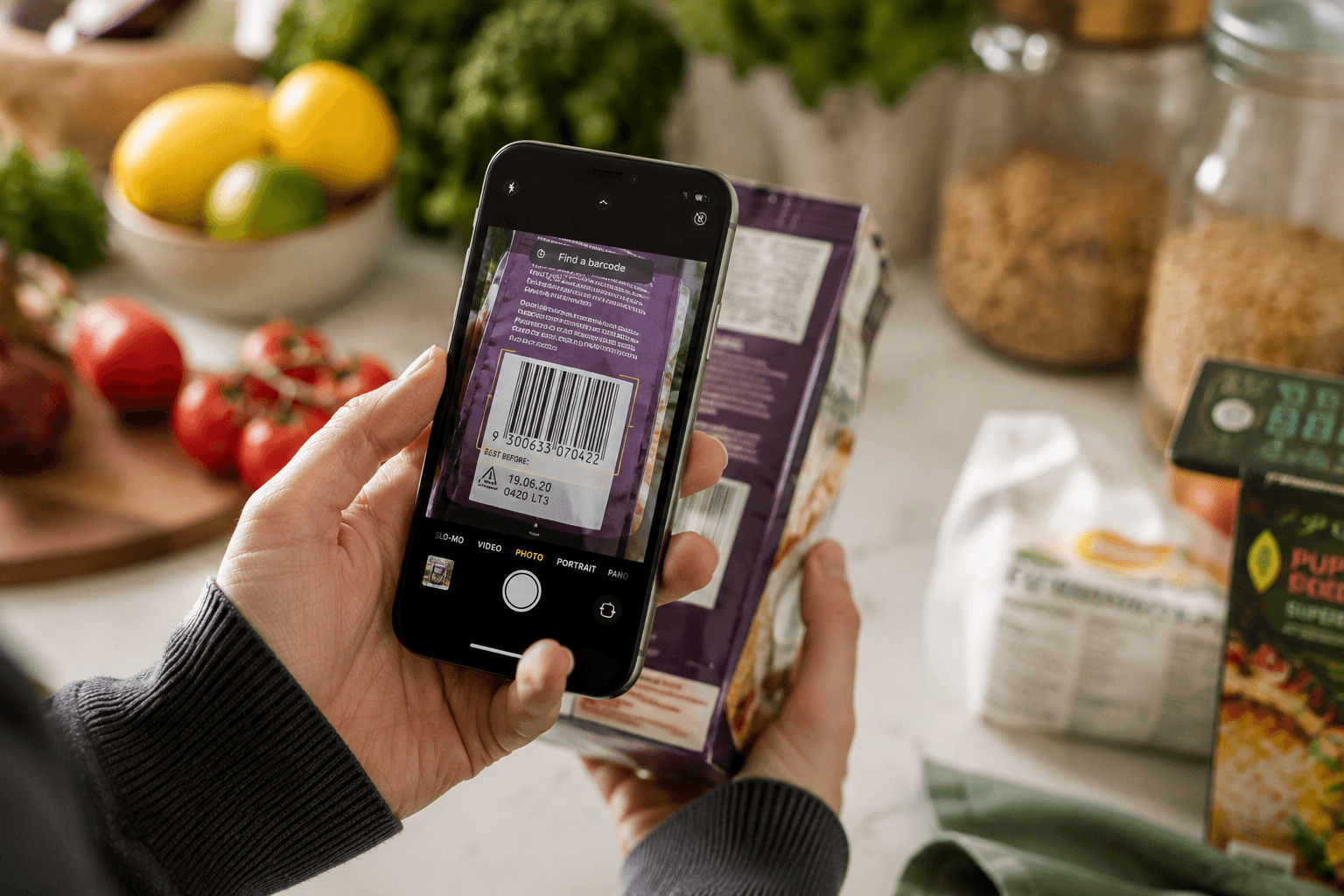
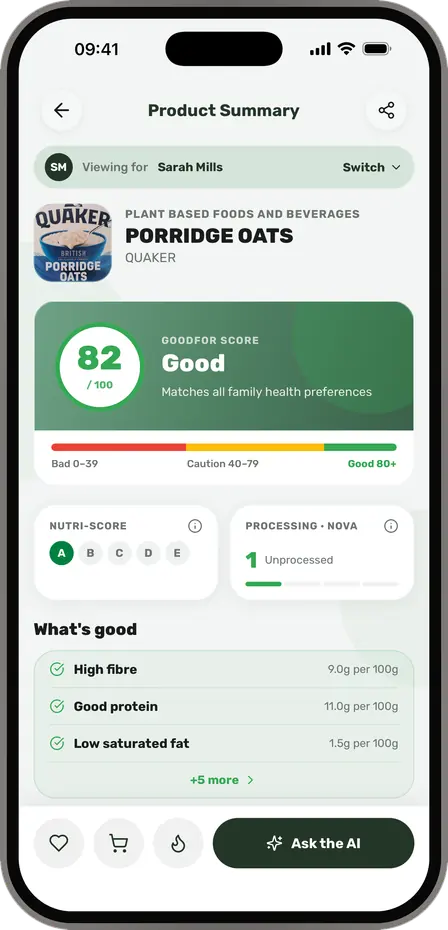
Scan a frozen bag, snack pack or ready meal with edamame in GoodFor and you get one 0-100 score in a second. Alongside it you see the ingredients, sugar, salt and saturated fat, Nutri-Score (A to E) and the NOVA processing group (1-4). If a profile has a soy allergy, a warning appears on every scan. The score lists every deduction, so plain boiled beans and a salted roasted snack are easy to tell apart. Calories, protein and fat can be logged by scan or photo against the daily goal. If a product does not fit, GoodFor suggests a replacement from the same store, and Lumi, the in-app AI food coach, finds alternatives that keep the person’s goals.
NOVA groups food by how processed it is, from 1 (unprocessed) to 4 (ultra-processed). GoodFor flags the group on every scan.
Nutri-Score grades the overall nutritional quality of a food from A (best) to E, per 100 g. GoodFor shows it on every scan.
Frequently Asked Questions
At your next shop or meal with edamame, do these three things
- Check both the ingredient list and the “Contains” line on any pack for soy, especially for allergies or shared facilities.
- Boil or steam frozen edamame before serving, then season and squeeze out the beans, discarding the pods every time.
- For children under five, only offer mashed or halved shelled beans and supervise eating to prevent choking.


Make safer everyday choices