





Key Takeaways
- Dates are high in natural sugar, at 66 g per 100 g in the brief’s figures, and the products in the table below range from 54.5 to 68 g, so portion size matters.
- The NHS counts 30 g of dried dates (about 1-2 dates) as one of your 5 a day and advises eating dried fruit at mealtimes.
- Dates are a good source of fibre (7 g per 100 g), potassium (650 mg per 100 g) and plant-based iron (0.9 mg per 100 g).
- People with diabetes or prediabetes can include dates in small amounts, but should count the carbohydrate and check their own blood sugar response.
- Medjool dates are large and very sweet, while Deglet Noor dates are smaller and less sweet, so compare by weight or the nutrition label.
🏝️ What dates are and how they’re used in food
Dates are the sweet edible fruit of the date palm, grown across the Middle East, North Africa and California. On UK shelves you will meet two styles: soft Medjool, the large caramel-flavoured “king of dates”, and smaller, firmer, cheaper Deglet Noor.
What dates are, where they come from and how they are grown
Dates grow on date palm trees (Phoenix dactylifera) in hot, dry regions and have been cultivated for thousands of years. Most dates in British shops are imported, so the country of origin on the pack tells you where yours came from.
Fresh dates vs dried dates: texture, flavour and use
Dried dates are the norm in UK shops, and if a recipe just says “dates” it almost always means dried. Fresh dates are soft and moist and rarely seen outside autumn. Drying removes water, so sugar and fibre are concentrated and dried dates carry more energy per gram.
Medjool dates, Deglet Noor and other common types in the UK
Medjool dates are larger, very soft and sticky, caramel-like and more expensive. Deglet Noor are smaller, firmer, less intensely sweet and cheaper. Chopped dates such as Whitworths are mainly used for baking.
Pitted, unpitted and processed dates for cooking
Pitted dates are easy to chop, blend or eat. Unpitted ones may be juicier but need stoning before use, and they keep moisture, and so shelf life, longer. Chopped or whole, dates turn up in baking, bars, and natural sweetener pastes or syrups.
Cultural role: dates at Ramadan and in British baking
Dates are traditionally eaten to break the fast at iftar during Ramadan, valued for quick energy and gentleness on an empty stomach. Sticky toffee pudding and date and walnut loaf are the classic British bakes that rely on them.
📦 Where dates turn up in UK supermarkets and food
Dried dates sit in the snack, baking and world-food aisles, and they are also built into many bars and bakes. On ingredient lists, look for “dates”, “dried dates”, “date paste” or “date syrup”.
The table compares products by their Tesco label figures per 100 g. Lower is better for sugars. Higher is better for fibre.
| Product | Type and format | Energy (kcal) per 100 g | Sugars (g) per 100 g | Fibre (g) per 100 g | Label |
|---|---|---|---|---|---|
| Tesco Medjool Dates 3 Pack | Medjool | 280 | 54.5 | 7.0 | High |
| Tesco Finest Pitted Medjool Dates 200g | Medjool, pitted | 291 | 63.0 | 7.3 | High |
| Myjool 3 Medjool Dates 50g | Medjool, branded | 293 | 65.5 | 7.2 | High |
| Al Munawwarah Palestinian Medjool Dates 450g, 900g and 4kg | Medjool, branded and bulk | 279 | 59.3 | 4.8 | High |
| Al Munawwarah Ajwa Dates Gift Box 300g | Ajwa, gift box | 357 | 63.2 | 7.9 | High |
| Whitworths Chopped Dates 250g | Chopped | 317 | 63.0 | 10.0 | High |
| Minton & Donello Rice Flour Rolled Chopped Dates 6 × 500g | Chopped, rolled in rice flour | 270 | 68.0 | 4.0 | High |
| Sainsbury’s Ready To Eat Dates 200g | Ready to eat | 272 | 58.1 | 10.3 | High |
| Eat Natural Hazelnut & Date Bar 40g | Fruit and nut bar | 488 | 29.0 | 5.5 | High |
What this shows: Plain dates range from 54.5 to 68 g sugars per 100 g, and the rice-flour-rolled chopped dates are highest. Sainsbury’s and Whitworths give the most fibre, and the Al Munawwarah Medjool range the least at 4.8 g. Every plain product is well above the NHS “high in sugar” mark of 22.5 g per 100 g, so decide by portion, not by the pack.
Named types of dates in UK shops (Medjool, Deglet Noor, Whitworths, supermarket own-brand)
Retailers usually state the variety and whether the dates are pitted, which is easier for snacking and cooking, or whole, which suits traditional Ramadan boxes and longer keeping. The Ajwa gift box is a presentation pack, so its higher energy figure should not be read as typical of dates.
Dates in snacks, bars, desserts and energy foods
Dates are the main ingredient in many snack bars and “no added sugar” treats, usually early in the ingredients and sometimes blended with oats or nuts. The Eat Natural bar is 30.5% dates, and at 29.0 g sugars per 100 g a 40 g bar has about 11.6 g sugars.
How dates show up on UK labels: names, claims and positions
Date-based sweeteners and pieces are listed as “dates”, “date paste” or “date syrup”. “Source of fibre” is a legal claim that needs at least 3 g fibre per 100 g or 1.5 g per 100 kcal, which every plain product in the table clears. Where a traffic-light label is shown, expect sugars to be red for plain dates.
🍎 What happens when you eat dates: blood sugar, digestion and absorption
Dates have a moderate glycaemic index (GI, a measure of how fast a food raises blood sugar) of 42-55, with Medjool at the lower end. They do not spike blood sugar like white bread, but they still raise it. Their sugars, mainly glucose and fructose, are absorbed in the small intestine.
Digestion and slow-release sugar from dates
The fibre in dates slows the absorption of their sugars compared with soft drinks or sweets. The total carbohydrate still counts.
Fibre content in dates and its gut effect
Dates deliver 7-10 g fibre per 100 g in the table, which supports digestive regularity. The NHS recommends 30 g of fibre a day for adults, so a 30 g portion supplies 1.6 g to 3.1 g, about 5-10% of the target depending on the brand. No trial in the research shows that dates treat constipation, so treat them as a modest contributor to your fibre total.
Iron absorption from dates and pairing with vitamin C
Dates supply about 0.9 mg iron per 100 g, and plant iron is absorbed best alongside vitamin C. The NHS says men need 8.7 mg a day and women before the menopause 14.8 mg. Pair dates with an orange to help absorption.
💡 Nutrition Tip: A 30 g portion of dates at 0.9 mg iron per 100 g gives about 0.27 mg. That is roughly 3% of a man’s 8.7 mg daily need and under 2% of a premenopausal woman’s 14.8 mg. A small top-up, better with an orange alongside.
🔎 Are dates safe and what are the UK recommended amounts?
The NHS counts 30 g of dried dates (about 1-2 dates) as one of your 5 a day, eaten with a meal rather than grazed through the day.
NHS, FSA and EFSA positions on date portions and natural sugar
The NHS defines a dried-fruit portion as 30 g, equal to about 80 g of fresh fruit. Its “high in sugar” threshold is 22.5 g of total sugars per 100 g. The “of which sugars” line on a label includes natural fruit sugars and cannot show how much is free sugar. There is no official maximum daily amount for dates, so 30 g is the practical yardstick.
Dried-fruit serving sizes for adults and children
Weigh dates rather than count them, because Medjool are much larger than Deglet Noor. 30 g is roughly 1-2 Medjool or 3-4 smaller dates, and the NHS guidance supports the same portion for older children. The Sainsbury’s Ready To Eat Dates label gives 82 kcal and 17.4 g sugars per 30 g. For children under 2, the NHS says the Eatwell Guide, including the 5 a day advice, does not apply because their needs differ.
Safe portion guidance for diabetes and prediabetes
People with diabetes or prediabetes can include dates in small amounts if they count the total carbohydrate. In a 2022 trial, 79 adults with type 2 diabetes ate 60 g of dates a day or the same amount of raisins for 12 weeks. Neither group saw significant changes in HbA1c (long-term blood sugar), fasting glucose, insulin resistance, blood pressure or blood fats, and neither worsened.
A 2020 trial in 100 adults eating three dates a day for 16 weeks left the HbA1c effect uncertain. Neither study sets a recommended dose, and your own diabetes team’s advice comes first.
🥗 What research shows about dates’ health effects
Dates provide fibre and potassium and may lower total cholesterol slightly, but the studies are small. Potassium is about 650 mg per 100 g, roughly a third of daily need and more than a banana. Treat dates as a nutritious fruit rather than a functional medicine.
Key nutrition studies: fibre, potassium, glycaemic impact
One trial reported a GI of 55.3, within the moderate range. A GI figure describes the dates alone and not the portion, so a large handful still delivers a large carbohydrate load. Fibre and polyphenols (plant compounds) are often credited for the digestive benefits, but the research does not establish the mechanism.
What studies say about dates and heart, gut or pregnancy health
In the 100-adult trial above, three dates a day for 16 weeks lowered total cholesterol by 0.209 mmol/L compared with controls. A 2025 review of 298 participants across four studies also found lower total cholesterol, but no effect on triglycerides (blood fats) or HDL cholesterol. A 2021 review found lower fasting glucose and neutral HbA1c, though the authors noted a small evidence base and wide differences between studies.
On pregnancy, BBC Good Food reports studies linking dates in the last weeks to cervical dilation and induction outcomes. That evidence is weak and does not justify using dates in place of maternity care.
Conflicting findings and what influences them
Results depend on the variety, serving size, population and duration, so some studies in people with diabetes show effects and others do not. Most are small and short-term, so the numbers suggest a possible effect, not a promise.
✅ Quick check: Before trusting a date health headline, ask:
- How many dates a day did people eat?
- Were they adults with diabetes, or healthy people?
- How many people took part, and for how long?
- Which variety was used?
⚠️ Who should be careful with dates and why
Dates are not suited to unrestricted quantities for everyone, particularly people with diabetes, anyone prone to tooth decay and anyone with allergies.
Diabetes, prediabetes and portioning dates
Dates affect blood sugar less than sweets but still count as carbohydrate, so keep to the 30 g portion rather than eating from the packet. People who monitor their glucose can ask their care team how to check their own response to a portion. Insulin adjustments are a matter for medical advice, not a label.
Tooth health and children: dried fruit at mealtimes
The NHS advises eating dried fruit like dates only at mealtimes, because the sticky texture holds sugar against teeth. Eaten alone through the day, it gives bacteria repeated access to that sugar.
⚠️ Watch out: A bag of dates in the school bag or car for grazing is the riskiest way to eat them for teeth. Serve them with a meal or alongside other food, and for children put out a portion rather than the packet.
Pregnancy and dates: limited evidence for labour outcomes
No dose or timing of dates for labour has been established, so there is no number to quote. If you are interested in eating dates for labour, ask your midwife.
Allergy and intolerance risks with dates
Plain dates contain no listed nut ingredient, but manufactured products can carry different ingredients and “may contain” statements. The Eat Natural bar is a fruit and nut bar with peanuts and almonds. Read the allergen statement on every packet, as it varies by brand.
🛒 How to spot and swap dates when reading food labels
Dates show up as “dates”, “date paste” or “date syrup”, often high on the ingredient list, so the sugar is high whatever the form. Follow these steps:
- Read the ingredient list: the closer to the top, the more dates are in the product.
- Check the nutrition panel for sugars and fibre per 100 g.
- Portion out 30 g as one serving, which is 1-2 Medjool or 3-4 smaller dates.
- In recipes, swap dates for sugar 1:1 by weight and expect more sweetness and stickiness.
- Choose bars blended with oats or nuts, which carry less sugar per 100 g than plain dates.
Names dates hide under and what “no added sugar” really means
“No added sugar” is allowed only when no sugars or sweetening ingredients were added, and naturally occurring sugars should be indicated. It does not mean low in sugar, and plain dates still carry 50-60 g or more per 100 g. Date paste and syrup count as free sugars under NHS guidance, because sugars in puréed fruit are classed that way. Whole intact dates do not.
Swapping dates for other sweeteners and dried fruits in recipes
Dates can stand in for some syrup or sugar as a blended paste, or be swapped with sultanas, apricots or figs for a different fibre and mineral profile. None of these are sugar-free, so a date-sweetened bake is still not low in calories or carbohydrate.
🔄 Try instead: Pick up Tesco Medjool Dates 3 Pack instead of Minton & Donello rice-flour rolled chopped dates: 54.5 g sugars per 100 g against 68 g, with 7 g fibre against 4 g. On the pack, look for “Date (100%)”. Scan both in GoodFor and the sugar and fibre lines show before either goes in the trolley.
Getting the portion right when using dates in snacks and bakes
Weigh or count out dates before adding them to a recipe, using 30 g per person as the base. In energy balls, use half dates and half oats or nuts to cut the sugar per portion. Chopping spreads dates through a mix for sweetness with less date in each bite.
❌ Myths and misconceptions about dates
Dates are nutritious but not a free food, and the idea that all natural sugar is harmless is wrong. These claims are worth correcting:
- “Dates are just sweets.” They are sugar-dense, but they also bring fibre and potassium. Compare by weight, not by “one date”.
- “Natural sugar doesn’t count.” The NHS “of which sugars” line includes it, so it counts towards your total sugars and carbohydrate.
- “A handful is a healthy snack for everyone.” Portion size drives the calories and sugar, as the 30 g guide shows.
- “Dates fix low iron.” They contain some iron, but the research does not show an amount that corrects deficiency, and plant iron is absorbed less well.
- “All dates are equal.” Size, water content and fibre vary by type and processing, as the table shows.
💡 Top tip: Weigh 30 g of dates once and note how many pieces it is. Then portion a week’s worth into small tubs, so the whole packet is not within reach when you are hungry.
How GoodFor Scores dates
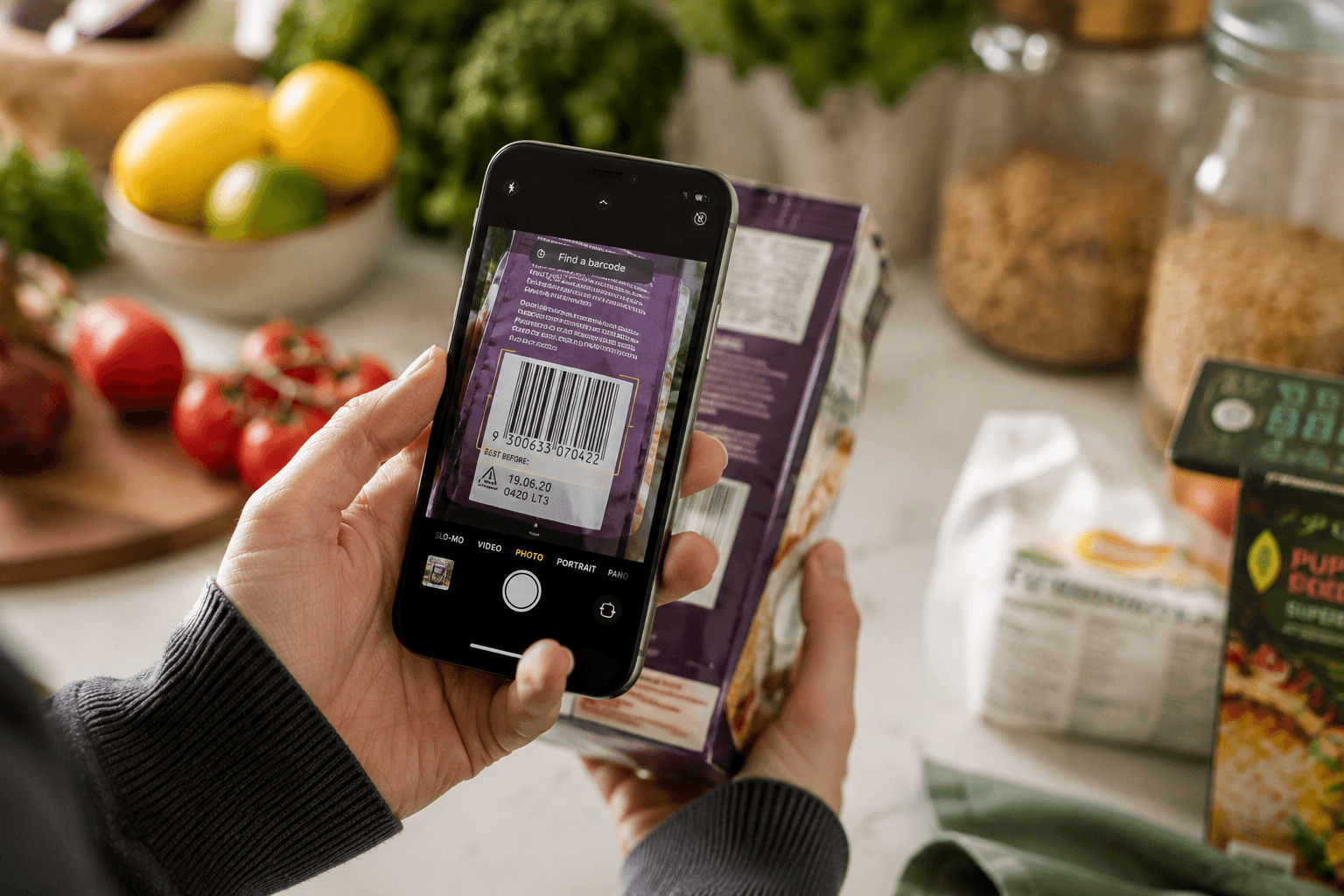
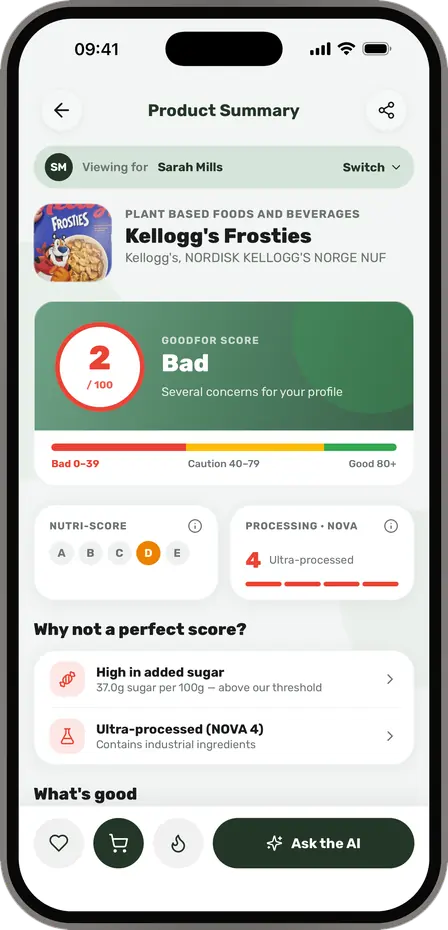
GoodFor is a food and drink scanning app built for UK shoppers, used by thousands of users. Scan a barcode on dates or a date-based bar and you see the ingredients, the sugar per 100 g and the reasons behind a 0-100 score. Nutri-Score and the NOVA processing group sit alongside it.
NOVA groups food by how processed it is, from 1 (unprocessed) to 4 (ultra-processed). GoodFor flags the group on every scan.
Nutri-Score grades the overall nutritional quality of a food from A (best) to E, per 100 g. GoodFor shows it on every scan.
The score reflects nutrient levels per 100 g against official thresholds, the degree of processing and your profile’s goals, such as reduce sugar or manage diabetes. Every deduction is listed.
Frequently Asked Questions
🛒 At your next shop or snack, here’s how to get the best from dates
- Portion out 30 g of dates (about 1-2 Medjool or 3-4 smaller dates) and eat them with a meal, not as a graze.
- Check the ingredient list and nutrition panel for sugar and fibre before buying bars, pastes or coated date products.
- Weigh 30 g once and portion into tubs, so you do not overeat from the pack.


Make safer everyday choices