




Key Takeaways
- In the UK, a product labelled gluten-free must contain no more than 20 mg/kg (20 parts per million) gluten, according to the Food Standards Agency.
- Most whole, unprocessed foods are naturally gluten-free and suitable for families managing coeliac disease. These include fruit, vegetables, plain meat, fish, eggs, rice and potatoes.
- Always check food labels for wheat, barley, rye or oats (unless certified gluten-free), and rely on the gluten-free claim or Crossed Grain symbol for safety.
- Cross-contamination with gluten can occur in shared kitchens and restaurants, so use separate utensils, toasters or preparation areas for gluten-free foods.
- The available evidence does not support a gluten-free diet for people without coeliac disease, wheat allergy or another medically recognised gluten-related condition (NHS).
🥖 What gluten-free means on UK labels and what the threshold actually is
In the UK, a food labelled “gluten-free” must contain no more than 20 parts per million (ppm) of gluten as sold to the consumer. That is 20 mg of gluten per kg of food. The Food Standards Agency (FSA) sets out the rule, and Coeliac UK notes it has been mandatory since 2012. It applies to specialist products, processed foods and oats kept free of contamination.
The claim does not mean the food contains absolutely zero gluten. It means the gluten level sits at or below the legal limit. The 20 mg/kg figure is a limit on the product as sold, not a daily intake limit for a person.
A second wording exists in law: “very low gluten”, for foods above 20 mg/kg and up to 100 mg/kg. Coeliac UK says no UK foods are labelled this way at present, so you are unlikely to meet it on a shelf.
🥕 Which everyday foods are naturally free of gluten
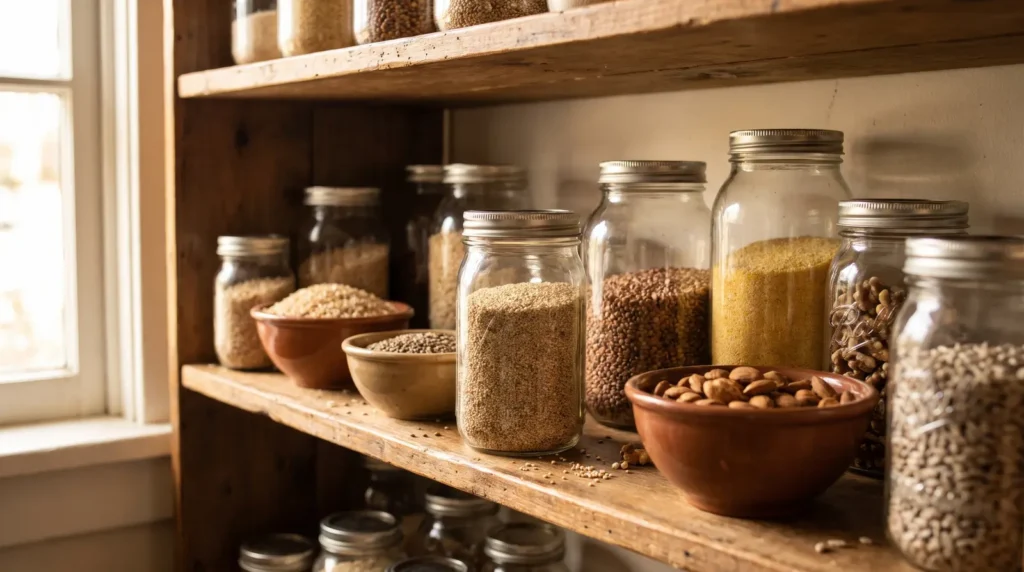
Most whole, unprocessed foods contain no gluten, so a plain chicken breast, a bag of rice or a carton of milk is safe without a label read. The NHS lists meat, fish, vegetables, fruit, potatoes, rice, rice noodles and most dairy products. It adds flours made from rice, corn, soya and potato, provided they have not been contaminated or coated with gluten-containing ingredients.
Coeliac UK adds eggs, pulses, nuts, seeds and maize to the list of naturally gluten-free foods. Quinoa, buckwheat, millet and sorghum are also gluten-free grains and grain-like foods.
- Fresh and frozen produce: safe. Check dried, coated or pre-prepared versions such as dried fruit with a coating or ready-made smoothies, where additives or flavourings may contain gluten.
- Plain dairy: milk, cheese and natural yoghurt are safe. Flavoured yoghurts, ice cream and processed cheese can contain gluten in thickeners or flavourings.
- Oats: oats themselves do not contain gluten, but contamination in growing or processing is common, so buy only oats labelled gluten-free.
- Flours: potato, corn, soya, nut, cassava and bean flours are gluten-free and work in baking and cooking.
🔄 Try instead: Pick up plain natural yoghurt instead of a flavoured pot. Plain yoghurt has no thickener or flavouring that could hide gluten, so there is nothing extra to decode. Look for a short ingredient list on the pack: milk, and live cultures.
🩺 Why a strict gluten-free diet matters for coeliac disease and sensitivity
In coeliac disease, eating gluten triggers an immune response that damages the small intestine. Gluten is a protein in wheat, barley and rye. The NHS states that lifelong exclusion of gluten is the treatment, so “a little won’t hurt” is not a safe rule for a diagnosed child or adult.
The effect on the gut and long-term health
Each exposure to gluten damages the lining of the small intestine, which is where nutrients are absorbed. The NHS describes the result as malabsorption, with symptoms such as diarrhoea, anaemia and fatigue. It also notes that symptoms can return and that continued exposure can cause long-term damage.
Quality of life for children, families and adults
A 2026 review of 13 studies found that children and adolescents with coeliac disease generally report lower quality of life, especially in emotional, social and school settings. Following the diet improves symptoms. The same review links it to social restrictions, nutritional imbalances and a financial burden for families.
For a parent, the practical lesson is that the diet protects health but can isolate a child at parties, trips and school lunches. Planning for those moments matters as much as the shopping list.
What the evidence says about gluten-free for people without coeliac disease or wheat allergy
The NHS says there is no credible evidence supporting gluten-free diets for people without coeliac disease, wheat allergy or another diagnosed gluten-related disorder. If bloating or tiredness is the worry, see a GP before any diet change.
🛒 Gluten-free foods in UK supermarkets: real-product comparison for bread, pasta and cereal
Across ten gluten-free breads and cereals on Tesco’s shelves in 2026, fibre runs from 3.2 g to 15 g per 100 g, sugars from under 0.5 g to 26.7 g, and salt from 0.38 g to 1.04 g. Gluten-free bread, pasta and cereals are stocked in the free-from aisles of all the major UK supermarkets, but their nutrition varies a lot.
The table compares each product per 100 g, with one example portion. Higher is better for fibre. Lower is better for sugars and salt.
| Product name | Fibre (g/100 g) | Sugars (g/100 g) | Salt (g/100 g) | Example portion | Label |
|---|---|---|---|---|---|
| Bread: BFree Gluten Free High Protein Wraps | 15 | 1.4 | 0.38 | 1 wrap (42 g): 6.3 g fibre, 0.6 g sugars | Low |
| Bread: BFree Gluten Free High Protein Pittas | 12 | 4.0 | 1.0 | 1 pitta (55 g): 6.9 g fibre, 2.2 g sugars | Low |
| Bread: Promise Gluten Free 12 Seeds and Grains Loaf | 11 | <0.5 | 0.85 | 2 slices (80 g): 8.8 g fibre, <0.5 g sugars | Low |
| Bread: Genius Gluten Free Wholesome Five Seeded Loaf | 10 | 2.4 | 0.84 | 1 slice (36 g): 4 g fibre, 0.9 g sugars | Low |
| Bread: Schär Gluten-Free Soft White Sliced Bread | 8.1 | 3.3 | 0.99 | 1 slice (25 g): 2.0 g fibre, 0.8 g sugars | Low |
| Bread: Warburtons Gluten Free White Loaf | 4.4 | 2.0 | 0.83 | 1 slice (27 g): 1.2 g fibre, 0.5 g sugars | Low |
| Bread: Warburtons Gluten Free White Thins | 3.2 | 7.5 | 0.75 | 1 thin (50 g): 1.6 g fibre, 3.8 g sugars | Medium |
| Cereal: Nutribrex Gluten Free Cereal | 7.7 | 2.8 | 0.61 | 2 biscuits (30 g): 2.3 g fibre, 0.8 g sugars | Low |
| Cereal: Nestlé Go Free Gluten Free Honeynut Cornflakes | 5.1 | 26.7 | 0.93 | 30 g: 1.5 g fibre, 8.0 g sugars | High |
| Cereal: Nature’s Path Organic Gluten Free Mesa Sunrise | 3.7 | 14 | 1.04 | 30 g: 1.1 g fibre, 4.2 g sugars | Medium |
What this shows: The BFree High Protein Wraps have the most fibre and the least salt. Promise has the lowest sugars of the loaves, and Nutribrex is the lowest-sugar cereal. Nestlé Go Free Honeynut Cornflakes have nearly ten times the sugars of Nutribrex per 100 g. For your family, compare fibre and sugars per 100 g on the pack rather than trusting the gluten-free label to mean healthy.
Pasta has no row because there are no like-for-like per-100 g figures to compare. Judge it the same way as the breads, by fibre and salt per 100 g on the pack.
Where the products differ most
Nature’s Path Mesa Sunrise carries 14 g sugars and the most salt at 1.04 g. The BFree Pittas (1.0 g) and Schär (0.99 g) are close behind on salt. Warburtons White Thins are the highest-sugar bread at 7.5 g per 100 g.
🥗 Nutrition example: Two slices of Genius Five Seeded Loaf weigh 72 g. At 10 g fibre per 100 g that is about 7.2 g of fibre, with 1.8 g of sugars. Two slices of Warburtons Gluten Free White Loaf (54 g at 4.4 g per 100 g) give about 2.4 g of fibre. The seeded loaf gives roughly three times the fibre for the same two slices.
🔬 What the research shows about gluten-free diets and health outcomes
A 2023 review of eight intervention studies found that education and support improved gluten-free diet knowledge, adherence and quality of life in people with coeliac disease, with benefits still visible at three months. The same review reports that strict adherence ranges from 42% to 80%, depending on how it is defined and measured. Lifelong strict adherence is the only proven treatment, so the useful evidence is about making it work in daily life.
Strict gluten avoidance for coeliac disease: who, when and what it changes
The diet is for people with confirmed coeliac disease. Coeliac UK healthcare guidance says diagnostic testing should be completed before it starts, because going gluten-free first can make test results unreliable. Once the diagnosis is made, removing gluten helps control symptoms and prevent complications.
Nutrition, wholegrains and balanced eating without gluten
Gluten-free diets need planning for fibre. Coeliac UK points to brown rice, pulses, nuts, seeds, fruit and vegetables as the main sources, with five portions of fruit and vegetables a day as the target. When you buy gluten-free bread or cereal, compare fibre per 100 g using the table above.
Where evidence is thin or experts disagree
No verified benefit has been shown for gluten-free diets outside a medical indication. Reliable evidence comparing the nutritional quality of gluten-free products with ordinary equivalents is also lacking. Check the nutrition label and choose higher-fibre options where you can.
One point is settled but affects only some families. A minority of people with coeliac disease react to avenin, a protein naturally present in oats, even when the oats are certified gluten-free. If symptoms appear or persist after oats are introduced, raise it with a dietitian rather than dropping or adding foods yourself.
🏷️ Gluten-free, wheat-free, and other label claims decoded on UK packs
Only “gluten-free” and the Crossed Grain symbol carry a tested limit on a UK pack. Every other claim tells you nothing about gluten. The cereals to watch for are wheat, barley, rye and oats (unless certified gluten-free).
Gluten-free claim and Crossed Grain symbol: what the law requires
The Crossed Grain symbol is Coeliac UK’s certification mark, associated with audited manufacturing processes. It checks the factory process, not just the finished food. It does not guarantee low sugar, high fibre or suitability for another allergy.
The FSA confirms that a gluten-free claim can sit beside a “may contain wheat” statement. The claim describes measured gluten, while the precautionary line warns of possible unintended presence. “May contain” is voluntary wording for an unavoidable cross-contamination risk, and it does not quantify that risk.
Wheat-free and very-low-gluten: what these mean, and what they do not
A “wheat-free” product can still contain gluten from barley or rye, so it never replaces the gluten-free claim. “Very low gluten” does not mean a food suits someone who needs a gluten-free diet. Treat it as not safe unless the pack also carries the gluten-free claim.
“No added sugar”, “high fibre”, “wholegrain”, “natural”, “high protein” claims
Nutrition and ingredient claims do not confirm gluten-free status. A “high protein” or “wholegrain” food may be built on wheat flour, and a “natural” food may contain barley malt. Find the gluten-free claim first, then use the table above for sugar and salt.
🧭 How to choose a gluten-free food or ingredient for your family step by step
Look for “gluten-free” on the front of the pack first, but never rely on a single check, because every ingredient and allergen statement matters.
- Spot the “gluten-free” wording or Crossed Grain mark on the front of the pack.
- Read the ingredient list for wheat, barley, rye and oats, treating oats as unsafe unless labelled gluten-free.
- Check the allergen summary, where gluten-containing cereals must be emphasised.
- Look for “may contain” or “made on a line with wheat/gluten” wording.
- Compare the pack with your last purchase, because recipes and manufacturing processes change.
- If you are still unsure, contact the manufacturer directly.
For naturally gluten-free foods such as fruit, plain meat or rice, check only the processed, flavoured, coated or breaded versions.
✅ Quick check:
- Gluten-free wording or Crossed Grain mark found on the front
- No wheat, barley, rye or uncertified oats in the emphasised ingredients
- “May contain” line read and understood
- Malt flavouring, modified starch, sauce powders or stock checked
- Same recipe as last time
👨👩👧👦 Gluten-free living for specific people and household situations in the UK
Children diagnosed with coeliac disease or wheat allergy need lifelong strict gluten exclusion. The NHS advises keeping the diet healthy and balanced and getting dietetic support where needed, which is worth asking for at diagnosis.
Managing a gluten-free diet for children and teens
Gluten-free school meals and snacks need extra planning and good label-checking habits. Children can feel “different”, which is the pattern behind the lower quality-of-life scores above, so inclusive solutions help as much as safe ones.
Tell the school about the diagnosis and ask how lunches are prepared and served. Think about shared toasters, buffet tables and birthday cakes, where crumbs and surprise treats can cause slips. A teen with a safe snack in the bag and a plan for the party is less likely to go without or take a risk.
Allergies and intolerances: gluten, wheat, dairy and other cross-considerations
Gluten-free does not guarantee a product is free from other allergens. Coeliac disease is an immune reaction to gluten, which is different from a wheat allergy, and a milk or egg allergy needs its own management.
Gluten-free foods can contain milk, egg or soya, and the allergen emphasis in the ingredients list shows them. One cereal in the table above, Nestlé Go Free Honeynut Cornflakes, lists peanuts as its third ingredient. A gluten-free pack is not automatically safe for a child with a nut allergy.
Eating out and avoiding cross-contamination at home
Gluten can transfer from one food to another through shared fryers, utensils, tins and surfaces. Tell the server about coeliac disease or wheat allergy so the kitchen can take care. Ask these questions:
- Does the fish-and-chip shop use a separate fryer for chips, or can they cook them in a clean pan?
- Does the restaurant use separate utensils, chopping boards and toaster bags for gluten-free orders?
- Is the gluten-free pizza cooked in the same oven as ordinary pizza, and if so, on a separate tray or baking paper?
- Are gluten-free dishes prepared in a dedicated area?
At home, use separate utensils, a clean toaster or toaster bags, and a separate butter dish or spread tub to keep crumbs out.
🔄 Better gluten-free options: specific swaps for bread, pasta, cereal and snacks
The swaps below work with the family’s usual meals, so nobody has to eat a different dinner.
- Bread and rolls: swap wheat loaves for Promise, Genius, BFree or Schär gluten-free loaves.
- Sandwiches: swap ordinary pitta or rolls for BFree gluten-free pittas or wraps.
- Pasta: swap regular pasta for gluten-free corn, rice or lentil pasta from the Tesco, Sainsbury’s or Asda free-from ranges.
- Cereal: swap wheat-based cereals for Nutribrex, Nature’s Path or certified gluten-free porridge oats.
- Family dinner: swap ordinary spaghetti for gluten-free spaghetti and keep the same sauce. Cooking time is usually similar, but check the pack.
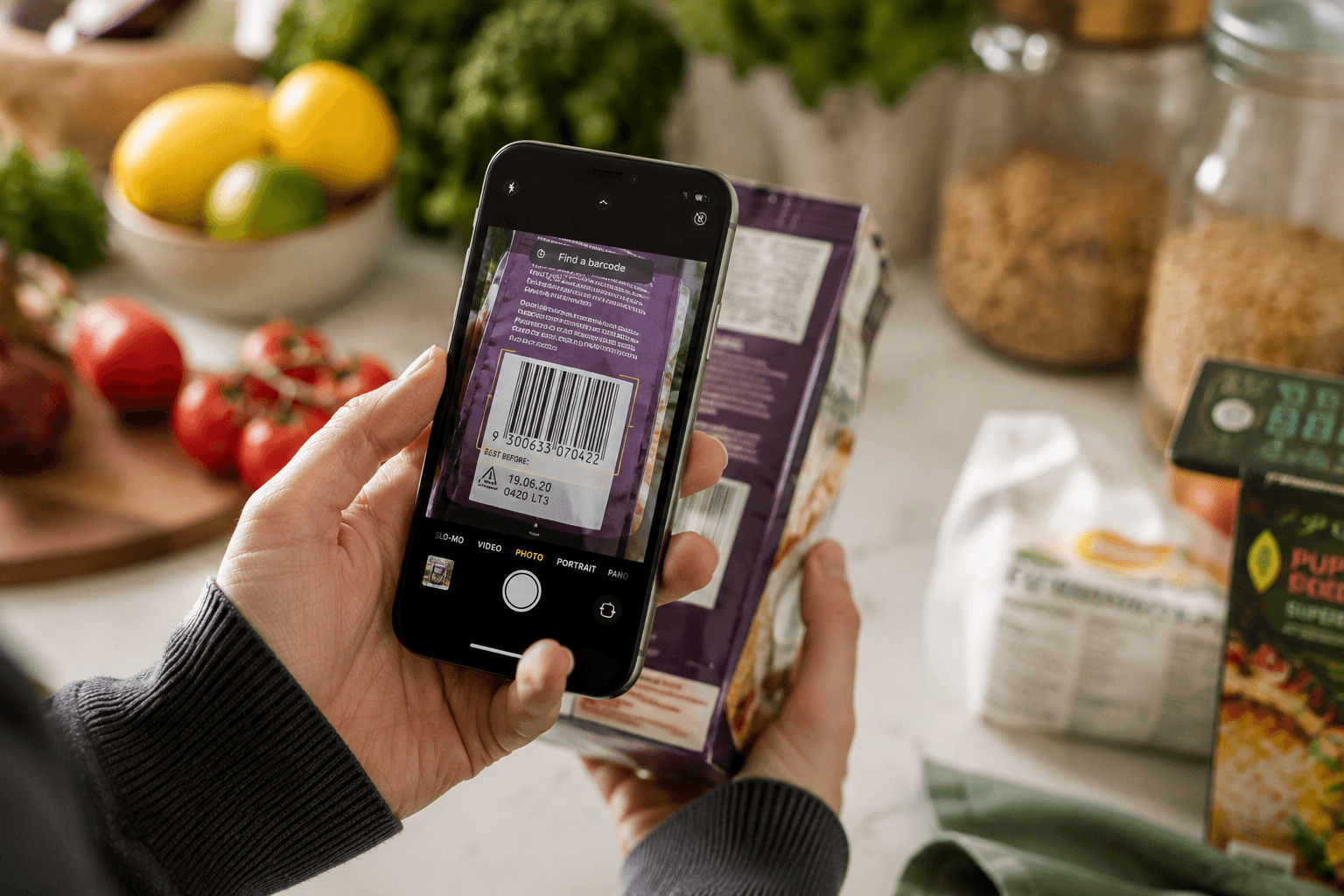
🔄 Try instead: Pick up Nutribrex Gluten Free Cereal instead of Nestlé Go Free Honeynut Cornflakes. A 30 g bowl has 0.8 g sugars against 8.0 g, about a tenth. On the box, look for “gluten-free” and compare the “sugars” line per 100 g. Scan both in GoodFor and the sugar line shows before the box goes in the trolley.
🚩 Myths and mistakes that catch families out
The most dangerous mistakes come from plain-looking foods and familiar words. Each myth below is corrected with the source’s own position.
“Wheat-free” is always safe for coeliac disease
“Wheat-free” is not a gluten claim, because barley and rye also trigger coeliac disease. The NHS lists wheat, barley and rye as the grains to avoid, plus derivatives such as farina, semolina, durum, bulgur, couscous and spelt.
⚠️ Watch out: “Wheat-free” can still mean there is barley or rye in the food. Put the pack back unless it also says “gluten-free”. A child with coeliac disease can react to a food that is wheat-free but made with barley malt.
All oats are naturally gluten-free and safe
Oats do not contain gluten themselves, but they are often contaminated during growing or processing. Choose only oats labelled gluten-free, as the NHS advises, and bear in mind that ordinary porridge oats and muesli are not safe.
“May contain” can be ignored if the ingredients look fine
A “may contain wheat” line is not optional reassurance. The guidance says it flags a cross-contamination risk the manufacturer has identified and cannot avoid. Read it together with the ingredient list, never instead of it.
Gluten-free is always healthier than regular food
Gluten-free status says nothing about nutrition. The NHS says there is no credible evidence supporting gluten-free diets for people without a diagnosed condition. The table above shows the spread: some gluten-free breads and cereals are high in fibre and others low, and sugar and salt vary widely. Judge each one on its own numbers.
Glucose syrup and wheat-based maltodextrin always contain gluten
Coeliac UK label guidance says glucose syrup, wheat-based maltodextrin and distilled cereal spirits are safe for people with coeliac disease, because the gluten proteins are removed in processing.
📅 This week’s practical gluten-free plan for meals, snacks and shopping in a UK household
Build the week around naturally gluten-free foods such as meat, vegetables, fruit, rice, potatoes and dairy, then add certified free-from versions only for bread, cereal and pasta. Here is a Monday for a family:
- Breakfast: Nutribrex gluten-free cereal with milk
- Snack: sliced apple and rice cakes
- Lunch: BFree gluten-free wrap with chicken and salad
- Snack: plain yoghurt with berries
- Dinner: gluten-free pasta with tomato and lentil sauce, and a side salad
- Pudding: banana
The wrap (6.3 g) and two Nutribrex biscuits (2.3 g) already give about 8.6 g of fibre before the lentils and fruit. Swap brown rice and pulses into other evenings to keep that up. Keep a few safe snacks ready, such as carrot sticks, rice cakes, fruit and gluten-free crackers, so nobody reaches for the wrong biscuit.
💡 Top tip: Set aside one cupboard or shelf for gluten-free foods. It keeps crumbs away from them and means anyone helping with shopping or cooking can see what is safe at a glance.
📱 How GoodFor Scores products for gluten
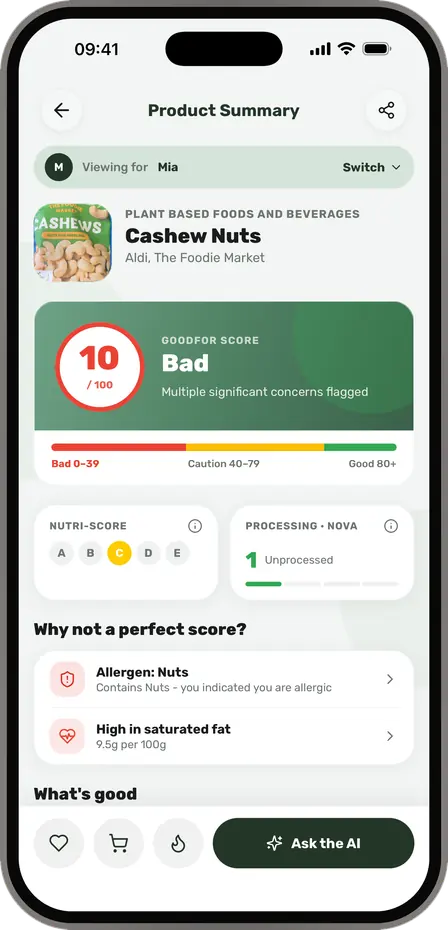
GoodFor gives every scanned food and drink one 0 to 100 score, and it shows the ingredients, additives, sugar, salt and saturated fat behind it. Each scan also shows Nutri-Score (A to E) and the NOVA processing group (1 to 4), so you see nutritional quality, processing and personal fit together.
NOVA groups food by how processed it is, from 1 (unprocessed) to 4 (ultra-processed). GoodFor flags the group on every scan.
Nutri-Score grades the overall nutritional quality of a food from A (best) to E, per 100 g. GoodFor shows it on every scan.
Gluten is one of the critical allergies you can set on a family profile, and every scan then carries a warning if the product does not fit. Up to five profiles can be switched in a tap, so a coeliac child and the rest of the family each get their own view. If a product scores badly or does not fit, GoodFor suggests a suitable replacement in the same store. GoodFor gives general nutrition information, not medical advice.
Frequently Asked Questions
At your next supermarket shop
- Choose gluten-free bread by fibre per 100 g, using the table above: Promise (11 g) and Genius (10 g) against Warburtons White Loaf (4.4 g).
- Build the trolley around naturally gluten-free foods first, and buy free-from versions only for bread, cereal and pasta.
- Re-read the label every time you buy, even for products you know, because recipes change.
Smart Basket in GoodFor scores the whole shop for every family profile at once, so one trolley can work for the coeliac child and everyone else.


Make safer everyday choices