




Key Takeaways
- The NHS says whole nuts, peanuts included, should not be given to children under 5 because they can cause choking.
- Peanuts are legumes, not tree nuts, but both must be listed and highlighted in bold as allergens on UK food labels.
- ‘May contain nuts’ is a voluntary warning about cross-contact, so a pack without it is not proven nut-free.
- Peanut allergy affects about 1 to 2% of UK children and tree nut allergy about 0.5 to 1%.
- From around 6 months, smooth nut butters or finely ground nuts can be introduced as part of weaning, with extra advice first if your baby has eczema or there is allergy in the family.
🥜 Are nuts and seeds good for children?
Nuts and seeds are nutritious for children when given as smooth butters, ground or finely chopped from 6 months, and as whole nuts only from age 5 with supervision. The NHS lists protein, unsaturated fats, fibre, vitamin E and magnesium among what they supply, and counts them among its healthier snack choices.
The form matters more than the food. Whole nuts, peanuts included, are hard and small enough to block a young airway, so the NHS says they should not be given to under-5s. Seeds such as sunflower and pumpkin follow the same rule.
The NHS advises introducing nut butters and ground nuts as part of weaning from around 6 months, and says delaying peanut introduction beyond 6 to 12 months may increase allergy risk. How to do it safely has its own section below.
Nuts and seeds are also energy-dense, meaning a small amount carries a lot of calories. A thin spread of nut butter on toast or a spoonful of ground seeds stirred into porridge is plenty. A whole bowl is not.
💡 Top tip: For children under five, swap whole nuts for smooth nut butter or ground nuts stirred into porridge or yogurt. The NHS recommends these forms because they give the nutrients without the choking risk.
What’s the difference between peanuts and tree nuts?
Peanuts are legumes (like beans and peas) growing underground, while tree nuts grow on trees and are a separate regulated allergen group. GOV.UK technical guidance treats them as distinct allergens, and both must be highlighted in the ingredients list when present.
The allergies are separate conditions too. Cross-reactivity, where a person allergic to one reacts to the other, is possible but not universal, so diagnosis should be led by a specialist rather than guessed from the name.
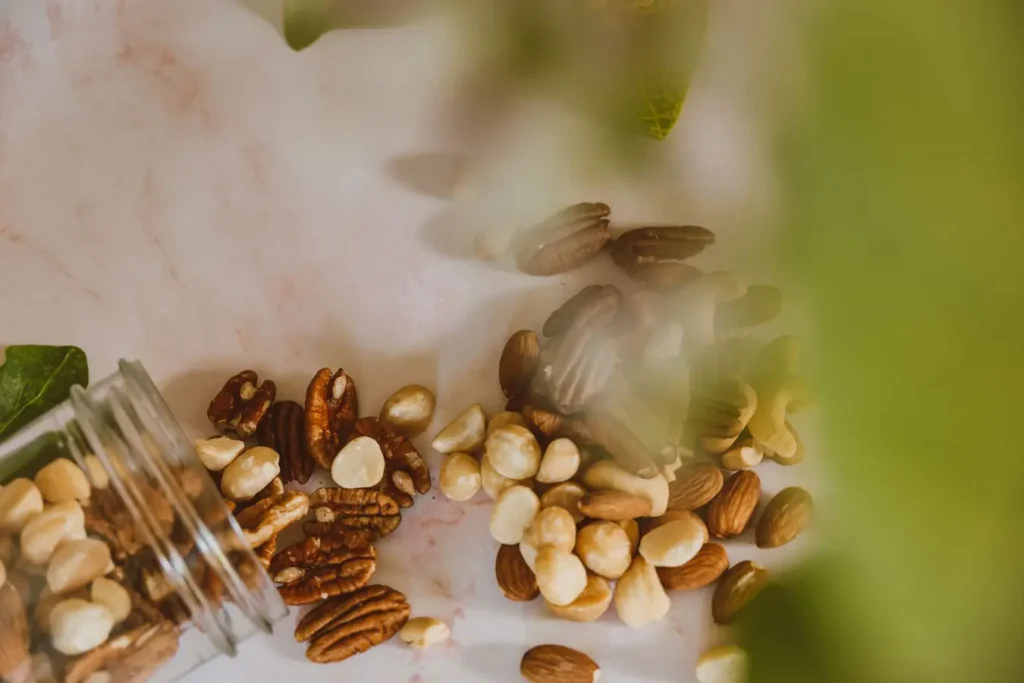
The regulated tree nuts, with the nutrient each is best known for:
- Almond: vitamin E
- Hazelnut: vitamin E
- Walnut: omega-3 ALA
- Cashew: magnesium
- Pecan: antioxidants
- Brazil nut: selenium
- Pistachio: protein
- Macadamia: monounsaturated fat
Pine nuts, chestnuts and coconut are not on that regulated list, though any of them can still cause an allergic reaction in some people. Chestnuts are lower in fat than other tree nuts.
⚠️ Watch out: A pack can show a tree nut in bold and still contain peanuts, or the other way round. Read the ingredients twice, once for “peanuts” and once for each tree nut your child needs to avoid.
🩺 What is a nut allergy and how common is it?
In the UK, about 1 to 2% of children have peanut allergy and 0.5 to 1% have tree nut allergy, with reactions ranging from mild rash to life-threatening anaphylaxis. A nut allergy is an IgE-mediated reaction, meaning the immune system treats a nut protein as a threat.
Symptoms run from itching, hives and mild swelling to serious breathing difficulties. Anaphylaxis, the most severe form, needs urgent adrenaline and a 999 call.
Diagnosis needs a clinical history plus a specific IgE blood test or a skin-prick test, arranged through a GP or allergist. Do not self-diagnose or cut nuts out without advice, because unnecessary restriction removes a useful food.
If your baby has eczema, a diagnosed food allergy, or there is a family history of food allergy, eczema, asthma or hay fever, the NHS advises speaking to a GP or health visitor before introducing allergenic foods.
Once an allergy is confirmed, management means strict avoidance, carrying an adrenaline auto-injector if one is prescribed, and good label habits. Those habits are covered in the label sections below.
⚠️ Watch out: If your child has any breathing difficulty or swelling after eating nuts, seek urgent medical attention. Anaphylaxis is a medical emergency, and mild first symptoms can progress quickly.
👶 How do I introduce nuts to babies and young children safely?
NHS guidance recommends introducing smooth nut butters or finely ground nuts from around 6 months, never whole nuts under 5. Follow these steps:
- Blend smooth peanut or almond butter, or ground nuts, into a food your baby already eats, such as porridge or mashed fruit.
- Offer a first taste of about ¼ teaspoon and watch closely for any reaction, such as rash, swelling, vomiting or difficulty breathing.
- Introduce one new allergenic food at a time, so a reaction can be traced to its cause.
- If there is no reaction, keep offering the food a few times a week as part of a varied diet.
- If your baby has eczema, or there is allergy in the family, ask your GP or health visitor before the first taste.
Seeds (sunflower, pumpkin, sesame, flax and chia) follow the same age and form rules as nuts: ground or finely chopped for under-5s. Whole nuts and large chunks wait until age 5, even if a toddler copes well with other foods.
🏷️ What does ‘may contain nuts’ mean on UK labels?
‘May contain nuts’ is a voluntary warning that a product may have cross-contact with nuts during manufacturing, not that nuts are an ingredient. GOV.UK guidance says the warning should follow a risk assessment showing that cross-contact is unavoidable.
Nuts or peanuts used as an ingredient are different: they must be highlighted in the ingredients list, for example in bold. That is the legal difference between “contains” and “may contain”.
The wording is allergen-specific. “May contain nuts” does not cover peanuts, which are a separate allergen, so a peanut risk should read “may contain peanuts”. A product also should not claim to be “free from” an allergen while carrying a “may contain” warning for it.
Because precautionary labelling is voluntary, a pack without it is not proven free of cross-contact. Mandatory declarations only cover allergens used on purpose. The NHS advises avoiding a product if it is unclear whether it contains the allergen.
✅ Quick check:
- Find the bold allergens in the ingredients list.
- Look for any “may contain” line, and check it names your child’s allergen.
- Treat “contains” as an ingredient and “may contain” as possible cross-contact.
- If unsure, ask the manufacturer, especially for severe allergies.
🗃️ How do I store nuts and seeds safely?
Store nuts and seeds in airtight containers in a cool, dry place; ground forms and opened packs spoil fastest and should be used promptly. The high fat in nuts and seeds goes rancid with light, heat and moisture, and sealing them from air extends freshness.
Rancid nuts taste bitter or stale. Throw them out rather than hiding the taste in porridge.
Most nut butters need refrigerating once opened, so follow the instructions on the pack. Nuts and seeds can also be frozen to extend shelf life, which helps with bulk buys.
If a child has a nut allergy, keep nut-containing products in a separate, clearly labelled container, so they are never mistaken for safe snacks.
🥗 Which nuts and seeds are best for my family?
All nuts and seeds are nutritious, so the best option depends on your family’s preferences, allergies and how you plan to use them. Each gives some mix of protein, unsaturated fat, fibre and key micronutrients.
Sesame is a regulated allergen alongside peanuts and tree nuts, which matters for school lunchboxes and tahini.
The table compares the key nutrient, best use and one note for each nut or seed. There is no single winner, so pick by your child’s needs.
| Nut or seed | Key nutrients | Good for | Notes |
|---|---|---|---|
| Almonds | Vitamin E, magnesium, fibre | Snacks, baking, almond butter | Mild flavour |
| Walnuts | Omega-3 ALA, antioxidants | Salads, porridge | Only nut with significant omega-3 |
| Cashews | Magnesium, zinc, iron | Stir-fries, spreads | Creamy, sweet |
| Brazil nuts | Selenium | Occasional snack | Very high in selenium, so keep it occasional |
| Peanuts | Protein, folate | Butters, satay | Legume, not a tree nut |
| Sunflower seeds | Vitamin E, selenium | Salads, school snacks | Nut-free |
| Pumpkin seeds | Magnesium, zinc, iron | Porridge, snacks | Also called pepitas |
| Chia seeds | Omega-3 ALA, calcium | Porridge, smoothies | Forms a gel in liquid |
| Flaxseeds | Omega-3 ALA, lignans | Baking, porridge | Must be ground |
| Sesame seeds | Calcium, iron, magnesium | Tahini, baking | Regulated allergen |
What this shows: Seeds such as sunflower and pumpkin cover many of the same nutrients as nuts and are nut-free, though sesame is a regulated allergen. Brazil nuts are the one to keep occasional. Pick one or two from the table that suit your child’s allergy status and rotate them.
For other protein sources to rotate alongside these, see our high protein foods list.
✔️ Label claims decoded for nuts and seeds in the UK
UK law requires peanuts, tree nuts and sesame to be highlighted in the ingredients when used as ingredients, while a “may contain” line is the manufacturer’s choice. A headline claim on the front, such as “low sugar” or “nut-free”, tells you little by itself. Check it against the ingredients and allergen information on the back.
💡 Top tip: Turn the pack over before trusting a front-of-pack claim. If a product says “free from” an allergen but also carries a “may contain” line for it, the two contradict each other, so ask the manufacturer.
⚖️ Better options for children: real product swaps
Swapping fruit-coated or sweetened mixes for plain nuts and seeds cuts sugar sharply without losing fibre. The biggest gap in the Tesco range is between plain seeds and anything with dried fruit added.
The table compares Tesco products on sugars and fibre per 100 g, plus sugars in the stated portion. Lower is better for sugars. Higher is better for fibre.
| Tesco product | Sugars per 100 g | Fibre per 100 g | Sugars per stated portion | Label |
|---|---|---|---|---|
| Pumpkin Seeds | 1.1 g | 8.5 g | 0.3 g (25 g) | Low |
| Wholefoods 4 Seed Mix | 1.5 g | 8.3 g | 0.4 g (25 g) | Low |
| Brazil Nut Snack Pack | 2.4 g | 3.3 g | 0.7 g (30 g) | Low |
| Lizi’s Low Sugar Granola Nuts and Seeds | 3.3 g | 8.0 g | 1.7 g (50 g) | Low |
| Mixed Nuts | 4.1 g | 6.8 g | 1.0 g (25 g) | Low |
| Roasted Nut Snack Pack | 4.5 g | 7.8 g | 2.5 g (55 g pack) | Low |
| Nuts & Seeds Muesli | 13.1 g | 9.5 g | 6.6 g (50 g) | Medium |
| Fruits & Seeds Mix | 28.0 g | 7.2 g | 7.0 g (25 g) | High |
| Fruit & Nut Snack Pot | 40.3 g | 5.8 g | 22.2 g (55 g pot) | High |
| Fruits, Nuts & Seeds Mix | 47.7 g | 5.7 g | 11.9 g (25 g) | High |
What this shows: Plain pumpkin seeds have about a fortieth of the sugar of the Fruits, Nuts & Seeds Mix, and more fibre. One Fruit & Nut Snack Pot holds 22.2 g of sugars. Choose plain seeds or nuts for snacks and keep fruit mixes for occasional use.
Lizi’s “low sugar” name fits its 3.3 g, though it still contains black treacle and agave syrup. The muesli leads with oats and wheat flakes, so “nuts and seeds” in the name is not the main ingredient. Seeds without nuts suit allergy-aware lunchboxes, and each pack above carries a choking warning for young children.
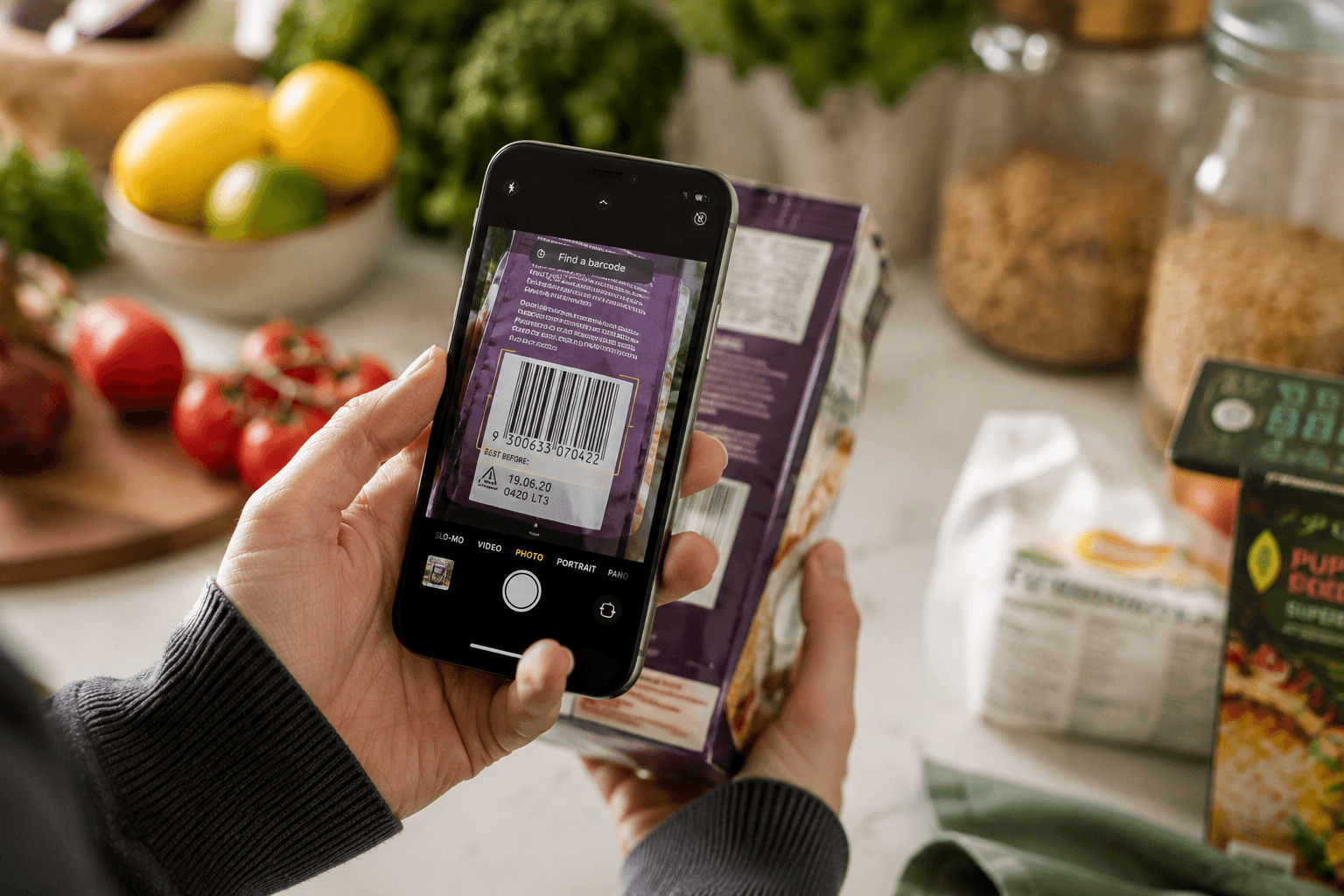
🔄 Try instead: Pick up Tesco Pumpkin Seeds instead of Tesco Fruits, Nuts & Seeds Mix: 1.1 g sugars per 100 g against 47.7 g. On the pack, look for an ingredients list that says only “pumpkin seeds”, with no sultanas or cranberries. Scan both in GoodFor and the sugar line shows before the pack goes in the trolley.
🛑 Common mistakes and myths about nuts and seeds for children
The most common mistakes are relying only on front-of-pack claims, confusing peanuts and tree nuts, and assuming products without a precautionary warning are allergy safe.
- “The front says nut-free, so it is.” Read the full ingredients and allergen lines every time, as set out above.
- “Nuts means peanuts.” Each allergen is checked and diagnosed separately; use the two-pass reading described earlier.
- “No ‘may contain’ line means no risk.” GOV.UK says the warning is voluntary, so its absence proves nothing.
- “My toddler chews well, so whole nuts are fine.” The NHS says never give whole nuts to under-5s, whatever other foods they manage.
- “Vegan means nut-free.” GOV.UK consumer advice says vegan products can contain or carry cross-contact warnings for peanuts, tree nuts or sesame.
- “A nut-free school is the safe answer.” GOV.UK school guidance favours allergy-aware policies and emergency planning over blanket bans.
📆 A practical plan for nuts and seeds this week
Plan age-appropriate nut and seed foods through the week using smooth butters, ground options and nut-free seed snacks, always reading the label. For under-5s, every item below means ground or butter forms; whole nuts wait until five.
- Monday: porridge with ground flaxseed.
- Tuesday: sunflower seeds, ground into yogurt for under-5s (nut-free).
- Wednesday: a thin smooth peanut butter sandwich.
- Thursday: ground pumpkin seeds over soup or pasta (nut-free).
- Friday: ground almonds stirred into pancake batter.
- Weekend: finely chopped walnuts on porridge, for children old enough.
The Tuesday and Thursday seed ideas also work as nut-free school or nursery snacks. For more lunchbox ideas, see our healthy snacks for kids. With up to five family profiles in GoodFor, each child’s allergies can be set once so every scan checks the product against them.
How GoodFor Scores nuts and seeds for children
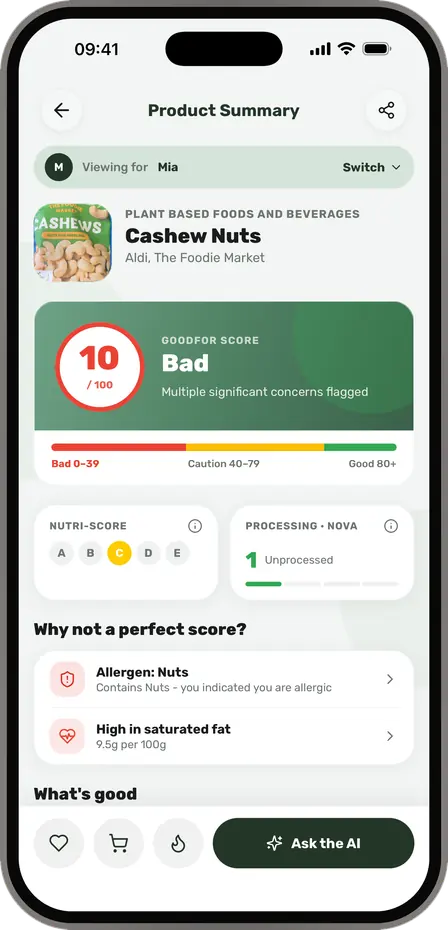
GoodFor is a UK food and drink scanning app, used by thousands of users, that turns a barcode scan into one clear 0 to 100 score in a second. Each scan shows the ingredients, additives, sugar, salt and saturated fat, with the reasons behind the number. It also shows Nutri-Score (A to E) and the NOVA processing group (1 to 4), giving three views of one product.
NOVA groups food by how processed it is, from 1 (unprocessed) to 4 (ultra-processed). GoodFor flags the group on every scan.
Nutri-Score grades the overall nutritional quality of a food from A (best) to E, per 100 g. GoodFor shows it on every scan.
For allergy-aware families, you can set critical allergies, including nuts, in each profile, and GoodFor warns on every scan. Scores are personalised to the profile, and any deduction is listed so you can see why. GoodFor gives general nutrition information, not medical advice, and does not replace reading the pack.
Frequently Asked Questions
🛒 At your next shop and meal plan for children
- Pick smooth nut butter or ground nuts for under-5s and keep whole nuts for supervised children over five.
- Turn every pack over to read the bold allergens in the ingredients list and any “may contain” warning for nuts or peanuts.
- Choose plain, unsalted nuts and seeds instead of honey-roast or fruit-coated options to keep sugars and salt low.


Make safer everyday choices