




Key Takeaways
- One Medjool date contains around 16 g of natural sugar and 66 kcal, so portion size matters for adults and children.
- The NHS counts 30 g of dried fruit as one 5 a day portion, roughly one large Medjool date, and dried fruit counts towards 5 a day only once a day.
- Whole plain dates are naturally gluten-free and vegan and a source of fibre and potassium, but snack bars need their ingredients and allergen lines read.
- The sugar in whole dates is not free sugar, but date paste, date syrup and bars with added sweeteners count as free sugar.
- Dates are best eaten with a meal rather than between meals, because dried fruit sticks to teeth.
🍬 Are dates healthy? Natural sugar, fibre and portion size explained
Dates are healthy in small portions because they offer fibre and potassium, but a Medjool date has around 16 g of natural sugar, so portion size is the key. One date alongside a meal suits most adults and children. A handful eaten between meals does not.
Dried dates count towards your 5 a day, but only once a day. Plain dates are gluten-free and vegan and contain none of the major allergens. The risk lies in what a manufacturer adds, or in cross-contamination on shared equipment, so bars and pastes need their label read first.
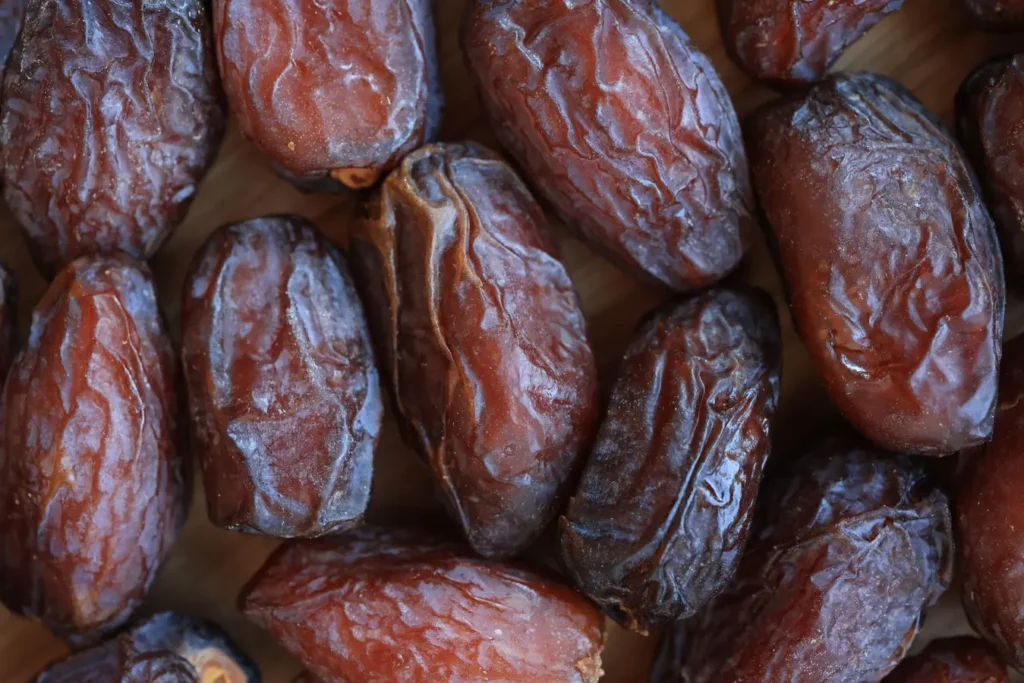
What dates are: dried fruit from the date palm
Dates are the sweet dried fruit of the date palm, sold whole, chopped, or as paste, syrup or in bars. UK shelves stock them plain (pitted or whole) and in processed forms such as snack bars, energy balls, pastes and syrups, where other ingredients can be added.
Natural sugar versus added sugar: what official guidance says
The NHS says sugars in whole dried fruit are intrinsic (held inside the fruit’s structure) and are not counted as free sugars. Once dates are processed into syrup, paste or juice, they do count. On a pack all the sugars sit in one line, so only the ingredients list tells you which kind you are buying.
Gluten-free, vegan and allergy status of dates
Plain dates are naturally gluten-free, vegan and typically free from the 14 major allergens. Tesco Soft Pitted Dates list “Date” as the ingredient. Whitworths Chopped Dates list “Dates (93%)”, then rice flour. A snack bar often carries a line such as “may contain nuts”, so read the ingredients and “may contain” lines on bars and mixes for gluten, milk or nuts.
🥗 Nutrition in dates: Medjool vs Deglet Noor and daily values
A Medjool date is larger and higher in sugar than a Deglet Noor date, but both are high in fibre and potassium by weight. Dates supply about 696 mg potassium per 100 g, plus iron, vitamin B6 and folate. They contain under 1 g fat per 100 g and no cholesterol.
This first table compares one date of each type. Lower is better for sugar and calories. Higher is better for fibre.
| Type | Weight per date (g) | Calories (kcal) | Sugar (g) | Fibre (g) |
|---|---|---|---|---|
| Medjool date | 24 | 66 | 16 | 1.7 |
| Deglet Noor date | 7 | 20 | 5 | 0.6 |
What this shows: One Medjool has about three times the sugar of one Deglet Noor, mostly because it is much bigger. Count dates by weight rather than by number, and check which variety is in the pack.
The Food Standards Agency sets the “high fibre” claim at 6 g per 100 g. The table below compares supermarket packs per 100 g, as printed on the Tesco, Whitworths and Jordan River nutrition panels. Lower is better for sugar and calories. Higher is better for fibre.
| Product (per 100 g) | Calories (kcal) | Sugar (g) | Fibre (g) |
|---|---|---|---|
| Tesco Soft Pitted Dates | 304 | 68.0 | 8.7 |
| Tesco Deglet Nour Dates | 304 | 68.0 | 8.6 |
| Tesco Finest Medjool Dates | 291 | 63.0 | 7.3 |
| Tesco Finest Zamli Dates | 300 | 62.4 | 6.0 |
| Whitworths Chopped Dates | 317 | 63.0 | 10.0 |
| Jordan River Dates | 326 | 64.8 | 5.1 |
| Tesco Finest Medjool Date Tray | 326 | 64.9 | 7.5 |
| Tesco Medjool Dates 3 Pack | 280 | 54.5 | 7.0 |
What this shows: Tesco Medjool Dates 3 Pack has the least sugar, about a fifth less than Tesco Soft Pitted Dates (54.5 g against 68.0 g). Whitworths Chopped Dates has the most fibre. Every pack except Jordan River Dates clears the 6 g “high fibre” line. If sugar matters most to you, compare the sugar column on the pack in your hand.
The fibre case rests on the per-100 g column. One Medjool gives only 1.7 g, so three Medjool dates deliver about 5 g fibre and about 48 g sugar.
🍭 How much sugar is in dates? Sugar content per date and per 100 g
The sugar in dates is natural fruit sugar (mainly fructose and glucose), at around 16 g per Medjool and 5 g per Deglet Noor. Per 100 g, supermarket dates carry 54.5 to 68 g, far above the 22.5 g that UK traffic-light guidance treats as high. The “of which sugars” line on a pack means every sugar in the product, fruit sugars included. A pack of plain dates and a bar with syrup added can therefore show similar numbers, and only the ingredients list separates them.
Sugar types in dates: intrinsic and free sugars
Intrinsic sugars are part of the intact fruit and don’t count as “free sugars”. Once dates are processed into paste or syrup, that structure breaks down. The released sugar counts as free sugar, for adults and children alike.
Why processed date syrup and paste count as added sugar
Date syrup, paste or juice in recipes or snack bars is treated as free sugar and counted in daily limits. The UK free-sugar limits per day are:
A bar sweetened with date paste can use a big share of a young child’s allowance in one go.
💡 Top tip: A high “of which sugars” number does not tell you whether the sugar is natural or added. Turn the pack over. If the ingredients say only “dates”, the sugar is the fruit’s own. If you see date paste, date syrup, honey or glucose syrup, count that sugar as added.
👶 Dates for kids: portion advice and label checks for parents
Half a date is a sensible limit for a toddler, and one or two dates for older children, counted as part of their fruit for the day rather than on top. Dates can be offered from around 6 months as part of weaning, if soft and mashed. Serve them with a meal, for the dental reasons covered further down.
Dates give a source of fibre and some iron, but they are not a low-sugar snack. Bars and fruit snacks aimed at children may contain added syrup, honey or sweeteners, so check the ingredients and the “of which sugars” line each time.
Safe ways to serve dates for babies and toddlers
Mash dates for babies and cut them into small pieces for toddlers, because whole dried fruit is a choking risk. Pitted dates still need cutting up. Softer textures are safer.
Fibre, iron and nutrients for children
Children get a source of fibre and some iron from dates, alongside a lot of natural sugar. The fibre figures in the table above are per 100 g, so a toddler’s half Medjool provides under 1 g.
⚠️ Watch out: A bar that says “no added sugar” can still be high in sugar. The claim only means no sweeteners were added, not that the fruit’s own sugar is low, and concentrated date paste packs in a lot. Look for “contains naturally occurring sugars” and check the “of which sugars” figure per bar.
🧮 How many dates per day is a healthy portion?
A 30 g serving of dates is one 5 a day portion: about one large Medjool, or two Deglet Noor by the usual rule of thumb. At the 7 g per date in the table above, it takes about four small Deglet Noor to reach 30 g, so weigh a portion once on kitchen scales. Children’s portions are smaller, as set out below, and the portion goes with a meal.
💡 Top tip: Stone a Medjool date and fill it with a teaspoon of peanut butter or a small piece of cheese, then eat it at the end of lunch. The fat and protein slow how fast the sugar is released and make the snack more filling. Yoghurt or a few nuts work the same way.
Adult portions and 5 a day guidance
A sensible adult portion is 1 to 3 dates a day, depending on the rest of your diet and your overall sugar intake. Only one portion of dried fruit a day counts towards 5 a day, so a second helping adds sugar and calories without counting again.
Children’s portion recommendations
A child’s whole-day total is 1 to 2 dates, inside their fruit for the day and not extra. The BDA also keeps dried fruit to mealtimes.
Why eat dates with meals not as snacks
Dried fruit is sticky, so eating it with meals lowers the risk of tooth decay compared with snacking. UK guidance names dates specifically. A date after lunch suits teeth better than a pot of dates in the car.
🍇 Dates compared to other dried fruit: sugar, fibre and calories
Dates carry more sugar than raisins or dried apricots per 100 g but match apricots on fibre, while raisins have the least fibre. This table compares the three per 100 g. Lower is better for sugar and calories. Higher is better for fibre. Brand and preparation move the exact numbers.
| Fruit (per 100 g) | Sugar (g) | Fibre (g) | Calories (kcal) |
|---|---|---|---|
| Dates | 62 to 68 | 5 to 10 | 280 to 326 |
| Raisins | 64 | 2.0 | 299 |
| Dried apricots | 53 | 7.3 | 213 |
What this shows: Dried apricots have the least sugar and about a third fewer calories than dates, and still give similar fibre. Raisins have the least fibre. For a lower-sugar dried fruit in a lunchbox, choose plain apricots and check mixed packs for added sugar, yoghurt coatings or sweetened mixes.
Using dates as a sweetener in homemade snacks
Using dates as a sweetener in homemade snacks gives you all their sugar, just as if you ate them whole. Blended into balls or bars, date paste counts as free sugar under the NHS-style definition. A batch made with ten Medjool dates (240 g) holds about 160 g sugar, so 12 balls carry about 13 g each.
🔄 Try instead: Pick up a fresh apple or banana, or a bar that says “low sugar”, instead of a date energy ball. Fresh fruit has no added paste or syrup, so no free sugars. On a bar, “low sugar” legally means 5 g or less sugars per 100 g. Scan both in GoodFor and the sugar line shows before the pack goes in the trolley.
🔎 What to look for on date and snack bar labels
Check both the ingredients for added sugars or syrups and the “of which sugars” value per portion when buying dates or date bars. Pack serving sizes differ. A serving of “2 dates” on a Medjool pack is about 48 g, well over the 30 g portion above, so compare the stated serving with the weight you actually eat.
Ingredients: plain dates, date paste, syrup and hidden sugars
The first ingredients listed make up most of the product, because UK law lists ingredients by weight and added sugars must appear. Look for bars where “dates” comes first, and beware “date syrup” or “concentrate”. Tesco Finest Medjool Date Tray lists “Dates (83%)”, so about a sixth of the tray is something else.
How to check the nutrition panel for sugar per portion
“Of which sugars” on the label shows total sugar per 100 g and per portion, and date bars can reach 15 to 25 g per bar. Compare both the per 100 g figure and the per bar figure, because a small bar can look moderate per 100 g.
Allergen, gluten-free and vegan labelling
Date products are commonly vegan and gluten-free, but snack bars often contain nuts, sesame or milk. Anyone with an allergy should read the “may contain” line every time and not rely on a symbol alone.
✅ Quick check:
- Ingredients: just “dates”, with no date syrup, honey or glucose syrup
- “Of which sugars” per bar checked (date bars can reach 15 to 25 g)
- Serving size matches what you actually eat
- Allergy: no nuts, sesame, gluten or milk in the ingredients or “may contain” line
- Vegan or gluten-free symbol present if you need it
💚 How GoodFor Scores dates, snack bars and dried fruit
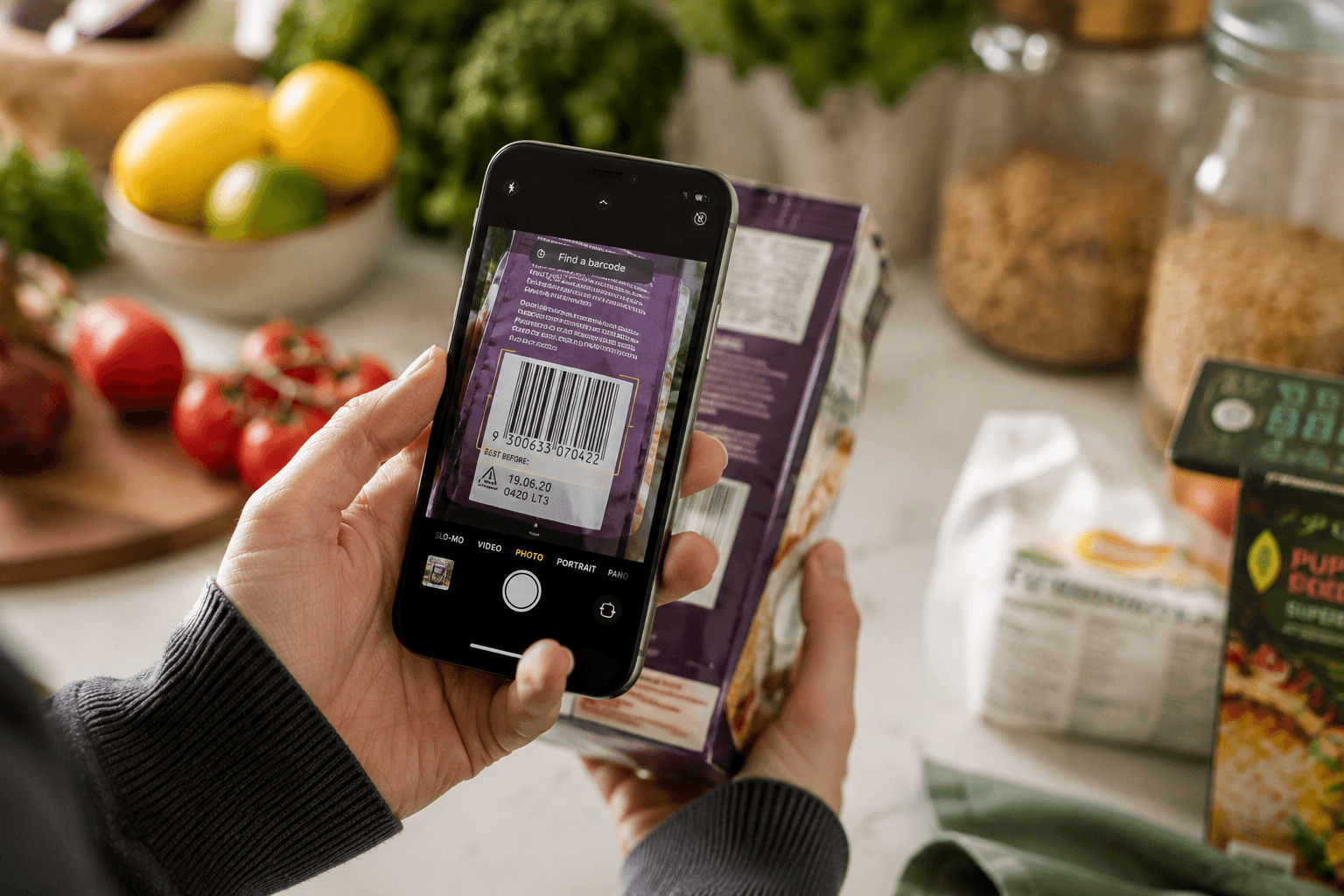
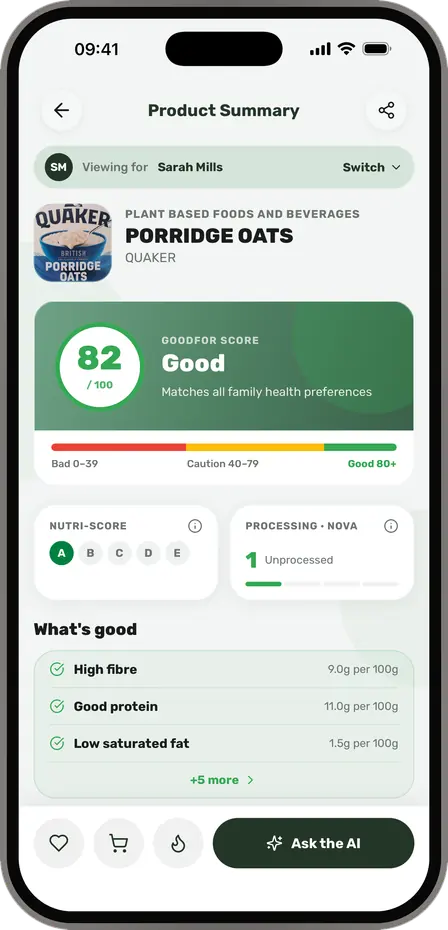
GoodFor rates dates and snack bars for sugar per portion, fibre content, real-world serving sizes, allergens and suitability for special diets. Scan a barcode and one 0 to 100 score appears in a second. Nutri-Score (A to E) and the NOVA processing group (1 to 4) show alongside it.
NOVA groups food by how processed it is, from 1 (unprocessed) to 4 (ultra-processed). GoodFor flags the group on every scan.
Nutri-Score grades the overall nutritional quality of a food from A (best) to E, per 100 g. GoodFor shows it on every scan.
The score combines nutrient levels per 100 g against official thresholds, the degree of processing, additive risk ratings and each profile’s own allergies, preferences and goals, with every deduction listed. Scores draw on NHS, WHO and EFSA data, carry no ads and are never influenced by brands. Family profiles can be set to goals such as reducing sugar.
Frequently Asked Questions
🛒 At your next shop or lunchbox pack, do these three things
- Pick whole plain dates with just “dates” in the ingredients, avoiding those with added syrup or concentrate.
- Weigh out a 30 g portion for adults, about one Medjool or a few small dates, and serve with a meal, not as a snack.
- For children, mash or chop dates, check the “may contain” line for allergens, and keep portions small, counting them as part of their fruit for the day.
If a date bar does not fit a family member’s profile, GoodFor suggests a suitable replacement from the same store.


Make safer everyday choices