





Key Takeaways
- Cayenne pepper is ground dried chilli from the Capsicum annuum plant, with a medium heat level of approximately 30,000 to 50,000 Scoville Heat Units.
- The NHS advises introducing herbs and spices in small amounts from around 6 months as part of weaning, and there is no specific age ban or child maximum.
- Most UK supermarkets sell cayenne pepper in small jars, and a typical labelled serving is 1.2 g, about half a teaspoon.
- Capsaicin is the compound that makes cayenne pepper hot, and large amounts can irritate the mouth and stomach.
- Ready meals, dips and sauces can list cayenne separately or hide it within “spices”, so read the ingredient list before giving them to a child.
🌶️ What cayenne pepper is and how it is used in food
Cayenne pepper is a red, fiery spice made from dried and ground cayenne chillies, mainly Capsicum annuum. It sells as a fine, bright red powder. Sainsbury’s, Tesco and Waitrose all stock it as a pure spice with “cayenne pepper” as the only ingredient, in jars of 42 g, 48 g and 40 g respectively.
Two look-alikes cause most of the mix-ups. Black pepper comes from a different plant, the peppercorn (Piper nigrum), and gives a different kind of bite. Paprika is also ground dried pepper, but from milder varieties, so it adds colour and sweetness without real heat.
BBC Food describes cayenne as suited to soups, curries, gravy and cheese-based dishes, usually in small amounts.
The definition: ground dried chilli from the Capsicum annuum plant
Cayenne pepper is made by drying and grinding chillies of the Capsicum annuum species. The name comes from the city of Cayenne in French Guiana, but the chillies are now grown in India, Mexico, the USA and China. The spice in a UK jar is one crop, ground, rather than a mixture.
How cayenne pepper is produced and what makes it hot
The heat comes from capsaicin, which survives drying and grinding and stays in the finished powder. The more capsaicin in the powder, the hotter the jar.
Why cayenne pepper is used in recipes and what it adds to food
Cayenne is mainly used to add heat and depth to savoury dishes, from soups to cheese sauces. Used sparingly, it gives background warmth. Used generously, the heat can overpower everything else on the plate.
🌡️ How hot cayenne is on the Scoville scale
Cayenne pepper rates at about 30,000 to 50,000 Scoville Heat Units (SHU), which is medium heat. The Scoville scale measures the heat of chillies by their capsaicin content.
The table compares how hot each pepper is in SHU. A higher number means hotter.
| Pepper | Scoville Heat Units (SHU) | Heat level |
|---|---|---|
| Bell pepper | 0 | No heat |
| Jalapeño | 2,500 to 8,000 | Mild to medium |
| Cayenne | 30,000 to 50,000 | Medium to hot |
| Habanero | 100,000 to 350,000 | Very hot |
| Carolina Reaper | 1.5 to 2.2 million | Extreme |
What this shows: Cayenne is roughly 4 to 20 times hotter than a jalapeño but well below a habanero. If you are used to mild chilli powder or paprika, it will feel hotter than you expect. Start with a pinch.
What cayenne tastes like
Cayenne gives a sharp, immediate burn that builds and lingers. Underneath is a slightly fruity, earthy, faintly smoky flavour, but the heat dominates. Used generously, it can mask other flavours in the dish.
🛒 Where cayenne pepper turns up in UK foods, sauces and snacks
Cayenne features in spice jars, seasoning mixes, hot sauces, dips, savoury snacks and some ready meals. The ingredient list position shows how much a product contains. Cayenne is first and 35% in Frank’s RedHot, but 19th of 24 in Tesco Thousand Island Dressing, where it is a trace seasoning.
Frank’s RedHot Spicy Mayo at Tesco lists cayenne twice, as fermented red cayenne peppers (5th of 20, 3%) and as cayenne pepper (11th of 20). Tesco All Purpose Seasoning lists it 9th of 11. The Tesco Southern Fried Chicken Wrap lists it first in the tomato salsa, after the seasoning.
The table compares energy and salt per 100 g for products where Tesco shows both figures. Lower is better for salt.
| Product (Tesco) | Ingredient list position | Form | kcal per 100 g | Salt g per 100 g | Label |
|---|---|---|---|---|---|
| Ground Cayenne Pepper | 1st of 1 | Pure spice | 376 | 0.08 | Low |
| Frank’s RedHot Original Cayenne Pepper Hot Sauce (earlier listing) | 1st of 5, 35% | Hot sauce | 25 | 8.4 | High |
| Frank’s RedHot Original Cayenne Pepper Hot Sauce 148 ml | 1st of 5, 35% | Hot sauce | 29 | 9.57 | High |
| Hot Paprika | 2nd of 2, 5% | Spice blend | 326 | 0.09 | Low |
| 4 Tex Mex Dips, Jalapeño Chilli Cheese | 21st in the combined list | Dip | 175 | 0.58 | Medium |
| Red Pepper & Spicy Cheese Dip | 12th of 16 | Dip | 91 | 0.25 | Low |
What this shows: The cayenne itself adds almost no salt, at 0.08 g per 100 g. The sauces carry 8.4 to 9.57 g, more than 100 times as much, even though they look light at 25 to 29 kcal. Check the salt on a hot sauce, not the spice.
🧬 What the body does with capsaicin
Capsaicin activates transient receptor potential vanilloid 1 (TRPV1), a heat and pain sensor in the mouth and gut. That is why a burn, tingle or warmth in the mouth, throat and stomach is the typical response rather than a sign of damage.
Most reactions to ordinary food are irritation of the mouth or gut, not true allergy. The practical question for a family is tolerance, not nutrition.
What is in cayenne nutritionally
Cayenne contains vitamin A (from beta-carotene) and vitamin C, with smaller amounts of vitamin E, B6, potassium and manganese. A pinch of about 1 g is far too little to meet daily needs, so the vitamins are a footnote and the effect on a family meal is mainly taste.
Does cayenne pepper affect blood sugar or gut health?
Research has not established a cayenne-specific benefit for gut health, blood sugar or dental health. A systematic review cited by Memorial Sloan Kettering Cancer Center found no effect of red pepper or capsaicin on blood pressure or heart rate. Trial results on cholesterol and weight are covered in the research section below.
Cayenne allergy, intolerance and typical reactions
True allergy to cayenne or capsaicin is extremely rare, and most reactions are irritation rather than an immune response. Burning, tingling and stomach upset are typical. A rash or swelling points to intolerance or possible allergy.
⚠️ Watch out: Stomach pain, diarrhoea or a rash after trying cayenne or any new spice is worth noting. If the symptoms are bad or keep coming back, speak to your GP.
🛡️ How much cayenne is too much for adults and children
No NHS, FSA or EFSA maximum portion exists for cayenne in food, for adults or children, but excessive amounts cause discomfort. Very high doses, such as competitive chilli-eating or undiluted hot sauce, can cause stomach pain and vomiting. Brief reactions at normal cooking amounts are not harmful.
In cooking, a pinch to a teaspoon in a dish is normal for adults. For children, start with less and watch how they cope, since no numeric limit exists.
✅ Quick check:
- The product is a spice jar, not a capsule or supplement.
- You used a pinch in the shared dish, not a spoonful.
- You add more only if your child is comfortable.
The regulator position: FSA, NHS and EFSA
UK and EFSA rules treat cayenne as an ordinary spice, not a regulated additive. Supermarket foods containing it simply list it as an ingredient, with no age warnings.
Supplements are a different product
Cayenne capsules sold to consumers warn under-18s to seek medical advice. That warning belongs to the concentrated capsule and does not apply to spice jars or cooking.
🔬 What the research shows about cayenne and health
Large analyses find capsaicin may very slightly affect cholesterol and energy intake, with little effect on health outcomes. The effects come from measured, often concentrated doses, not from seasoning a family meal. Topical pain creams work differently from eating cayenne.
Summary of key studies on weight and cholesterol
- Meal energy: a 2013 review of 10 trials with 191 participants found capsaicinoids before a meal cut energy eaten at that meal by about 74 kcal, with high variation between studies.
- Blood fats: a 2025 review of 12 randomised trials in overweight or obese people found triglycerides fell by 14.29 mg/dL and total cholesterol by 9.97 mg/dL. The stronger effects came at doses of at least 10 mg over 12 weeks or more.
Contested findings: what is not proven
A 2026 review of 13 trials with 821 adults rated the evidence low to very low certainty. Its apparent drops in total cholesterol and diastolic blood pressure were not robust. Glucose, insulin and HbA1c did not improve.
Some observational studies link eating spicy food with lower heart disease risk, but that is association, not cause. Spicy eaters may simply eat more vegetables and home-cooked meals. No approved EU or UK health claims exist for cayenne or capsaicin, so eat it for flavour, not as medicine.
👶 Who should take extra care with this spice
Children, pregnant or breastfeeding people and anyone with a sensitive gut should start cautiously with cayenne in food. True allergy is rare, but irritation such as stomach burning or diarrhoea can occur.
Children and babies: NHS weaning guidance
The NHS advises introducing herbs and spices from around 6 months, in age-appropriate amounts, with no restriction on cayenne. Mild spices such as cinnamon, cumin, coriander and mild curry powder suit babies, and a tiny pinch of cayenne works in a dish shared with the family.
Babies’ digestive systems are still developing, so very hot or heavily spiced food may cause discomfort or refusal to eat. Watch for loose stools, tummy ache or rejection, and judge by your child’s reaction, since no numeric child dose exists. Toddlers and older children can build up gradually, and some will never like heat.
💡 Top tip: Add one pinch to a family dish and let your child taste a small spoonful first. Keep plain, cool food on the table, such as rice, bread or yoghurt, in case it is too spicy.
Pregnancy and breastfeeding
The NHS and FSA set no restriction on cayenne in food during pregnancy, though tolerance to hot food varies. Spicy food may worsen heartburn and indigestion, which are common in pregnancy. If it bothers you, cut back and speak to your midwife or GP.
People with gut conditions or allergies
People with irritable bowel, reflux or a known intolerance to hot peppers may need to avoid cayenne. Stomach upset, diarrhoea and mouth or throat burning are noted in sensitive people. Cayenne is not a common allergen.
🏷️ How to spot cayenne on a UK food label and what to swap it for
On UK labels, cayenne appears as “cayenne”, “cayenne pepper”, “ground cayenne” or “cayenne chilli”. It sometimes hides inside blends as “chilli powder” or “spices”. In ready meals or snacks it can sit deep in the list.
Cayenne is not a bolded allergen, and the label does not print heat strength.
- Look for “cayenne”, “cayenne pepper” or “cayenne chilli” in the ingredients.
- If the label says only “spices”, “chilli powder” or “seasoning”, the list does not show whether cayenne is in it. Ask the manufacturer’s customer service.
- Check the serving size on the nutrition panel, since per 100 g figures overstate what a sprinkle gives.
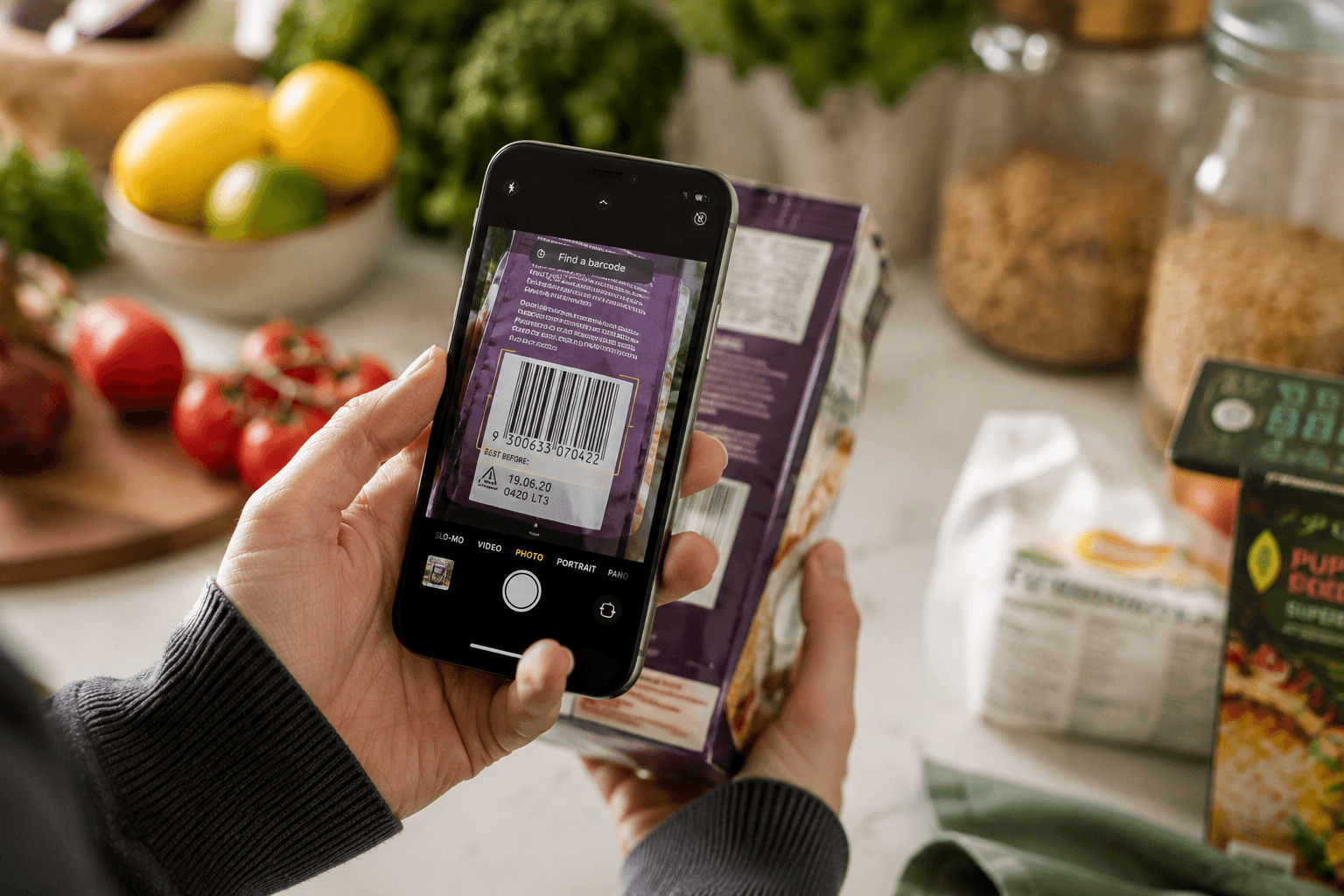
🔄 Try instead: Pick up a jar of mild paprika instead of cayenne. Paprika is made from milder peppers, so it gives colour and warmth without the burn. On the jar, look for “paprika” without the word “hot”. Scan both jars in GoodFor and it shows whether cayenne is in the ingredients before either goes in the trolley.
🤔 Myths about cayenne and chilli
Four beliefs cause most of the confusion about cayenne.
- “A capsule warning means no cayenne for children.” The under-18 warning covers the supplement, not culinary cayenne (see above).
- “Cayenne and chilli powder are the same.” Cayenne is pure dried chilli, while chilli powder is a blend that usually contains cayenne plus cumin, garlic powder and paprika, so it is milder.
- “Hotter food is healthier for children.” No research shows this, so comfort and taste matter more than heat.
- “A supermarket jar of cayenne is high risk.” The Sainsbury’s, Tesco and Waitrose jars carry no child warning, and Tesco’s declared serving is a small 1.2 g.
🥗 Nutrition example: One cayenne capsule holds 2 to 4.6 mg of capsaicinoids (the hot compounds). A Tesco jar serving of 1.2 g, half a teaspoon, gives just 5 kcal. The capsule is a concentrated supplement, while the jar is a seasoning.
📱 How GoodFor Scores spices like cayenne
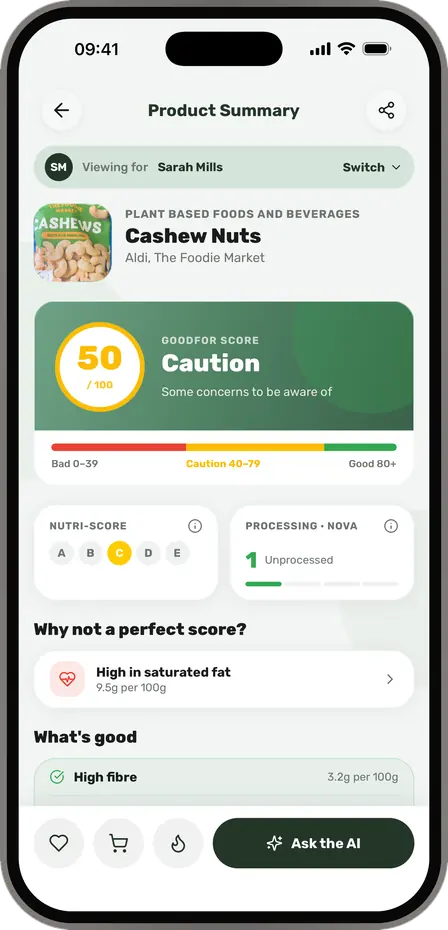
GoodFor is a UK food and drink scanning app used by thousands of users, and every scan shows the ingredients, additives, sugar, salt and saturated fat behind its 0-100 score. A spice like cayenne is explained in plain English, so a family can see what it is and why it is in the product. Salt is the line to watch in sauces, since the cayenne itself adds almost none.
Each profile can carry its own settings, including health concerns such as digestive issues and an analysis sensitivity of Standard, Cautious or Sensitive. Anything that does not fit is flagged and lowers the score, and every deduction is listed. If a product does not suit a profile, GoodFor suggests a replacement from the same store.
Frequently Asked Questions
Next time you cook with cayenne pepper
- Start with a pinch in the recipe, taste after stirring it in, and add more only if everyone is comfortable.
- For children or anyone unsure about heat, keep mild paprika, plain rice or yoghurt on the table as a back-up.
- Check every jar, sauce or blend for “cayenne pepper”, “cayenne”, “chilli powder” or “spices” in the ingredients before you use it.


Make safer everyday choices