




Key Takeaways
- Dates contain about 66 g sugars per 100 g, which is roughly 15 g in one 24 g Medjool date.
- Whole dates are not classed as free sugars by the NHS, but date syrup, paste and blended dates used as sweeteners count towards your free-sugar limit.
- Dates add fibre (about 7 g per 100 g, up to 10.3 g on some labels), potassium and magnesium that table sugar lacks, but they are still high in sugar.
- The NHS advises keeping dried fruit, including dates, to about 30 g (1 to 2 dates) a day as part of your 5 A Day.
- “Natural” or “no added sugar” claims on date-based products do not mean the product is low in sugar or free sugars.
🍬 Dates as sweetener: what the numbers and labels mean
Most UK supermarket dates and date syrups list 58 to 68 g sugars per 100 g, well above the 22.5 g per 100 g line the NHS and the traffic-light system use for “high” in sugar. Sainsbury’s Ready-to-Eat Dates show 58.1 g sugars per 100 g, and Tesco’s Groovy Food Organic Date Syrup lists 62 g, or 4.7 g in a 7.5 g teaspoon.
The label’s sugars line counts total sugars, so a “no added sugar” pack can still sit far above the high-sugar line. The British Dietetic Association (BDA) explains that this line includes naturally occurring sugars and does not say how much is free sugar. Use the sugars line to compare packs, and the ingredient list to see where the sugar comes from.
🌴 What dates are and what 100 g contains
Dates are the fruit of the date palm (Phoenix dactylifera), and most sold in the UK are semi-dried, so they stay soft, sticky and chewy rather than dry like raisins. Medjool dates are large, soft and caramel-like. Deglet Noor dates are smaller, firmer and less sweet.
Typical values per 100 g of dates:
Table sugar has 100 g sugars, about 400 kcal and no fibre per 100 g. One date gives about 1.6 g fibre (about 5% of the 30 g daily adult target), about 160 mg potassium and about 12 mg magnesium. That is a useful contribution, but beans, potatoes and vegetables give more fibre and potassium for fewer calories and less sugar.
🏥 Why sugar from dates matters for your family’s health
Dried dates pack sugar into a small, sticky portion, so portion and frequency decide the effect, not the word “natural”. Four risks matter most for families: tooth decay, extra energy, blood sugar and how full you feel afterwards.
Teeth and dental health: sticky sugars and tooth decay risk
Sticky sugars from dried dates and date syrup cling to teeth and feed plaque bacteria, which produce acids that attack enamel. The government’s Delivering Better Oral Health toolkit says free sugars should stay under 5% of energy and that how often you eat sugar matters as much as how much. Keep dates to mealtimes rather than grazing on them, and give children water afterwards.
Weight and energy intake: dried fruit and calories
Dates are energy dense: Sainsbury’s Ready-to-Eat Dates list 272 kcal per 100 g and Tesco’s date syrup 301 kcal. A 30 g handful of the dates is about 82 kcal, and a teaspoon of syrup about 23 kcal. The NHS notes that sugary foods add energy without matching nutrition, and date syrup is not a low-calorie alternative to other sweeteners.
Blood sugar and glycaemic index: sugar in dates versus table sugar
Dried dates and date syrup are both high in sugars, so the label’s carbohydrate and sugars lines are the numbers to use for blood sugar. The British Heart Foundation (BHF) lists date syrup and date sugar among the names for sugar, as concentrated sugars in the same group as honey and other syrups. No verified UK glycaemic index (GI, how fast a food raises blood glucose) figure exists for a defined date variety and portion, so “low GI” claims for dates have nothing official behind them.
Appetite and fullness: fibre in dates compared to sugar
The 3.1 g of fibre in a 30 g serving of Sainsbury’s dates is the clearest difference from table sugar, which has none. Fibre adds chew and bulk, which helps a small portion feel more filling than a sweet. It does not remove the energy, so the fibre helps you stop at one portion rather than making a second harmless.
🛒 UK date and date-syrup products compared for sugar, fibre and portion size
This table compares dried and filled date products from Tesco and Sainsbury’s on sugars and fibre per 100 g, then on the pack’s own portion. Lower is better for sugars. Higher is better for fibre.
| Product | Sugars per 100 g | Fibre per 100 g | Portion size | Sugars per portion | Fibre per portion | Retailer | Label |
|---|---|---|---|---|---|---|---|
| Sainsbury’s Ready-to-Eat Dates | 58.1 g | 10.3 g | 30 g | 17.4 g | 3.1 g | Sainsbury’s | High |
| Tesco Finest Zamli Dates | 62.4 g | 6.0 g | 30 g | 18.7 g | 1.8 g | Tesco | High |
| Tesco Finest Medjool Dates | 63.0 g | 7.3 g | 15 g | 9.4 g | 1.1 g | Tesco | High |
| Tesco Deglet Nour Dates | 68.0 g | 8.6 g | 30 g | 20.4 g | 2.6 g | Tesco | High |
| Jomara Filled Dates with Pistachio | 55 g | 5.6 g | 36 g (2 pieces) | 20 g | 2 g | Tesco | High |
| Jomara Date Maamoul | 26 g | 3.1 g | 36 g (3 pieces) | 9.4 g | 1.1 g | Tesco | High |
What this shows: Among plain dates, Sainsbury’s has the least sugar and the most fibre per 100 g, and Tesco Deglet Nour has the most sugar. Jomara Date Maamoul looks lowest at 26 g, but it is a baked biscuit containing wheat flour and vegetable oil, so it is not like-for-like with plain dates or syrup. Portions differ, so a 15 g Medjool serving carries about half the sugar of a 30 g serving of the others. Compare per 100 g first, then work out the portion you will actually eat.
📑 What studies and UK guidance show about using dates as a sweetener
NHS guidance counts sugars in date syrup, paste or purée as free sugars, but sugars in whole or chopped dates eaten as fruit are not counted. The rule exists because blending or pressing releases sugar from the fruit’s cell structure. UK guidance has no separate category for a “date sweetener”, so syrup and paste are treated like any other syrup.
None of the UK guidance retrieved describes date syrup or paste as a low-GI or healthier sweetener. Check the sugars line, not the marketing.
Whole dates versus date syrup: NHS and BDA guidance
The whole-versus-processed distinction decides what counts towards the daily free-sugar limits, which the NHS sets at 5% of energy. Whole dates are not sugar-free, though: their sugar still appears in the label’s total. The BDA’s label guide adds that the “of which sugars” line shows total sugars only, so you have to judge the free-sugar part from the ingredients.
Blood sugar effects and what we don’t know
No verified UK data show that date syrup or paste gives a smaller blood-sugar rise than ordinary sugar. All date-based sweeteners fall in the traffic-light high-sugar band, and the sugars line is the figure to trust.
Where experts disagree on “healthier” sweeteners
Some ranking pages call dates “healthier” because of their minerals and fibre, while the BHF cautions that concentrated date syrup is still a high-sugar product, not a health food. The disagreement is mostly about wording, not figures: everyone agrees whole dates carry fibre and syrup carries little.
🏷️ What label claims on date-based sweeteners do and don’t guarantee
“No added sugar”, “natural sweetness” and “high in fibre” all appear on UK date products, and none of them guarantees low sugar or a better product. A pack can carry all three and still list 58 to 68 g sugars per 100 g. The sugars line and ingredient list are the only parts you can compare across brands.
“No added sugar”
A date bar or syrup labelled “no added sugar” can still be high in sugars from the dates themselves. UK claims guidance says the product must contain no added mono- or disaccharides (simple sugars) and no ingredient used for its sweetening power. If natural sugars remain, the label should say “contains naturally occurring sugars”.
“Source of fibre”
Plain dates carry a lot of fibre: Sainsbury’s Ready-to-Eat Dates have 10.3 g per 100 g and Tesco Deglet Nour 8.6 g, and Tesco’s page describes the Deglet Nour as high in fibre. The claim describes fibre only and says nothing about sugar or energy.
“Wholegrain”
“Wholegrain” refers to cereal, and pure dates and syrups contain none. If you see it on a date snack, the cereal is coming from flour or oats, as with the 31% wheat flour in Jomara Date Maamoul.
“Light” or “reduced sugar”
“Light” and “reduced sugar” are comparisons with another product, so they say nothing about how much sugar is in the pack. Treat either claim on a date snack as a prompt to read the sugars line.
“Natural” or “natural sweetness”
“Natural” describes where an ingredient came from, not how much sugar, energy or benefit it brings. It sets no sugar figure and no health claim.
“High protein”
No plain date product is high in protein. In a “high protein” bar made with dates, the protein comes from added nuts or seeds, such as the pistachio strips in Jomara’s filled dates.
🕵️ Step-by-step: how to choose a date sweetener for baking and snacks
Start at the nutrition panel and find “carbohydrate, of which sugars” and fibre, then check whether dates are the first ingredient. These six steps take under a minute in the aisle.
-
Step 1Check sugars per 100 g against the 22.5 g high line: every plain date product is over it, so the question is how far.
-
Step 2Read the ingredients: plain dates, date paste or date syrup should be named first and, ideally, be the only ingredient.
-
Step 3Compare fibre per serving: the plain dates in the table carry 6 to 10.3 g per 100 g, and date syrup, which is pressed and strained, carries less.
-
Step 4Look for glucose syrup, rice syrup or other sugars further down the list, because they push total sugars up and count as free sugars.
-
Step 5Read the allergen and “may contain” statements, which matter most for filled dates and snack bars made for children.
-
Step 6Match the product to the job: paste or chopped dates for binding and chew, syrup for pouring over porridge.
💡 Top tip: Stir chopped dates into oats or plain yoghurt instead of drizzling syrup. Whole pieces add chew and bulk, so you use less, and the sweetness comes with fibre.
👨👩👧👦 Who should take particular care with date sweeteners
Date syrup, paste and blended dates all count towards the NHS free-sugar limits, which rise with age:
- Age 1: 10 g a day
- Ages 2 to 3: 14 g
- Ages 4 to 6: 19 g
- Ages 7 to 10: 24 g
- Age 11 and over, including adults: 30 g
Babies under 1 have no limit, but the NHS says not to add sugar to their food or drinks.
Children and family snacks
One 30 g serving of Sainsbury’s dates blended into a smoothie or paste would put 17.4 g sugars towards a 4 to 6-year-old’s 19 g limit. Eaten whole, the same dates are not counted as free sugars. Serve dates with a meal rather than as a snack and offer water afterwards. Always remove the stone and chop the flesh before serving to young children.
Type 2 diabetes or blood sugar concerns
Date syrup and paste sit far above the 22.5 g high-sugar line. Treat them as concentrated carbohydrate, choose the highest-fibre product and read the sugars line carefully. Your diabetes care team can set the portion that suits you.
Pregnancy and breastfeeding
No date-specific limit applies, so the general 30 g free-sugar maximum stands unless a clinician has given you different advice.
Allergy and intolerances
Plain dates are rarely a problem, but filled dates and snack bars can contain nuts, soya or other allergens. Jomara’s filled dates include pistachio, for example. Read the “may contain” line before serving to a child with an allergy.
🔄 Swaps: better date-based options for common snacks
Filled dates add glucose syrup on top of the fruit’s own sugar, while plain dates let you control what goes with them, such as a spoon of nut butter if there is no nut allergy.
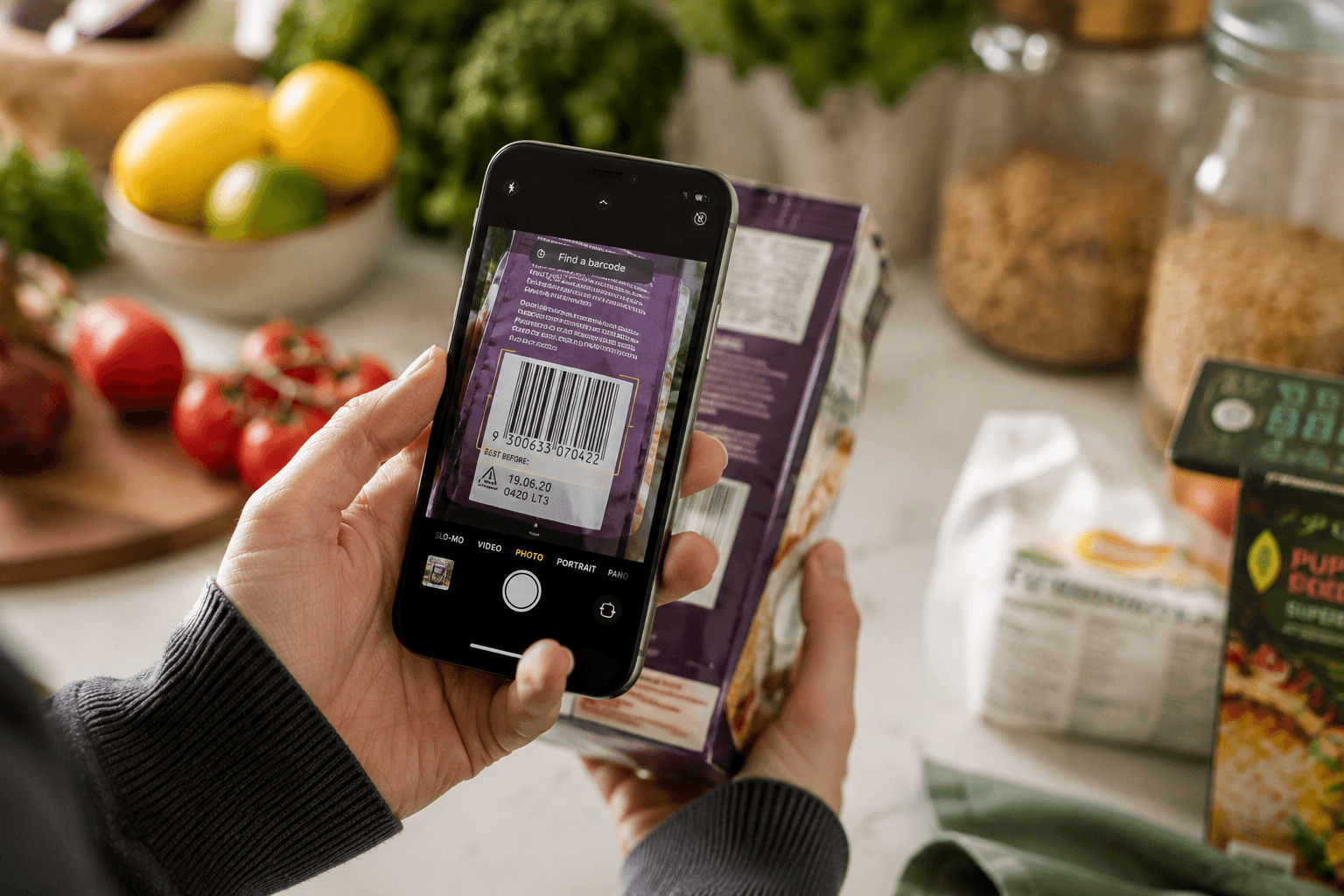
🔄 Try instead: Pick up plain Medjool dates instead of filled dates with pistachio. A 15 g portion gives 9.4 g sugars, against 20 g in a 36 g pair of filled dates, and there is no glucose syrup. On the pack, look for “dates” as the only ingredient. Scan both in GoodFor and the sugar and ingredient lines show before either goes in the trolley.
🚩 Common mistakes and myths about date-sweetened food
“Date-sweetened” does not mean low sugar: plain date products list 58 to 68 g sugars per 100 g, far above the 5 g per 100 g “low” line. These are the mistakes that cost families the most.
- Myth: date-sweetened means low sugar. The Groovy Food date syrup is the sweetener itself, and it lists 62 g sugars per 100 g.
- Mistake: all sugar in dates is harmless. Whole dates and syrups stick to teeth, and syrup, paste and blends count towards the daily free-sugar total.
- Myth: natural sugars are never free sugars. Processing releases the sugar from the fruit, which is why syrup, paste and purée are counted.
- Mistake: dates equal table sugar. Dates carry fibre and table sugar carries none, but portion size still decides the sugar you eat.
- Myth: every date product is equally healthy. Forest Feast Deglet Nour Dates and Al Munawwarah Tunisian Dates both list glucose syrup, and Jomara Date Maamoul adds refined flour and oil.
📅 How to build a practical week of date-based snacks and baking
Plan one 15 to 30 g portion of whole dates per person per day, eaten with a meal, and keep it within the free-sugar limits above. Pair them with oats, nuts or plain yoghurt, and skip syrup on the same day so the free-sugar count stays low.
🥗 Nutrition example: Monday, 30 g of Sainsbury’s dates chopped into oat balls gives 17.4 g sugars. Tuesday, 15 g of the same dates stirred into a 100 g plain Greek yoghurt pot gives 8.7 g sugars from the dates (15 g at 58.1 g per 100 g). Wednesday, no dried fruit: choose berries.
How GoodFor Scores dates and date-based products
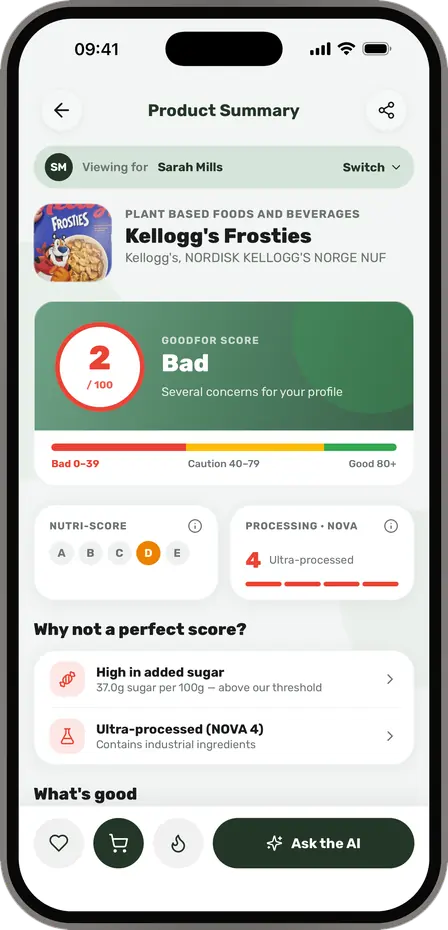
GoodFor scores dates and date-based products on a 0 to 100 scale, built from nutrient levels per 100 g, the degree of processing, additive risk and the profile’s own settings. Every scan shows the ingredients, sugar, salt and saturated fat, so syrup, paste and glucose syrup are visible in the list. It also shows Nutri-Score and the NOVA processing group, giving three views of one product. Each family profile personalises the result, so a date bar can score differently for a toddler than for an adult, with every deduction listed.
NOVA groups food by how processed it is, from 1 (unprocessed) to 4 (ultra-processed). GoodFor flags the group on every scan.
Nutri-Score grades the overall nutritional quality of a food from A (best) to E, per 100 g. GoodFor shows it on every scan.
Frequently Asked Questions
Before your next shop
- Check the sugars and fibre per 100 g on date and syrup packs, then read the per-portion figure for your family’s serving.
- Choose plain dates as the only ingredient, or date paste for baking, and avoid added glucose syrup or flour in filled products.
- Serve whole dates at mealtimes, paired with oats or plain yoghurt, and keep syrup and paste for recipes where you control the portion.
If your family has different limits, GoodFor lets you set up to five profiles, so each child’s sugar sits against the right age band.


Make safer everyday choices