





Key Takeaways
- Sodium benzoate (E211) is an authorised preservative in the UK and appears on ingredient lists as “sodium benzoate” or “E211”.
- UK law sets E211 limits by food category, for example 15 mg/kg in the final food when it arrives through colour preparations.
- European food safety experts judged the Southampton study’s evidence of an effect on some children’s behaviour limited, and it tested additive mixtures, not E211 alone.
- An ingredient list shows that sodium benzoate is present, not how much.
- Limiting E211-containing soft drinks and squashes is reasonable for children, because these products are often high in sugar and low in nutritional value.
🧪 What sodium benzoate (E211) is, how it is made and what it does in food
Sodium benzoate is the sodium salt of benzoic acid and is authorised in Great Britain as the preservative E211. The Food Standards Agency (FSA) lists it as “Authorised”, and its legal specification requires an assay (purity test) of at least 99%.
E211 works by inhibiting microorganisms, particularly in acidic foods. It is a preservative only, so its presence says nothing about the sugar or salt in the pack.
The chemical and E number explained
A pack that says “E211” and one that says “sodium benzoate” contain the same additive. The legal specification gives the formula C₇H₅O₂Na and a molecular weight of 144.11.
How sodium benzoate is produced for food use
The legal specification caps contaminants in food-grade sodium benzoate at 3 mg/kg arsenic, 2 mg/kg lead and 1 mg/kg mercury. Loss on drying (a measure of moisture) must be no more than 1.5%. The additive in your food has to meet these limits.
What sodium benzoate does as a preservative
Benzoic acid, the active acid form, inhibits microbial growth, particularly in acidic foods. A tangy, shelf-stable product such as a fizzy drink or a sauce is therefore a likely place to find E211 on the label.
🥤 Where E211 turns up in a weekly shop
E211 appears in energy drinks, instant noodles and pastes sold at major UK supermarkets such as Tesco. The table compares four Tesco products whose pages were checked, using figures per 100 g, or per 100 ml for the drinks, so the rows compare fairly. Lower is better for sugars and salt.
| Product | How E211 is listed | Category | Per 100 g/ml |
|---|---|---|---|
| Noodle Head Me Goreng Stir Fried Noodles 200g | Preservative (E211) | Instant noodles | 128 kcal; sugars 4.5 g; salt 0.59 g |
| Monster Energy Full Throttle Zero Sugar 4 × 500 ml | Preservatives (Potassium Sorbate, Sodium Benzoate) | Energy drink | 3 kcal; sugars 0 g; salt 0.16 g |
| Monster Energy Zero Sugar Lando Norris Drink 4 × 500 ml | Preservatives (Potassium Sorbate, Sodium Benzoate) | Energy drink | 2 kcal; sugars 0 g; salt 0.14 g |
| Laila Garlic Paste 1 kg | Sodium Benzoate (listed second of two displayed ingredients, after Metabisulphite) | Garlic paste | 140 kcal; sugars 10 g; salt 0.7 g |
What this shows: E211 appears in products with very different nutrition. Both energy drinks have 0 g sugars per 100 ml, while the garlic paste has 10 g sugars per 100 g, so the preservative tells you nothing about sugar. A 500 ml can holds five times the drink figures, so Full Throttle Zero Sugar carries 0.8 g of salt per can. Check the sugars and salt lines separately from the additive.
🩺 How the body handles E211
Sodium benzoate is an authorised preservative, and the safeguards that reach you are the legal purity limits and the category limits on how much a food may contain. The sources behind this page give no E211-specific absorption or intake figures, so none are quoted here.
Digestion and absorption
What you can check on a pack is whether the additive is present and what the sugars and salt lines say. The label does not show the quantity of E211, so the category limits in the safety section below are the real safeguard.
Glycaemic effect and metabolism
The presence of sodium benzoate does not by itself indicate sugar or carbohydrate content. For anyone managing diabetes, the sugars line on the nutrition panel is the one that matters, as the zero-sugar drinks and the 10 g sugars garlic paste above show.
Allergy, intolerance and gut impact
An NHS hospital trust patient leaflet lists sodium benzoate among preservatives to avoid if sensitivity is suspected. That is local patient information, not a national NHS finding that E211 is unsafe. The section on who should take care covers what to do next.
🛡️ Is sodium benzoate (E211) safe according to UK and EU regulators?
Sodium benzoate (E211) is authorised in Great Britain, with permitted levels that depend on the food category. EFSA, the EU food safety body whose assessments underpin retained UK additive rules, has assessed the main child-behaviour study on it.
The legal status and maximum permitted levels
No single number covers every product, because the limit depends on the food category in the legislation. Where a limit is shown, it is expressed as free acid (the active benzoic acid form). The FAQ below gives examples of category limits.
Acceptable daily intake explained
The Acceptable Daily Intake (ADI) is the amount of a substance that regulators judge safe to eat every day for life. EFSA found that the Southampton data did not justify changing the ADIs for E211. The figure itself sits in the official scientific opinion on benzoic acid and benzoates, and no pack states how much E211 a product contains.
🥗 Nutrition example: A 2008 UK survey of 250 soft drinks reported a benzoate maximum of 150 mg/L. In a 500 ml can that is 0.5 × 150 = 75 mg at most. These are historical figures, not current law, so treat them as a sense of scale, not a safety verdict.
🔬 What the research shows about E211 and hyperactivity in children
The Southampton study did not isolate sodium benzoate as a cause of hyperactivity: it tested mixtures of artificial colours plus E211. The FSA stated that every approved additive must be safe for its authorised uses, while noting that the individual effect of sodium benzoate could not be isolated. For a parent, the research raises questions about additive mixtures, not a verdict on one preservative.
The Southampton study: what was tested and found
Children drank one of two mixtures of artificial colours plus sodium benzoate, or a placebo juice, for six weeks. The study included 297 children in two age groups: 153 three-year-olds and 144 aged 8 to 9.
Other studies and reviews on safety
EFSA concluded that the study gave limited evidence of a small effect on activity and attention in some children. It said the effects were inconsistent between age groups and between mixtures.
Why research hasn’t singled out sodium benzoate as the problem
The European review said the study could not identify which individual additive caused any observed effect, because mixtures were tested. Colours were present in both mixtures, so they matter as much as the preservative.
⚠️ Watch out: A drink without E211 can still contain other preservatives and artificial colours, and colours were in both mixtures tested in the Southampton study. Read the whole ingredient list and the sugars line, not one E number.
⚠️ Who should take special care with E211 in their diet
Young children are the group most discussed for E211, because the Southampton study tested three-year-olds and 8 to 9-year-olds. Most people do not need to treat E211 as a hazard, but it is reasonable to limit sugary drinks, squashes and sweets that contain it.
Children and the case for limiting soft drinks
The hospital trust leaflet advises avoiding unnecessary additives for children. The stronger reason to limit these products is nutritional: squashes and fizzy drinks add sugar with little else. Do not assume an “E-number-free” product is healthier, and compare sugar, salt, fibre and overall food quality as well.
Potential intolerance and allergic reactions
If a child repeatedly develops symptoms after a particular product, record the product, the time and the symptom each time. Stop that one product temporarily and discuss the pattern with a GP or allergy professional.
🏷️ Spotting sodium benzoate E211 on UK ingredient labels
In the UK you can identify sodium benzoate by looking for “sodium benzoate”, “E211” or “preservative: E211” in the ingredient list. Labels name it either way.
- Turn the pack to the ingredient list. Front-of-pack claims such as “zero sugar” describe sugar, not preservatives.
- Scan the list for “sodium benzoate” or “E211”.
- Look for the word “preservative” or “preservatives” nearby. One bracket can name two preservatives at once, as the Monster drinks do.
✅ Quick check:
- “Sodium benzoate” and “E211” are the same additive.
- The list shows that it was added, never how much.
- Sauce sachets and seasonings list their own ingredients in brackets, so read inside them.
- Then read sugars and salt per 100 g on the nutrition panel.
🌀 Myths and misconceptions about E211
The facts do not support the idea that every food containing E211 is bad, or that E211 is the sole reason for behaviour changes. The European review did not justify changing intake limits on the strength of the Southampton data.
Myth: “E211 is always bad for you”
The FSA’s position is that every approved additive must be safe for its authorised uses. E211 is allowed in a range of foods provided the category limits are respected. Judge the whole product, not one additive.
Myth: “Kids’ hyperactivity is always due to sodium benzoate”
The key UK study tested mixtures, not sodium benzoate in isolation. As the research section showed, no individual additive could be identified, so blaming one preservative for a child’s behaviour is guesswork.
Myth: “E211-free foods are always healthier”
Removing E211 does not automatically make a product more nutritious or lower in sugar or salt. A squash with no E211 can still carry far more sugar than a zero-sugar drink that lists it.
🔄 Try instead: Pick up plain water, or a drink whose ingredient list does not say “sodium benzoate” or “E211”, instead of a squash or energy drink that does. Water has no preservative and no sugar, so there is nothing to check. On other drinks, compare the “sugars” figure per 100 ml. Scan both bottles in GoodFor and it shows which one has E211 before it goes in the trolley.
🧮 How GoodFor Scores E211
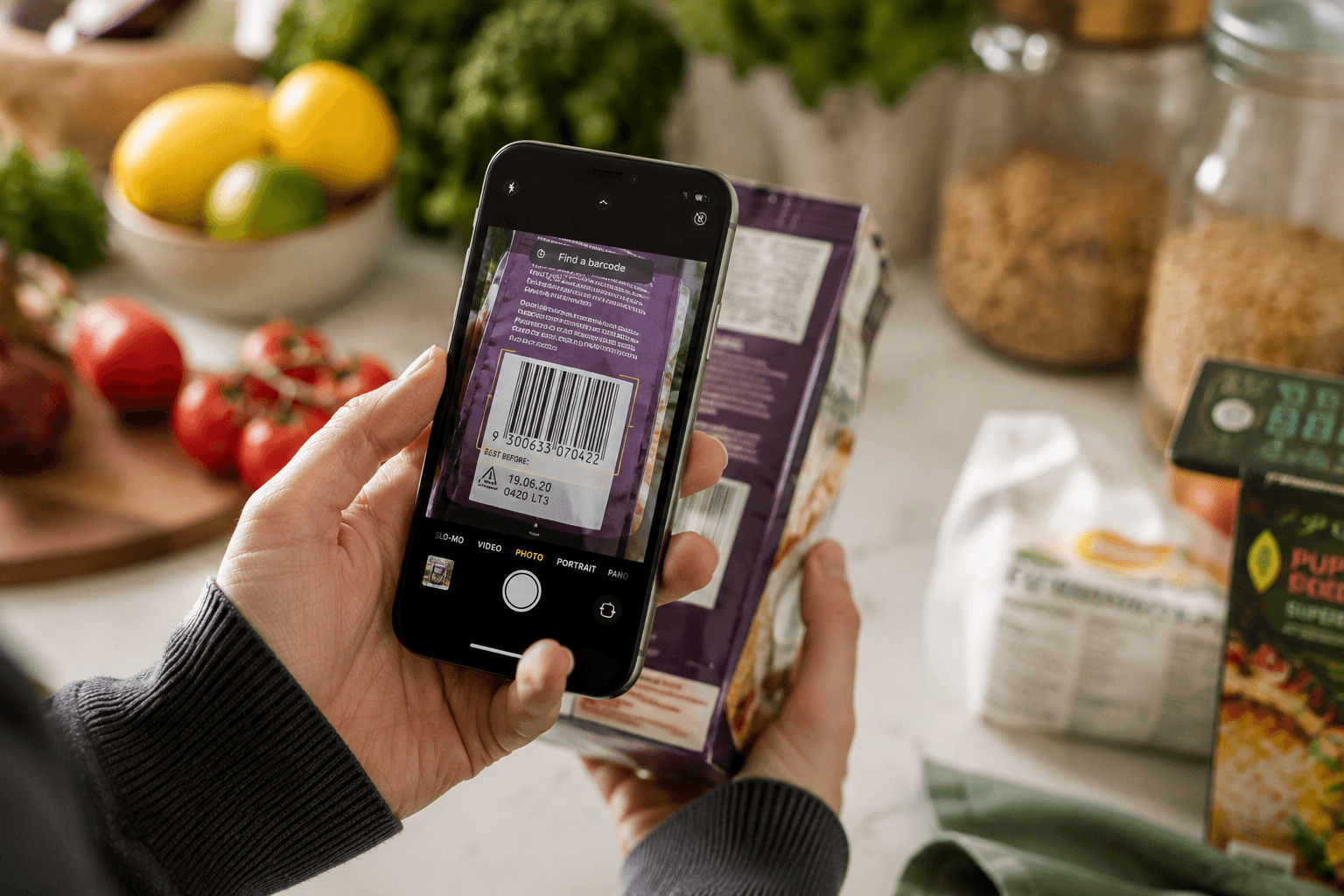
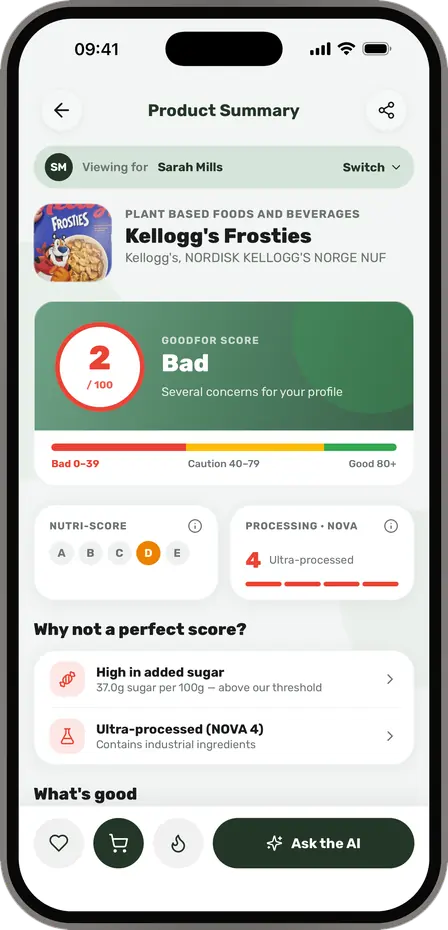
GoodFor identifies E211 from the product’s ingredient list, so it flags the additive wherever the pack declares it. Every scan shows the ingredients, additives, sugar, salt and saturated fat. E211 is explained in plain English with the research behind it, and a filter picks out preservatives.
The 0-100 score comes from nutrient levels per 100 g against official thresholds, the degree of processing, additive risk ratings and the profile’s own allergies, preferences, conditions and goals. Every deduction is listed, so you can see how much E211 mattered next to sugar or salt.
Nutri-Score and the NOVA processing group appear alongside. GoodFor is used by thousands of users, carries no ads and never lets brands influence scores.
NOVA groups food by how processed it is, from 1 (unprocessed) to 4 (ultra-processed). GoodFor flags the group on every scan.
Nutri-Score grades the overall nutritional quality of a food from A (best) to E, per 100 g. GoodFor shows it on every scan.
Frequently Asked Questions
🛒 At your next shop, check these before you pick up drinks, sauces or pastes
- Check the ingredient lists of the three drinks, sauces or pastes you buy most for “sodium benzoate” or “E211”.
- Read the sugars and salt lines per 100 g, as removing E211 does not automatically lower either.
- Swap one squash or energy drink that lists E211 for plain water this week.
GoodFor shows the additives in every product it scans, and its preservatives filter picks out E211 and similar additives.
Spot sodium benzoate (E211) before you buy.
Scan any label for sodium benzoate or E211. See the additive, its safety evidence and how it affects your family, free in one tap.
- See if sodium benzoate (E211) is in your food or drink
- Scan for every additive, allergy and family preference
- Get a verdict in a second, free, in any UK supermarket
Free · No ads · Trusted by thousands of users


Make safer everyday choices