





Key Takeaways
- The FDA has approved six high-intensity artificial sweeteners for use in the United States, and each has a set safe daily intake.
- Aspartame is about 200 times sweeter than sugar, sucralose about 600 times and stevia 200 to 400 times, so only small amounts go into each serving.
- The FDA states that authorized sweeteners are safe for the general population, but people with phenylketonuria (PKU) must avoid or restrict aspartame because it contains phenylalanine.
- A can of regular cola has about 35 g (1.2 oz) of sugar, roughly 140 calories, and a diet version with a sweetener removes those calories.
- “Sugar-free” and “no added sugar” claims describe sugars only, so check total carbohydrate and serving size on the Nutrition Facts label.
🍬 What high-intensity sweeteners are and how they work
Artificial sweeteners in the US provide 200 to 20,000 times the sweetness of table sugar with few or no calories. The FDA lists six approved as food additives: saccharin, aspartame, acesulfame potassium (Ace-K), sucralose, neotame and advantame. Purified steviol glycosides (from the stevia plant) and monk-fruit extracts reach the market through GRAS (“generally recognized as safe”) notices instead.
Because so little is needed to match the sweetness of sugar, the calories contributed are negligible. You will find them in diet drinks, sugar-free gum and “light” yogurts, usually listed by name in the ingredients.
Each approved sweetener has an acceptable daily intake (ADI). That is the amount the FDA considers safe to consume every day over a lifetime. Regulators build in a wide margin, so the ADI is a ceiling, not a recommendation.
🍭 Which artificial sweeteners are used in US foods and drinks
Shoppers in the US are most likely to find six FDA-approved sweeteners, plus stevia and monk-fruit derivatives. The first six are approved as food additives. The last two have GRAS status, which applies to the purified extracts, not to raw leaf or fruit.
The table compares how many times sweeter than table sugar each one is. A bigger number means less is needed.
| Sweetener | Relative sweetness to sugar | FDA approval/GRAS | Common brand(s) | Typical product uses |
|---|---|---|---|---|
| Saccharin | About 300x | Approved food additive | Sweet’N Low | Tabletop packets |
| Aspartame | About 200x | Approved food additive | Equal | Tabletop packets, diet drinks |
| Sucralose | About 600x | Approved food additive | Splenda | Packets, drinks, packaged foods |
| Acesulfame potassium (Ace-K) | About 200x | Approved food additive | Usually blended into products | Drinks and packaged foods |
| Neotame | About 7,000 to 13,000x | Approved food additive | Ingredient-list item | Packaged foods |
| Advantame | About 20,000x | Approved food additive | Ingredient-list item | Packaged foods |
| Steviol glycosides (stevia) | About 200 to 400x | GRAS | Truvia | Packets, liquid drops, drinks |
| Monk-fruit extract | About 100 to 250x | GRAS | Splenda Monk Fruit, Truvia monk fruit | Packets, liquid sweeteners |
What this shows: Neotame and advantame are thousands of times sweeter than sugar, so they appear in tiny amounts in manufactured foods, not as packets. The ones you stir into coffee run from about 200 to 600 times sweeter. A bigger multiple means less is used, not that a sweetener is safer or riskier, because each has its own ADI. Multiples are approximate and vary with the formulation, so read the ingredient list for the sweetener’s name.
🩺 Health evidence: what these sweeteners do in your body
The FDA considers authorized sweeteners safe under their approved uses. The concern comes from large observational studies of diet drinks:
- A 2023 umbrella review (a review of reviews) found highly suggestive associations between artificially sweetened beverages and obesity, type 2 diabetes, high blood pressure, all-cause mortality and cardiovascular disease.
- A 2024 dose-response meta-analysis pooled 11 cohorts, 2,196,503 participants and 235,609 deaths. The highest-intake group had a relative risk of 1.13 for all-cause mortality and 1.26 for cardiovascular mortality against the lowest.
14 (all-cause mortality), 1.29 (cardiovascular mortality) and 1.15 (stroke). - A 2025 systematic review reported a relative risk of 1.42 for Alzheimer’s disease with higher intake, and called for more research on causality.
A relative risk of 1.13 means 13% higher risk in the highest-intake group than in the lowest, not a 13% chance of dying. These studies cannot show cause and effect. People already facing weight or blood-sugar problems often choose diet drinks, and other lifestyle differences also skew the comparison.
Weight, appetite and sweet cravings
Swapping a sugary item for a sweetened one cuts calories in that item, but the evidence for weight loss or appetite control is mixed. The American Heart Association (AHA) ties the benefit to replacing sweetened foods, not adding a sweetened item on top of your usual diet.
The umbrella review rated the link with obesity as highly suggestive, and a 2017 meta-analysis of three studies found a relative risk of 1.59 for diet soda drinkers. Both are observational, and three studies are too few to settle causation. If a sweetened product leaves you wanting more sweet food, that is a fair reason to switch or cut back.
Impact on blood sugar for prediabetes or diabetes
The FDA notes that artificial sweeteners generally do not raise blood glucose, which makes them an option for diabetes management. The American Diabetes Association (ADA) adds that choosing water, seltzer, diet soda, unsweetened tea or sugar substitutes can lower sugar intake and help keep blood glucose steady.
That applies to the sweetener itself, not the whole product it sits in. The observational link with type 2 diabetes above comes from drink-intake studies, which cannot show cause.
Cancer risk and FDA, WHO statements
The FDA and the National Cancer Institute (NCI) state that approved artificial sweeteners do not cause cancer in humans at approved intakes. The NCI’s review found no human evidence of cancer in the studies it examined, including for sucralose.
In 2023 the WHO’s International Agency for Research on Cancer (IARC) classified aspartame as “possibly carcinogenic” (Group 2B). That is a hazard classification, meaning it asks whether something could cause cancer, not how likely it is at normal intake. The FDA continues to maintain that aspartame is safe at approved levels.
Dental health and tooth decay
Unlike sugar, artificial sweeteners are not fermented by mouth bacteria and do not contribute to dental cavities. That is why they sweeten sugar-free gum. Check that “sugar-free” gum lists a sweetener and not sugar.
Digestive tolerance and gut effects
Mayo Clinic notes possible bowel upset in sensitive people and symptom flares in some people with bowel disease. Effects differ by sweetener and by person.
No evidence in the sources used here shows that moderate use of the approved sweeteners harms gut bacteria. Sugar alcohols, a separate category, can cause digestive symptoms at high intakes. If a product upsets you, change that product, not everything.
📋 Sweeteners in real US grocery products: sugar and carbohydrate per serving
Many leading US sugar substitutes list zero calories and zero sugars per serving, but total carbohydrate can still be above zero. The figures below come from Walmart product listings. They are per labeled serving, which for packets and drops is tiny, so compare each row against its own serving. Lower is better for both sugars and carbohydrate.
| Product (brand) | Serving size | Total carbohydrate (g) | Sugars (g) |
|---|---|---|---|
| Great Value Liquid No Calorie Stevia | 1/16 tsp (0.3 ml) | 0 | 0 |
| Truvia Original (stevia leaf) | 1 packet (2 g) | 2 | 0 |
| Truvia Calorie-Free from Monk Fruit | 1 packet (2 g) | 2 | 0 |
| Sweet Leaf Organic Stevia | 0.40 g | 0 | 0 |
| Great Value Sugar-Free Blackberry Preserves | 1 Tbsp (17 g) | 4 | 0 |
| Great Value Sugar-Free Strawberry Preserves | 1 Tbsp | 4 | 0 |
| True Lemon Kids Fruit Punch mix | 1 stick packet | 3 | 2 |
What this shows: Five of the seven list 0 g sugars, but only the liquid stevia and Sweet Leaf also show 0 g carbohydrate. The Truvia packets carry 2 g of carbohydrate each, and Truvia Original lists erythritol first. Sweet Leaf lists organic inulin first. A 17 g spoonful of the sugar-free preserves has 4 g carbohydrate, about 24 g per 100 g, despite “0 g sugars.” If you count carbohydrate, check the carbohydrate line, not the sugars line.
⚠️ Watch out: True Lemon Kids Fruit Punch says “no artificial sweeteners” on the box, but its first ingredient is cane sugar. It has 2 g of added sugars per packet, so it is not sugar-free. Check the “added sugars” line on the Nutrition Facts label, not the front claim.
🌿 Synthetic versus plant-derived sweeteners: key differences
In the US, “artificial” typically describes lab-synthesized sweeteners, while “natural” means purified extracts from plants or fruits, and both must meet FDA safety standards. The artificial group is saccharin, aspartame, sucralose, Ace-K, neotame and advantame. The “natural” group is purified steviol glycosides and monk-fruit-derived sweeteners.
Three differences matter at the shelf:
- Source: The six artificial sweeteners are made by synthesis. Stevia and monk fruit start as plants, but the sweet compounds are extracted and purified industrially.
- Safety status: The FDA says plant origin is not itself a safety guarantee. Each substance and use is assessed on its own.
- Taste: Saccharin and stevia can leave a bitter or metallic aftertaste for some people. Taste is personal, so no type suits everyone.
Blends are common because combining sweeteners can balance flavor and reduce aftertaste. If one product tastes metallic, try a different sweetener before giving up on the category.
🏷️ Decoding sweetener label claims on US foods
“Sugar-free,” “Zero sugar” and what counts as sugar
“Sugar-free” and “zero sugar” on the front do not guarantee a product is free from all carbohydrates. The claim refers to sugars. Starch, milk carbohydrate or bulking agents can remain, as the preserves and Truvia packets above show.
“No added sugar” and what might still be in the food
“No added sugar” means no sugar was included during production, but the food may still contain natural sugars or carbs from milk, fruit or grains. Words like cane sugar, honey or syrup in the ingredients mean sugar was added.
“Light,” “diet,” and what they really mean
“Light” or “diet” can mean calorie or ingredient reduction, but neither word promises a product is low in sugar or a healthy choice. The Nutrition Facts panel and ingredient list show what was actually reduced.
“Natural” and “from plants”: label language vs. ingredient reality
“Natural” and “from plants” describe origin, not safety or calories. Only purified stevia glycosides and monk-fruit extracts with FDA GRAS status are accepted sweeteners of this type.
✅ Quick check:
- Find the sweetener’s name in the ingredient list (aspartame, sucralose, steviol glycosides, monk fruit extract).
- Read total carbohydrate per serving, not just “sugar-free” on the front.
- Look at the “added sugars” line, not the word “natural.”
🛒 How to choose a sweetener for your health goals
Start from your goal, then read both the Nutrition Facts and the ingredients. The AHA ties the benefit to replacing added sugar, not adding a sweetener on top of what you already eat.
- Name your priority: glucose control, less added sugar, fewer calories, taste, or a family with different needs.
- Compare total carbohydrate, added sugar, protein, fiber and calories per serving.
- Find the sweetener by name in the ingredients and confirm it is one of the FDA-recognized types.
- Look for bulking agents, starches or milk powders that add carbohydrate.
- If you have PKU, skip aspartame. Most other people can use it if they like it.
- Try two or three types for a week each, noting aftertaste and how your stomach feels.
💡 Top tip: Pick one sugary item to replace, such as your daily regular soda, and leave everything else alone. A swap works best when other very sweet processed foods shrink too. Don’t let a “free” drink become permission for dessert.
👶 Who should take particular care with sweeteners
Regulators’ positions differ by group. What suits most adults may not suit children under 2 or people with PKU.
Children and age recommendations
Mayo Clinic reports that the US Dietary Guidelines advise against sugar substitutes for children under two. For older children, the FDA material used here gives no age-specific intake limit. The ADI scales with body weight, so a smaller child reaches it sooner, and the label and the child’s overall diet guide the decision.
People with diabetes or prediabetes
A sweetener helps manage glucose only if overall carbohydrate and total calories stay in check. Check total carbohydrate and serving size, as the grocery table shows.
Pregnancy and breastfeeding
The FDA material used here gives no pregnancy-specific limit, so the standard ADI, which already includes a safety margin, is the reference. Ask your doctor or midwife if your situation has changed.
Food allergies, intolerances and PKU
People with PKU need to avoid or restrict aspartame, because it provides phenylalanine. Products containing aspartame carry a phenylalanine warning on the label.
Older adults
No age-specific FDA limit for older adults appears in the material used here, so the standard ADI applies. Ask your doctor if you take medicines or manage a condition.
🍓 Better options if you want to use less sugar or sweetener
The lowest-sugar choice is an unsweetened food or drink. The ADA lists water, seltzer and unsweetened tea as ways to lower sugar intake.
A 12-oz (355 ml) diet soda has 0 g sugar but carries a sweetener such as aspartame or sucralose. The same volume of plain sparkling water with sliced fruit has 0 g sugar and no sweetener.
🔄 Try instead: Pick up plain sparkling water with a slice of lime instead of diet soda. It has 0 g sugar and no sweetener, so nothing to check. On the can, look for an ingredient list that reads just “carbonated water.” Scan the diet soda in GoodFor and it lists every sweetener in it, so you can see what you are swapping out.
❌ Myths and mistakes about sweeteners
Several myths about sweeteners trip up even careful shoppers, especially on safety and label reading.
“Natural” means safer or healthier
Origin describes where a molecule came from, not how a finished product behaves. The Truvia packets in the grocery table are made from stevia and still carry 2 g of carbohydrate each.
Aspartame always causes cancer or is unsafe for everyone
The cancer evidence is covered above: the 2023 IARC label is a hazard classification, and the FDA maintains aspartame is safe at approved levels. The one group told to avoid or restrict it is people with PKU.
All sugar substitutes are identical (artificial vs. sugar alcohols)
Sugar alcohols (polyols) are a different category from high-intensity sweeteners. They are the ones linked to digestive symptoms at high intakes.
“Sugar-free” equals carbohydrate-free
Milk carbohydrate, starch and bulking agents can all remain. “0 g sugars” and a nonzero carbohydrate line sit comfortably on the same pack.
Reaching the ADI is a nutritional goal
The ADI is a safety ceiling, not a target or a minimum. Nobody needs to approach it to gain any benefit.
🗓️ A one-week plan for choosing and using sweeteners
Track every sweetened food and drink for a week, and swap only where the change supports your health goal, taste and comfort. A swap counts only if the new item displaces a higher-sugar one.
💡 Top tip: For one week, write down every sweetened food and drink. Swap one or two for unsweetened or lightly sweetened versions. Then compare your energy, cravings and, if you test it, blood sugar.
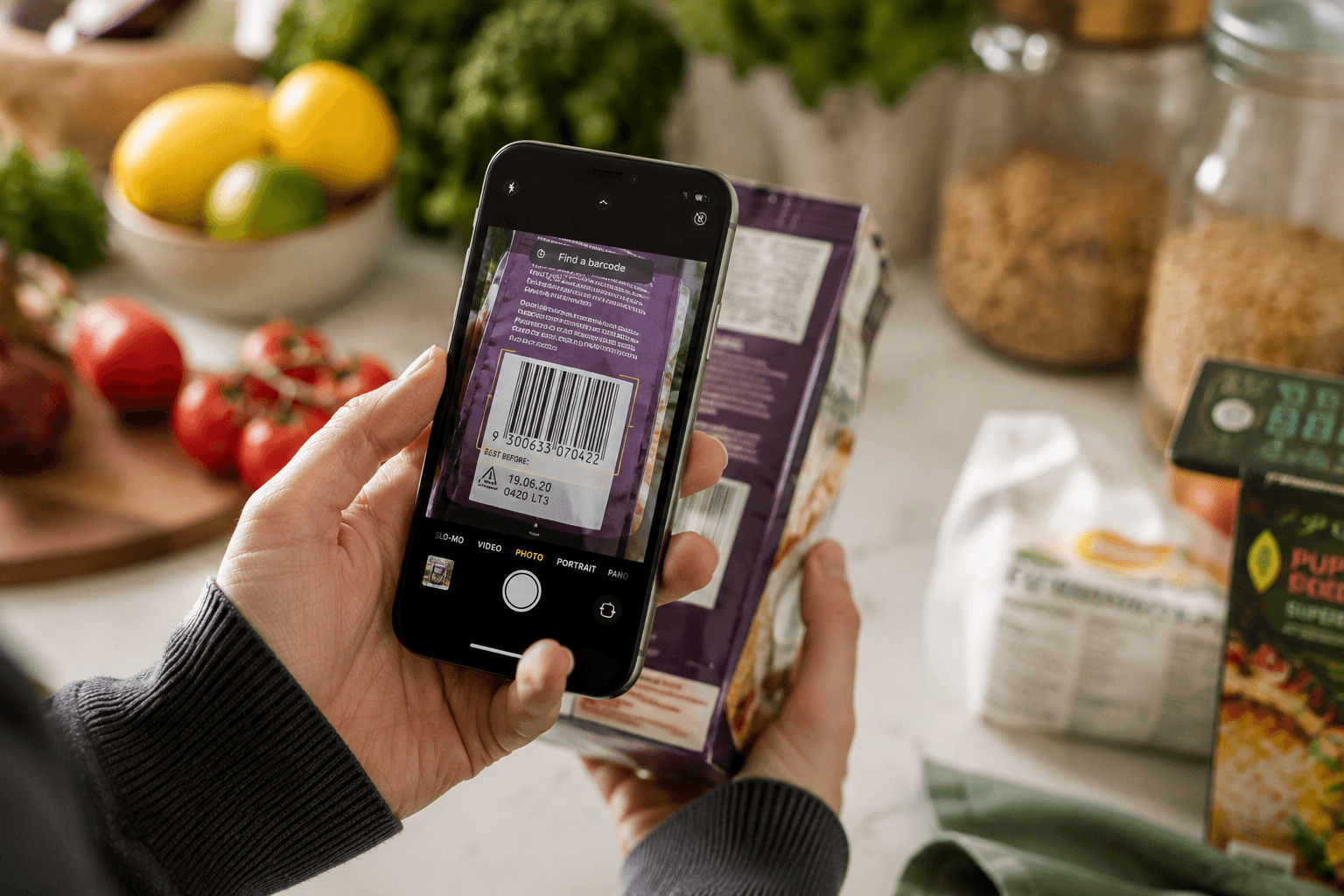
If you want the notes to build themselves, GoodFor’s calorie tracker logs meals by photo or scan, and each scan shows the ingredients and additives in the product.
📱 How GoodFor Scores sweeteners
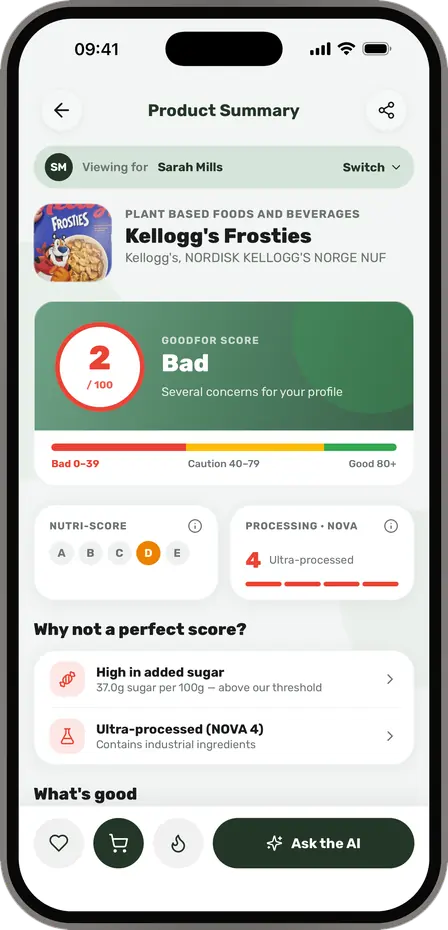
GoodFor is a food and drink scanning app, used by thousands of users, that gives any barcode one clear 0-100 score. Every scan shows the ingredients, additives, sugar, salt and saturated fat, plus the reasons behind the number. Each additive, sweeteners included, is explained in plain English with the research behind it, and filters cover sweeteners, emulsifiers, colors and preservatives.
The score comes from nutrient levels per 100 g against official thresholds, the degree of processing, additive risk ratings and the profile’s own allergies, preferences, conditions and goals, with every deduction listed. Nutri-Score (A to E) and the NOVA processing group (1 to 4) appear alongside it. A region setting applies USA ingredient rules, and scores are never influenced by brands. GoodFor gives general nutrition information, not medical advice.
NOVA groups food by how processed it is, from 1 (unprocessed) to 4 (ultra-processed). GoodFor flags the group on every scan.
Nutri-Score grades the overall nutritional quality of a food from A (best) to E, per 100 g. GoodFor shows it on every scan.
Frequently Asked Questions
At your next shop
- Read both the ingredient list and the Nutrition Facts for the sweetener’s name and the total carbohydrate per serving.
- Swap in a sweetener only if it replaces a higher-sugar food or drink you usually have.
- Keep the one you tolerate and like, and drop the one that tastes metallic or upsets your stomach.


Make safer everyday choices