





Key Takeaways
- The FDA classifies MSG (monosodium glutamate) as “generally recognized as safe” (GRAS) at typical food levels, and it identifies no specific safety concern for children at those levels.
- Added MSG must be listed as “monosodium glutamate” on US ingredient lists, so that exact wording is how you find or avoid it.
- A typical serving of food with added MSG contains less than 0.5 g. In the evidence the FDA cites, symptoms were reported after 3 g or more eaten without food.
- Controlled studies have not consistently reproduced the headaches and other symptoms blamed on MSG, and FDA scientists have not confirmed that MSG caused the reports.
- Many foods naturally contain glutamate (the active part of MSG), so avoiding added MSG does not remove every source of umami flavor.
🍲 What MSG (E621) is, how it is made and what it does in food
MSG is the sodium salt of glutamic acid, an amino acid that also occurs naturally in tomatoes, aged cheese and mushrooms. That natural glutamate is why those foods taste so rich.
What is monosodium glutamate?
Glutamic acid is one of the building blocks of protein. E621 is the additive code used on European labels. The FDA lists MSG as GRAS, a US status for substances qualified experts accept as safe under their intended use, with a technical role as a flavor enhancer.
How MSG is produced
Commercial MSG is made by fermentation. Manufacturers ferment carbohydrate sources such as starch, sugar beet or molasses, a process similar in principle to how yogurt or vinegar is made. The result is a white crystalline powder that dissolves in food.
What MSG does as a flavor enhancer
MSG provides umami, the savory “fifth taste” alongside sweet, sour, salty and bitter. Umami is the taste of aged cheese, soy sauce, mushrooms and slow-cooked meats.
Food companies use MSG because it makes food more satisfying. A small amount can also stand in for more expensive ingredients such as meat, cheese or vegetables.
🛒 Where this additive turns up in groceries and takeout
Expect added MSG in chips, flavored crackers, instant noodles, canned soups, frozen meals, bouillon cubes, seasoning blends, some fast food and many takeout dishes. Glutamate also occurs naturally in cheese, tomatoes, soy sauce and mushrooms, so those foods taste savory with no additive involved.
Foods and snacks with added MSG
Doritos, instant ramen, bouillon cubes and some chain restaurant dishes are commonly named examples. Seasoning blends are the clearest case, because MSG often sits near the top of the ingredient list (see the table below).
How to recognize MSG and its other names on US labels
FDA rules require directly added MSG to be named “monosodium glutamate” in the ingredients list. It cannot be hidden under “spices” or “flavoring.”
Other ingredients can carry free glutamate: hydrolyzed vegetable protein, autolyzed yeast, yeast extract, soy extracts and soy protein isolate. They are listed under their own names, and the label does not have to say they contain glutamate. A product that contains any of them cannot carry a “No MSG” or “No added MSG” claim.
✅ Quick check:
- Look for the words “monosodium glutamate” in the ingredients.
- Look for the other names above: hydrolyzed vegetable protein, autolyzed yeast, yeast extract, soy protein isolate.
- Check the serving size and the sodium line before you compare two products.
The table below lists six seasonings whose ingredient lists include MSG, using Walmart product listings seen in 2025 and 2026. It compares where MSG sits on the list and the sodium in one serving as printed on each pack. Lower sodium is better.
| Product | Where MSG sits on the ingredient list | Sodium per serving as printed on pack (mg) |
|---|---|---|
| Ac’cent Flavor Enhancer MSG (0.5 g serving) | 1st of 1 | 80 |
| Ac’cent Sa-son Original Seasoning (0.25 tsp serving) | 1st of 11 | 150 |
| 8 oz Original seasoning (1 g serving) | 3rd of 6 | 310 |
| Mighty Salt Garlic Umami | 3rd of 5 | 320 |
| Fiesta Season It All | 6th of 11 | 280 |
| Goya Sazón Without Annatto | 1st of 8 | 120 |
What this shows: MSG is first on the list in three of these six products. Sodium per serving runs from 80 mg (Ac’cent Flavor Enhancer) to 320 mg (Mighty Salt), four times as much. Serving sizes differ, so do not read it as a ranking. Use it to see that seasoning blends add sodium as well as flavor, and compare the sodium line on the packs you buy.
🧬 How the body handles glutamate
After eating, MSG separates into sodium and glutamate, and the FDA says the body metabolizes glutamate efficiently. It is chemically identical to the glutamate in a tomato or a slice of cheese.
Digestion and absorption of MSG
The body does not distinguish between glutamate from MSG and glutamate that occurs naturally in food. Both are processed the same way, and the sodium that comes with MSG counts toward your total sodium.
Is MSG an allergen or intolerance trigger?
MSG is not established as an IgE-mediated allergen, the immune reaction seen with peanuts or milk. Mayo Clinic describes the reported reactions as non-allergic, and the symptoms appear in the FDA’s evidence only with large doses taken without food.
🦺 Is this flavor enhancer safe for families to eat?
The FDA, WHO and other major health authorities consider MSG safe for the general population at the levels eaten in food. Individual variation is possible, so the evidence supports “safe for most people” rather than a promise for every person.
What regulators and experts say about MSG safety
The FDA has not found consistent evidence of harm at normal dietary levels in repeated reviews. The WHO and FAO expert committee (JECFA) classed MSG as “ADI not specified,” meaning no numerical daily cap is needed for normal food use. The FDA has not set a numerical limit either. EFSA, the European regulator, set a group limit for glutamates of 30 mg per kg of body weight per day, expressed as glutamic acid.
What a typical serving means for adults and children
A typical food serving with added MSG contains less than 0.5 g. In the evidence the FDA cites, mild symptoms appeared after 3 g or more eaten without food. That is at least six times a normal serving on an empty stomach, which is not how anyone eats a bowl of soup.
No child-specific limit exists, and the FDA identifies no general child-safety concern at typical food levels.
💡 Top tip: Check the serving size on the pack. Pure MSG such as Ac’cent Flavor Enhancer lists 0.5 g as one serving, right at the FDA’s “typical” ceiling. Measure with the pack’s serving instead of pouring freely, and you stay in the range the evidence covers.
📚 What the research actually shows
Major reviews have found no consistent proof that MSG causes the reported symptoms under normal eating conditions. Controlled studies fail to reproduce symptoms reliably, especially when people do not know whether they are getting MSG or a placebo.
Key evidence reviews: who studied MSG and what they found
A FASEB safety review cited by the FDA concluded MSG is safe. It noted mild, short-lived symptoms in some sensitive people at 3 g or more without food. A UPMC review adds that the earliest studies were weak, one involving only six people, and that better-designed later work supports safety.
Newer papers on obesity and heart rhythm describe open questions. The heart-rhythm paper itself says causality has not been established.
Reported symptoms in studies vs. real-life eating
The reported symptoms were headache, flushing, tingling, palpitations and drowsiness. They were generally mild and short-lived, and they appeared with the large, empty-stomach doses described above. A serving of food contains far less.
Why the “Chinese Restaurant Syndrome” story persists
The story began with a 1968 letter to the New England Journal of Medicine describing numbness and palpitations after Chinese food. It spread before controlled evidence existed.
Expectation plays a part. This is the “nocebo” effect, where fear of a substance produces symptoms. Sodium, alcohol or heat in a big restaurant meal could also play a part. UW Medicine also traces the myth to racialized framing of Chinese and Asian cooking. The symptoms were real to the people who felt them. Testing has simply not tied them to MSG.
🥗 Nutrition example: Six servings at 0.5 g MSG each add up to 3 g. For a 40-pound (18 kg) child, that would mean six servings of seasoned food at once. Real eating spreads MSG across a meal and comes with other food, which is not the empty-stomach condition behind the symptom reports.
🚸 Who should take extra care
Most people, including children, tolerate dietary MSG without symptoms. Some people describe headache or tingling after certain foods, and these reactions are usually mild and short-lived. Severe or repeated symptoms need medical advice.
Children and MSG
No child-specific hazard has been identified in standard eating. A study summarized by IFIC gave children as young as one year 25 or 50 mg per kg of body weight in beef consommé, and they did not show higher blood glutamate than adults.
A child with recurring headaches deserves a look at sleep, hydration, skipped meals and illness before MSG takes the blame. Recurrent or severe headaches belong with the child’s clinician.
Adults reporting symptoms (headaches or tingling)
Many adults report symptoms after MSG, but blinded testing rarely reproduces them. If you suspect a reaction, write down the food, the amount, the timing and the symptoms. Take that log to your doctor or a dietitian, who can plan a short, nutritionally adequate trial. Complete avoidance is hard because glutamate occurs naturally in so many foods.
⚠️ Watch out: Do not test yourself or your child with a spoonful of pure MSG. That is far more than any food serving (the 3 g figure above), so the result tells you nothing about normal meals. The FDA lists headache and flushing among the effects at that dose.
👀 How to spot it on a label and find realistic swaps
Directly added MSG is always named on a US ingredient list. “No MSG” or “No added MSG” only describes ingredients, so the food can still contain natural glutamate from cheese, tomato or soy sauce.
- Read the list from the start. In seasonings MSG often sits in the first few positions.
- Put a “No MSG” version next to the original and compare both ingredient lists and sodium lines.
Reading the US ingredient list for MSG and hidden glutamate sources
Hydrolyzed vegetable protein and similar ingredients carry free glutamate under their own names, so two products with different lists can deliver similar amounts. “Natural flavors” will not tell you either way. Added MSG would have to be named separately.
Choosing “No MSG” foods and alternatives
Look for “No MSG” on seasoning and instant noodle packs. Under the FDA rule above, a pack making that claim should not list yeast extract or hydrolyzed vegetable protein. Read the ingredients against your own needs, because natural glutamate from other ingredients can still be present.
🔄 Try instead: Pick up HOXY Korean Ramen Seasoning instead of a blend like Goya Sazón Without Annatto. The HOXY pack says “No MSG” and its ingredient list does not show monosodium glutamate, while Goya lists it first of 8. Look for “No MSG” on the front. Scan both in GoodFor and it shows which one lists MSG before it goes in the cart.
🌀 Myths and misconceptions
- “MSG is synthetic and unnatural.” It is made by fermenting plant sources such as starch, sugar beet or molasses.
- “Every ‘natural flavor’ hides MSG.” Directly added MSG must be named, so it cannot sit unlabeled inside “natural flavors.”
- “Some people react to every dose.” No evidence supports universal sensitivity, and most people with symptoms do not react in blinded tests.
- “MSG-free means glutamate-free.” Cheese, soy sauce and tomatoes still contain natural glutamate.
🔍 How GoodFor Scores
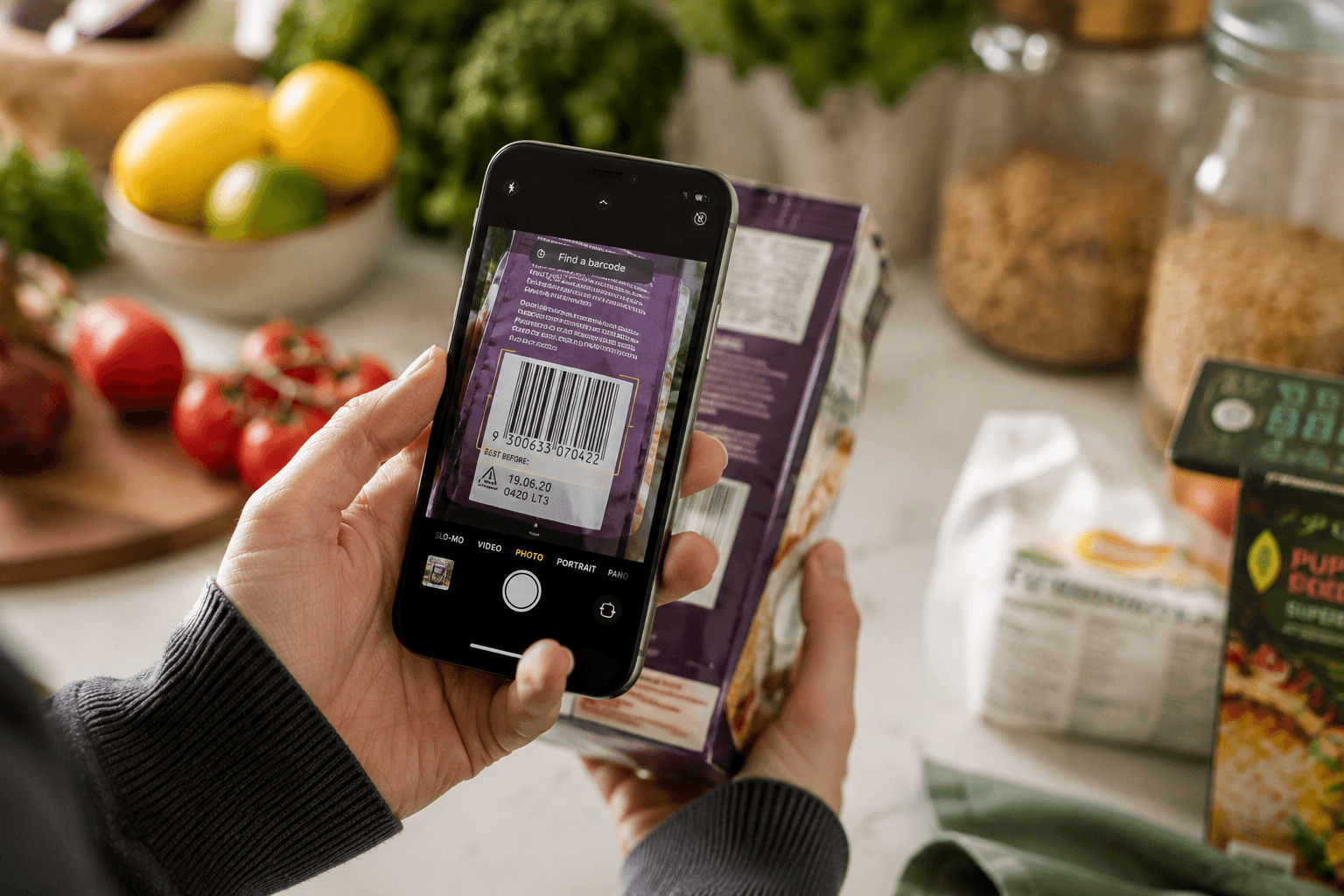
GoodFor flags the exact ingredient when you scan a barcode. E621 appears in the ingredient list with a plain-English explanation of what it is, why it is added and how natural glutamate fits in. GoodFor also shows every additive deduction behind the 0-100 score, alongside Nutri-Score and the NOVA processing group. If a product does not suit a profile, GoodFor suggests a replacement from the same store, so you can compare an MSG version with a “No MSG” one.
NOVA groups food by how processed it is, from 1 (unprocessed) to 4 (ultra-processed). GoodFor flags the group on every scan.
Nutri-Score grades the overall nutritional quality of a food from A (best) to E, per 100 g. GoodFor shows it on every scan.
Frequently Asked Questions
At your next grocery shop: label checks and swaps
- Check the ingredients for “monosodium glutamate,” and choose a “No MSG” version if you want to avoid added MSG.
- Compare the serving size and sodium line of seasonings and snacks before you buy.
- Use Parmesan, tomatoes or mushrooms at home for savory flavor without added MSG.
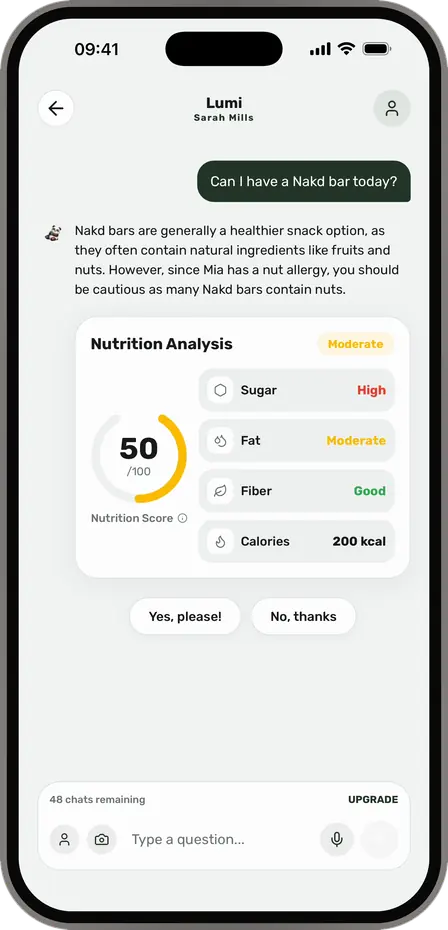
If you want swaps that keep your family’s preferences and health goals, you can ask Lumi, the GoodFor food coach, to suggest them.


Make safer everyday choices