




Key Takeaways
- A healthy snack for children in the UK is a small portion of whole fruit, vegetables, plain dairy or wholegrain foods, as supported by NHS guidance.
- Limit packaged snacks to no more than two per day, with each ideally providing 100 kcal or less, per NHS West Cheshire recommendations.
- For children aged 4 to 6, keep free sugar intake under 19 g per day, including sugars in snacks, as advised by the NHS.
- Dried fruit is best reserved for mealtimes because its sugars can harm children’s teeth, according to NHS guidance.
- On UK traffic-light labels, choose snacks with green or amber for sugar and salt to support healthier choices for children.
🍎 What makes a healthy snack for children?
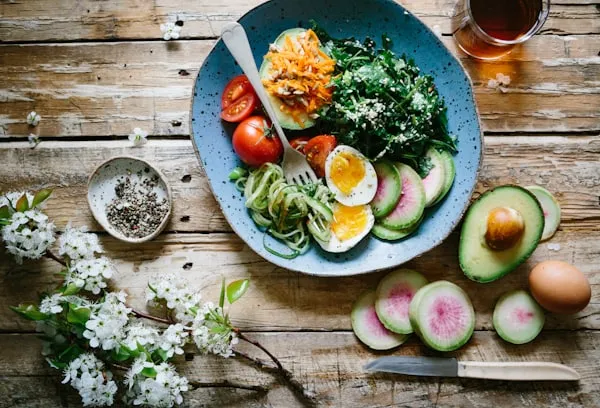
A healthy snack for children is a portion-sized combination of whole fruit, vegetables, plain dairy or minimally processed food, without added sugar or excess salt. The NHS Healthier snacks guidance builds snacks from four groups:
- Whole fruit: fresh, frozen or tinned in juice. Dried fruit is for mealtimes only.
- Vegetables: sticks served with a dip.
- Plain dairy: cheese, natural yoghurt or milk.
- Wholegrain or protein foods: oatcakes, hummus, nut butters, and unsalted nuts for children over 5.
Water and milk are the drinks to offer, and sugary drinks do not belong at snack time. The NHS Eatwell Guide page caps fruit juice and smoothies together at 150 ml a day, because their free sugars damage teeth.
Variety counts for more than perfection. NHS advice on young children’s food encourages different colours, textures and food groups across the week. A child who meets a red pepper stick on Monday and a yoghurt with berries on Tuesday is building a wider palate than one offered the same safe packet daily.
🦷 Why healthy snacks matter for children’s teeth, growth and eating habits
Frequent sugary snacks and drinks raise the risk of tooth decay and can shape growth and eating habits. The NHS sugar guidance explains the mechanism: sugar feeds bacteria in the mouth, and they turn it into acid that wears away enamel. The British Dietetic Association (BDA) adds that energy-dense, sugary, salty snacks raise the risk of becoming overweight.
Dental health and sugar frequency
Sugar eaten between meals is more likely to cause decay than the same sugar eaten with a meal. Each sugary snack gives mouth bacteria another round of fuel. The NHS therefore keeps dried fruit and sugary snacks to mealtimes and points to water and milk as the tooth-friendly drinks.
Appetite, growth and balance
Fruit, vegetables and dairy support growth and a balanced diet when they sit inside a meal pattern, not constant grazing. The BDA advises three meals and two small snacks. A child who nibbles all afternoon may leave tea untouched, so set snack times.
Building positive food relationships
Treat snacks as a neutral part of the day, neither reward nor punishment. Offering varied snacks calmly encourages exploration and broader tastes, which the BDA links with healthier eating habits.
📊 10 Healthy Snack For Kids: how top UK products compare on sugar, salt and fibre
Across ten snacks sold for children, sugars range from under 1 g to 49 g per 100 g, and even the “healthy” ones differ hugely on fibre. The table compares each product per 100 g, with a per-portion column for the real-life amount. Lower is better for sugars and salt; higher is better for fibre. Figures come from the Tesco listings, so check your own pack, as recipes change.
| Product | Sugars per 100 g | Fibre per 100 g | Salt per 100 g | Portion and sugars per portion | Claims and main ingredients | Label |
|---|---|---|---|---|---|---|
| Goodies Bluey Yogurt Banana & Strawberry Pouch | 8.0 g | 0.9 g | 0.06 g | 100 g pouch, 8.0 g | Yoghurt 46%, banana purée 30%, strawberry purée 15% | Medium |
| Mini Babybel Original | <0.01 g | n/a | 1.7 g | 20 g cheese, <0.01 g | Pasteurised milk, salt, lactic ferments | Low |
| BEAR Fruit Bites Tropical | 48 g | 11 g | 0.02 g | 20 g, 9.7 g | “No added sugar” | High |
| BEAR Fruit Splits Strawberry & Apple | 49 g | 11 g | 0.02 g | 20 g, 9.7 g | “No added sugar”; apples 68%, pears 31%, strawberries 0.5% | High |
| Piccolo Organic Kids Fruit & Grain Strawberry | 27 g | 3.7 g | 0.15 g | 22 g pouch, about 5.9 g | “No added sugar” | High |
| Organix Banana Bread Biscuits | 15 g | 5.0 g | 0.33 g | 1 biscuit, 1.3 g | Wholegrain flour, wheat flour, grape and banana juice | Medium |
| Goodies Mandarin & Apple Oat Bars | 22 g | 13 g | 0.03 g | 23 g bar, about 5.1 g | “Wholegrain”, “high in fibre”; oats 50.2%, raisins 19.1%, apple juice concentrate 12.0% | Medium |
| Eat Real Kids Cheese-Flavour Veggie Straws | 0.6 g | 3.0 g | 0.52 g | 16 g, 0.1 g | Potato starch 30%, rapeseed oil, rice flour 19% | Low |
| Piccolo Kids Organic Cocoa & Coconut Crispy Sticks | 1.6 g | 10.3 g | 0.07 g | 25 g, 0.4 g | “No added sugar”, “high in fibre” | Low |
| Piccolo Organic Crisp Sticks Cocoa & Hazelnut | 11 g | 9.7 g | <0.01 g | 25 g, 2.8 g | none stated | Medium |
Per-portion sugars for the Piccolo pouch and the Goodies bar are worked out from the per-100 g figure and the stated weight.
What this shows: The fruit snacks (BEAR and Piccolo Fruit & Grain) carry 27 to 49 g of sugars per 100 g, while the veggie straws, crispy sticks and Babybel carry under 2 g. A single 20 g BEAR pack gives 9.7 g, roughly half a 4-6-year-old’s daily limit. Check the per-portion figure before the pack goes in the basket.
Claims versus values
“No added sugar” does not mean low sugar. The two BEAR products and the Piccolo Fruit & Grain pouch all carry that claim, yet they hold 48 g, 49 g and 27 g of sugars per 100 g, all naturally from fruit.
Fibre claims need the same scrutiny. The Goodies oat bars are wholegrain and high in fibre, but still contain 22 g of sugars per 100 g. The Piccolo Cocoa & Coconut sticks are low in sugar and high in fibre, but carry 26 g fat and 5.0 g saturates per 100 g.
Salt works in reverse. Mini Babybel has 1.7 g salt per 100 g, which looks high, but one 20 g cheese gives only 0.34 g.
📚 What the research and NHS guidance say about children’s snacks
The NHS recommends children eat mainly fruit, vegetables, dairy and whole grains as snacks, with packaged options limited to two a day and sugary drinks avoided. The BDA frames this as three meals and two small snacks, with attention to salt and sugar. Both sit inside the Eatwell Guide, which looks at the whole diet rather than snacks alone.
NHS advice and 5 A Day
The NHS says fresh, frozen, tinned and dried fruit or vegetables all count toward 5 a day, and one portion is about what fits in your child’s palm. A small child has a small palm, so portions grow with them. Dried fruit still counts, but keep it to mealtimes.
Supporting evidence for snack choices
The NHS and BDA link high free sugar intake to tooth decay and weight gain. The BDA also notes that crisps, biscuits, chocolate and sweets are often high in saturated fat, sugar and salt but low in fibre and protein, which makes them less filling. Snacks with protein or fibre are the BDA’s recommended alternative.
Where research leaves gaps or experts disagree
Experts agree more on what to avoid (sugary, salty, highly processed snacks) than on the best snack schedule. The sources give no child-specific ideal calorie target, and the NHS West Cheshire 100 kcal figure is general guidance, not a rule for every child. The Eatwell Guide does not apply to under-2s, whose needs differ.
🏷️ Decoding UK snack label claims for parents
UK front-of-pack traffic-light labels show fat, saturates, sugar and salt, so aim for green or amber in the sugar and salt columns for a child’s snack, then read the back for per-portion figures. The NHS sugar guidance tells families to favour products with more green and amber and fewer reds.
On the back, a Cambridge University Hospitals guide treats 5 g sugars or less per 100 g as low, and 0.3 g salt or less per 100 g as low. More than 1.5 g salt per 100 g is high. Some packs list sodium instead of salt, so multiply sodium by 2.5: 0.3 g sodium is about 0.75 g salt.
The per-100 g figure compares products, but the portion decides what your child eats. A 4-6-year-old’s salt limit is 3 g a day, so a 0.34 g Babybel uses about a ninth of it despite its high per-100 g figure. For wording on ingredient lists, see our ingredient and additive definitions.
What ‘no added sugar’ does, and doesn’t, mean
“No added sugar” means nothing extra went in, not that the snack is sugar-free. Dried fruit, fruit purée and juice concentrates still supply sugar, and the NHS counts sugars in juices, syrups and purées as free sugars. The “sugars” line in the nutrition table combines naturally occurring and added sugars, so read both the claim and the number.
Fibre, wholegrain and high-protein labelling
“Source of fibre”, “wholegrain” and “high protein” describe one nutrient only. None guarantees low sugar or salt, as the oat bars (13 g fibre, 22 g sugars per 100 g) show. Check the ingredients list and nutrition table whenever you see one of these claims.
‘Light’, ‘natural’ and other common claims
“Light” and “natural” are not health guarantees. A “reduced” sugar or salt claim only compares the product with a reference version, so a reduced-salt snack can still be high in salt. Judge by the per-100 g and per-portion numbers.
🔍 How to choose a snack in the supermarket for your child
Start with the traffic-light label, then check ingredients and portion size before the snack goes in your basket. Use the per-100 g and sodium rules from the label section above.
- Find the traffic-light label and pick green or amber for sugar and salt.
- Read the ingredients for “sugar”, “syrup”, “honey” and “fruit juice concentrate”, all of which count as added sugar.
- Look at the first three ingredients: you want fruit, veg, wholegrain or milk, not sugar high on the list.
- Check allergens, which are highlighted in bold, and the “may contain” line if your child has an allergy.
- Compare the portion size with your child’s palm.
- Confirm the snack suits their age: unsalted nuts only for over-5s, and raw hard vegetables cut thin.
✅ Quick check:
- Traffic light: green or amber for sugar and salt?
- Ingredients: no sugar or salt in the top three?
- Portion: does it fit your child’s palm?
- Allergens: flagged in bold and checked?
🎯 Snack planning for real-life situations and dietary needs
A three-year-old’s snack needs cutting smaller, serving softer and perhaps swapping allergens, while older children can follow the family’s usual pattern. Match the food to the child before you match it to the label.
Children under 5, aged 4-6 and over 7: portion and safety
Babies under 12 months generally do not need snacks, and the NHS suggests an extra milk feed if they seem hungry. From age 2 children move towards Eatwell proportions. Under-5s should never have whole nuts, and children over 5 can have a small handful of unsalted nuts. Free sugar limits rise with age: 24 g a day for 7-10-year-olds and 30 g from age 11, compared with 19 g for 4-6s.
Food allergies, coeliac disease and intolerances
Check the bold allergens and the “may contain” line on every pack, even for a snack your child has had before, since recipes change. For coeliac disease, choose certified gluten-free oatcakes and crackers. “Wheat free” is not the same as gluten-free, and ordinary oats can be cross-contaminated.
🔄 Try instead: Pick up sunflower seed butter or a pot of hummus instead of peanut or almond butter for a nut allergy, and soya yoghurt with added calcium instead of dairy yoghurt for a dairy allergy. Neither contains nuts or milk. On the pack, look for “calcium” in the soya yoghurt ingredients and no “may contain nuts” line. Set the allergy in a GoodFor profile and every scan flags it.
Vegan, vegetarian, halal and kosher households
Most whole-food snacks (fruit, vegetable sticks, hummus, oatcakes) need no special checks. For vegan and dairy-free homes, use fortified soya, oat or coconut yoghurt in place of dairy, and check crackers and rice cakes for milk powder or whey. For vegetarian, halal or kosher homes, rely on the pack’s own suitability marking for cheese and processed snacks.
Weight management or selective eating
Keep the palm-sized portion and put the swap, not the cutback, first: a plain yoghurt with berries instead of a sweetened one, rather than a smaller version of the sweetened one. For fussy eaters, rotate snacks rather than repeating one every day, and let your child choose from three or four options.
🥪 Healthier swaps and what to offer instead of overly processed snacks
Instead of crisps or fruit winders, a whole apple or cucumber sticks with hummus gives filling fibre with less sugar or salt. The NHS warns that fruit winders and “fruit snacks” can have as much sugar as sweets, even though they look like fruit.
- Crisps: rice cakes with cheese.
- Fruit bars: fresh fruit, or tinned fruit in juice.
- Sugary yoghurts: plain yoghurt with berries.
- Large bags: single, child-sized portions.
🥗 Nutrition example: One 20 g pack of BEAR Fruit Splits has 9.7 g of sugars. That is just over half of a 4-6-year-old’s 19 g free sugar limit. Two packs would reach 19.4 g, past the limit, before any juice, yoghurt or breakfast cereal that day.
⚠️ Common mistakes and myths when choosing children’s snacks
“Fruit” on a pack is no guide to sugar: three of the ten snacks compared above hold 27 g or more per 100 g despite “no added sugar” claims. Beyond that, these mistakes undo good intentions:
- Offering the same snack daily. It is convenient, but the NHS and BDA both favour variety.
- Assuming homemade is automatically healthy. The NHS notes homemade snacks can be healthier and cheaper, but recipes can still be high in sugar, salt or saturated fat.
- Leaving dried fruit in the bag all afternoon. It is a mealtime food, not a grazing snack.
- Rewarding or punishing with snacks. Keep the tone neutral, as covered above.
- Skipping the per-portion column. A pack that looks fine per 100 g can still hold several portions.
⚠️ Watch out: Never give whole nuts to a child under 5, even if an older sibling is eating them. Smooth nut butter, spread thinly, is the safer way to offer nuts. Cut raw hard vegetables into thin sticks and stay with your child while they eat.
🛒 A practical week of healthy UK snacks: shopping list, portions and easy routines
A week’s snack rotation across fruit, vegetables, grains and dairy makes lunchboxes and after-school snacks simple. Keep to the NHS limit of two packaged snacks a day, with the rest homemade, in palm-sized portions:
- Monday: apple slices and cheese cubes.
- Tuesday: carrot sticks with hummus.
- Wednesday: wholegrain toast with plain yoghurt.
- Thursday: tinned fruit in juice, or soya yoghurt for dairy-free homes.
- Friday: unsalted nuts for children over 5 only, with a piece of fruit.
Let your child pick from three or four of these each week. For recipe ideas, see our healthy recipes for families. Smart Basket in GoodFor scores the whole shop for every family profile at once, so one trolley can suit a child with a nut allergy and a sibling who eats everything.
💡 Top tip: Set up a “snack shelf” at child height with prepped fruit, crackers, mini cheese and yoghurt within reach. Choose two new options each week for easy variety, and let your child help fill it so they feel ownership of the choice.
How GoodFor Scores Healthy Snacks for Kids
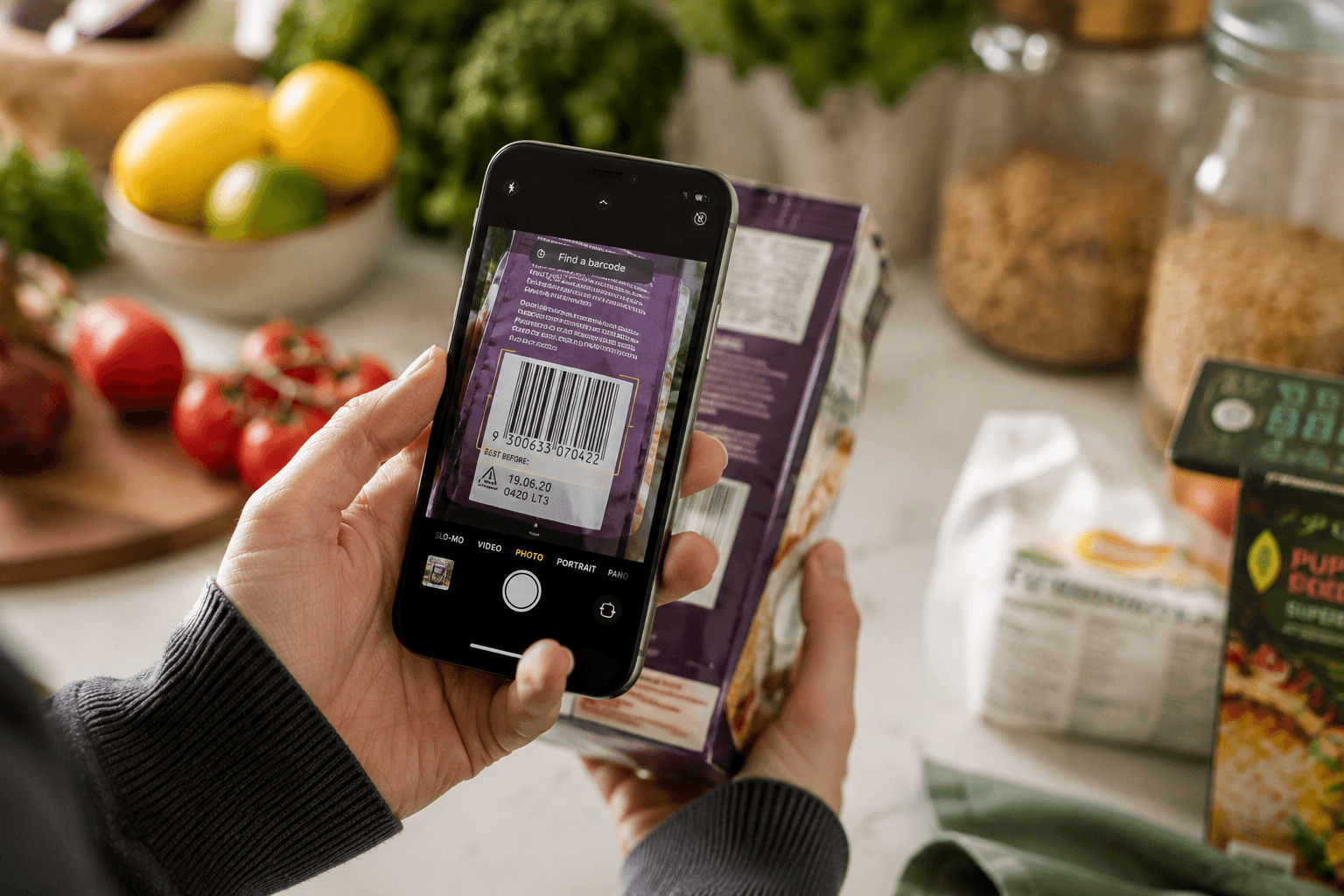
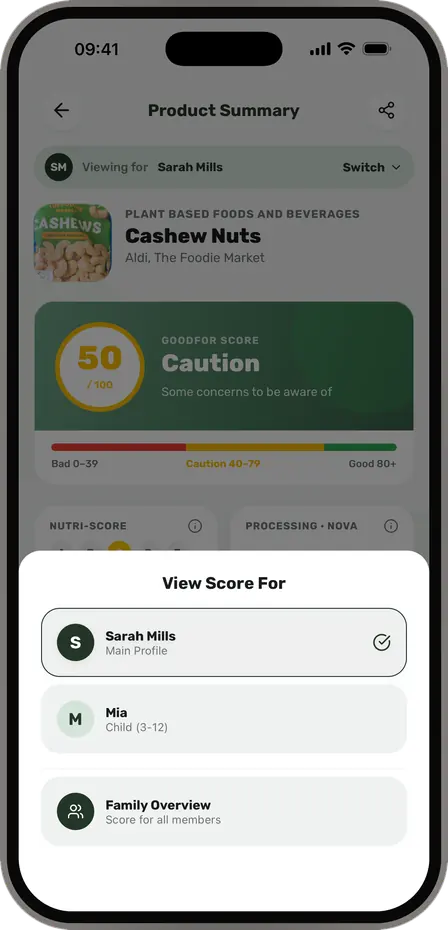
Scanning a snack in GoodFor gives one 0-100 score in a second, with the reasons behind it. Every scan shows the ingredients, additives, sugar, salt and saturated fat, alongside Nutri-Score (A to E) and the NOVA processing group (1-4), so you see quality, processing and personal fit together.
NOVA groups food by how processed it is, from 1 (unprocessed) to 4 (ultra-processed). GoodFor flags the group on every scan.
Nutri-Score grades the overall nutritional quality of a food from A (best) to E, per 100 g. GoodFor shows it on every scan.
Up to five family profiles each hold their own allergies, preferences and goals. Allergens, including “may contain” warnings, are flagged on every scan. If a snack scores badly or does not fit a profile, GoodFor suggests a suitable replacement from the same store, and Lumi, the in-app food coach, finds alternatives that keep that child’s preferences. GoodFor is used by thousands of families, gives general nutrition information and is not medical advice.
Frequently Asked Questions
🛒 Next time you shop or prep snacks for your child
- Pick snacks that are green or amber for sugar and salt on the front-of-pack traffic-light label and check the per-portion column.
- Make a snack shelf with two new fruit, veg, grain or dairy options each week and let your child help choose them.
- For allergies, always read the bold allergen list and the “may contain” line on every pack, especially if recipes change.


Make safer everyday choices