




Key Takeaways
- Edamame are young green soya beans, sold frozen in UK supermarkets, eaten by squeezing out the beans and discarding the pods.
- 100 g of cooked edamame provides around 13.3 g protein and 5.9 g fibre, according to Sainsbury’s product nutrition.
- Edamame pods are not edible; only the soft beans inside should be eaten.
- Soya is one of the 14 regulated UK allergens, so “edamame (soya)” must always be declared in ingredients lists.
- Cooking instructions differ by product: plain edamame may need 5 minutes of boiling or 3 minutes in the microwave, so always check the pack.
🌱 What edamame beans are, where they come from and how they are used in food
Edamame are young green soya beans, harvested before they mature and eaten as the beans inside the pod, never the pod itself. In the UK they are regulated as soya, which makes them a major food allergen.
The Food Standards Agency lists edamame among the foods that contain soya. Left on the plant, the same beans would harden and turn beige or brown, and those mature beans are the ones used for tofu, soya milk and soy sauce. Edamame is simply the early, tender stage of that crop.
The pod is the packaging, not the food. Sainsbury’s Edamame Beans and the itsu Garlic & Chilli Tumbled Edamame both say to squeeze the beans out and discard the shell.
Because edamame is soya, the law treats it as soya. UK guidance requires soya to be declared as an allergen in ingredient lists and on menus. Where a pack uses the less familiar word “edamame”, the technical guidance gives “edamame (soya)” as the clear way to write it.
🥣 Where edamame turns up in UK foods and how to spot it in the ingredient list
In the UK, edamame is most often listed as “edamame soya beans” or “soya beans”, with soya emphasised as an allergen, usually in bold or another contrasting style. The FSA’s allergen list confirms that edamame must be declared as soya.
The table compares named products per 100 g, using the retailers’ own figures. For protein and fibre, higher is better; for salt, lower is better. Position shows where edamame sits in the ingredient list, which runs from the largest ingredient down.
| Product name | Ingredient-list wording | Position/order | Per 100 g |
|---|---|---|---|
| Tesco Edamame Beans in Pods | Edamame soya beans in pods | 1st of 1 | 153 kcal, 14.0 g protein, 6.0 g fibre, salt <0.01 g |
| Sainsbury’s Edamame Beans 500g | Soya beans | Only ingredient | 148 kcal, 13.3 g protein, 5.9 g fibre |
| itsu Garlic & Chilli Tumbled Edamame | Edamame soya beans, with oil, sugar, soy sauce and sesame | Listed alongside the sauce ingredients | 5.2 g protein, 9.1 g fibre, salt 2 g |
| Tesco Finest Edamame & Greens Salad | Edamame Soya Beans (43%) | 1st of 23 | 112 kcal, 7.7 g protein, 3.9 g fibre, salt 0.37 g |
| Tesco Finest Char Siu Style Greens | Edamame Soya Beans | 1st component of the first compound ingredient | 135 kcal, 7.6 g protein, 7.5 g fibre, salt 0.76 g |
| Tesco Vegetable Sushi | Edamame Soya Beans | 3rd of at least 30 | 143 kcal, 3.2 g protein, 1.2 g fibre, salt 0.49 g |
| Tesco Beautifully Balanced Chicken, Broccoli & Almond Salad | Edamame Soya Beans | 3rd of 16 main ingredients | 115 kcal, 9.8 g protein, 3.7 g fibre, salt 0.28 g |
| Tesco Super Grains | Soya Beans (7%) | 1st of 11 principal ingredients | 141 kcal, 3.6 g protein, 5.4 g fibre, salt 0.4 g |
| Tesco Hot Smoked Salmon Grain Bowl | Edamame Soya Beans (9%) | 7th principal ingredient | 133 kcal, 5.0 g protein, 2.3 g fibre, salt 0.41 g |
| Tesco Plant Chef Thai Inspired Green Vegetable Curry | Edamame Soya Beans | 9th of 30 | 89 kcal, 2.3 g protein, 2.4 g fibre, salt 0.37 g |
| YO! Chicken & Sweet Pepper Poke | Spicy Edamame Beans (8%) (Edamame Beans (Soya)) | Inside a compound ingredient | 137 kcal, 6.1 g protein, fibre <0.5 g, salt 0.98 g |
What this shows: Plain bagged edamame (Tesco and Sainsbury’s) gives 13.3 to 14.0 g protein per 100 g, about two to four times the protein of the ready meals and salads, where edamame is one ingredient among many. Itsu’s flavoured version has 2 g salt per 100 g, far above the plain bags. For protein, buy plain edamame; in every product, soya is declared as an allergen.
Tesco Super Grains says only “soya beans”, even though its product description calls them edamame. Searching for the word “edamame” alone would miss it, so search for “soya” too.
🫛 How the body digests and reacts to edamame
Edamame is digested as a legume, supplying protein and fibre. The British Dietetic Association (BDA) lists protein, iron, calcium, zinc and fibre among the nutrients in boiled soya beans and roasted edamame.
The fibre is the part your own digestive enzymes cannot break down, so it passes through to the large intestine. Protein is broken down into amino acids in the stomach and small intestine, which is the usual route for any bean.
The allergic reaction is a different process. In a person with a soya allergy, the immune system treats soya proteins as a threat, and cooking does not remove that. The FSA names soya as a possible health risk for anyone with this allergy.
🔎 Edamame bean safety: UK guidance, allergens and safe amounts
Soya is a regulated allergen in the UK and must be declared on the label whenever it is present, so anyone with a soya allergy should avoid edamame. UK guidance covers soya as an ingredient or processing aid in pre-packed food.
What the law requires on the pack
Soya must appear in the ingredients list with visual emphasis, such as bold type, contrasting colour or underlining. “Soya” or “soy” alone is enough to identify the allergen. A “may contain” statement should rest on a documented risk of cross-contamination. It is no substitute for declaring an ingredient that was added on purpose.
Loose food and eating out
Cafés, restaurants and counters selling unwrapped food must give soya information when it is used. How they do it depends on the business, so ask the person serving you rather than assuming a dish is free of it.
UK sources set no verified intake limit for edamame, so no number is given here. Anyone with a diagnosed allergy should take advice from their specialist, not test their own tolerance.
📚 What studies reveal about eating edamame and its effects
The BDA reports that soya foods including edamame are a source of plant protein, calcium, iron and fibre. Some authorities approve a claim that 25 g of soya protein a day helps reduce blood cholesterol, but that does not guarantee an effect from any edamame portion.
The BDA gives these reference values. They describe the food forms listed, not every frozen, salted or roasted product on the shelf.
- Boiled soya beans, per 100 g: 14 g protein, 3 g iron, 83 mg calcium.
- Roasted edamame or soya nuts: 10.8 g protein in a 28 g serving.
The sources reviewed here are guidance and food-composition data rather than trials. They give no evidence on edamame’s effect on weight, blood sugar or blood pressure, so this page makes no such claims.
💡 Top tip: Check your portion against the pack. Sainsbury’s Edamame Beans list 10.6 g protein per 80 g serving, so you would need about 2.4 servings, nearly 190 g, to reach the 25 g soya-protein mark behind the cholesterol claim.
⚠️ Who should take extra care with edamame
Anyone with a diagnosed soya allergy must avoid edamame. Check ingredient lists for “soya” or “edamame (soya)”, and ask about soya when eating out.
Also take care if a specialist has advised you to restrict soya, or if you manage a soya-free diet for an intolerance. Cambridge University Hospitals guidance on soya exclusion stresses checking every label. It notes that soya appears under several names, including edamame, tofu, tempeh, soya protein and soya flour.
Not seeing the word “edamame” does not make a product safe. Read the whole ingredients list and any precautionary statement.
⚠️ Watch out: Every edamame product is unsafe for someone with a soya allergy unless their allergy specialist has said otherwise. This includes salads, sushi and poke bowls where edamame is a small part of the dish.
🏷️ The best way to spot edamame on a UK label and easy swaps
Check the ingredients list for “soya” or “edamame (soya)” and look for bold or highlighted allergen text. Official guidance recommends “edamame (soya)” when a pack uses the word “edamame”.
- Find the ingredients list on the pack, not the front label.
- Look for “soya”, “soy”, “edamame” or “edamame (soya)”.
- Spot the allergen highlighting, which may be bold, underlined or coloured.
- Check for “may contain” soya warnings, which flag a cross-contamination risk.
🔄 Try instead: Pick up frozen garden peas instead of shelled edamame in salads and stir-fries. Peas carry no soya allergen and still bring protein and fibre. On the bag, look for “peas” as the only ingredient and no bold “soya” anywhere. Add soya to a family member’s allergies in GoodFor and every scan warns you before the pack goes in the trolley.
🚫 Edamame myths and what the facts show
The most common mistake is eating the tough shell, when only the beans inside the pod are meant to be eaten. The itsu pack and the Sainsbury’s page both describe squeezing out the beans and discarding the pods.
Flavoured edamame is a different product from plain. Sainsbury’s plain edamame lists 13.3 g protein per 100 g, while itsu Garlic & Chilli lists 5.2 g. The itsu product adds oil, sugar, soy sauce and 2 g salt per 100 g.
Fibre is also voluntary on UK labels, so it may be missing from a nutrition panel even when the food contains it.
How GoodFor Scores edamame
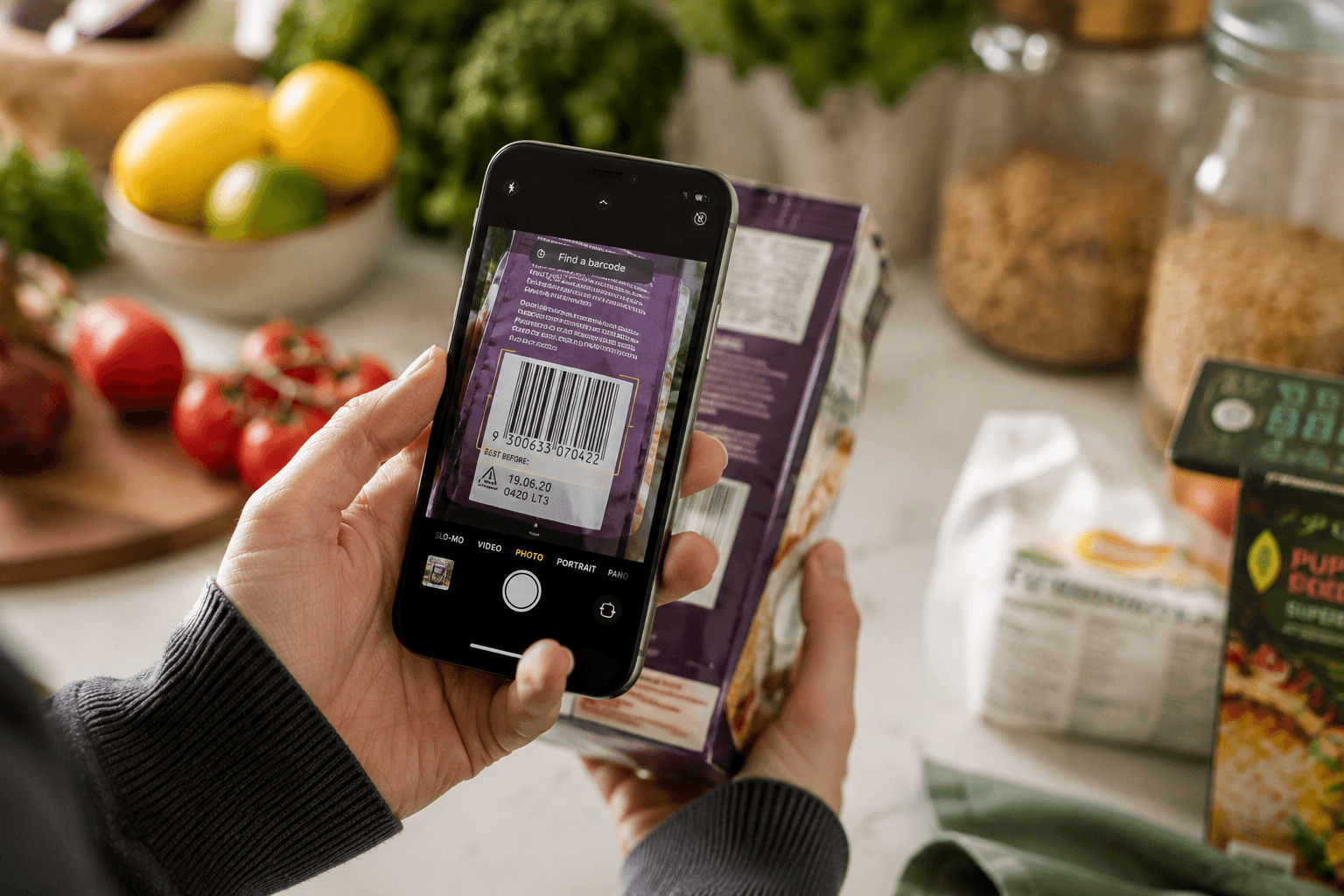
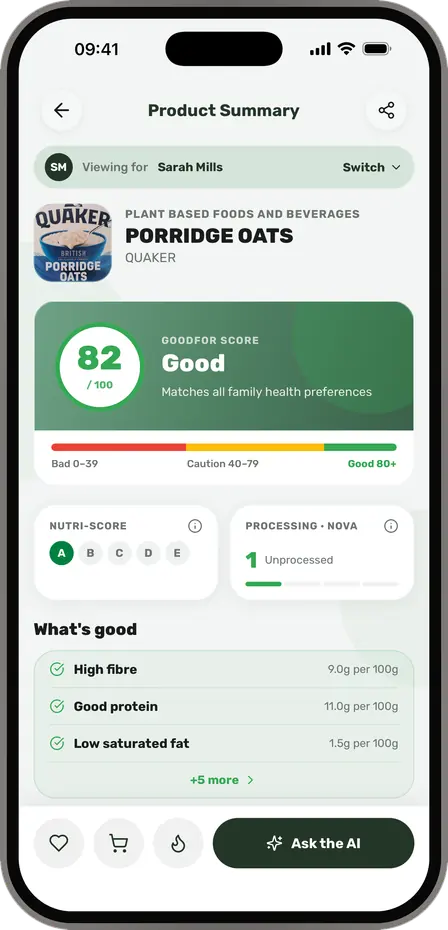
GoodFor scores edamame on its protein and fibre per portion, its allergen information and the declared values for energy, fat and salt. UK labels must declare energy, fat, saturates, carbohydrate, sugars, protein and salt. Fibre appears only when the maker chooses to show it.
GoodFor is a UK food scanning app used by thousands of users. It turns the label into one 0-100 score, with every deduction listed. It also shows Nutri-Score and the NOVA processing group, so plain edamame and a sauced version are easy to tell apart.
NOVA groups food by how processed it is, from 1 (unprocessed) to 4 (ultra-processed). GoodFor flags the group on every scan.
Nutri-Score grades the overall nutritional quality of a food from A (best) to E, per 100 g. GoodFor shows it on every scan.
Soya is always flagged. If a profile has a soya allergy, the scan carries a warning every time.
Frequently Asked Questions
🛒 At your next shop or meal with edamame, check these three things
- Read the ingredients list for “soya”, “edamame”, or “edamame (soya)” and be sure the allergen is highlighted.
- Use frozen garden peas as a swap for edamame in salads or stir-fries if anyone needs a soya-free option.
- Eat only the beans, not the pod, and check the portion size and salt if picking a flavoured or ready-to-eat version.


Make safer everyday choices