




Key Takeaways
- A 17 g bag of salt and vinegar potato sticks with 0.43 g of salt uses about 14% of the 3 g daily maximum for a child aged 4 to 6.
- UK labels class more than 1.5 g of salt per 100 g as high and 0.3 g or less as low, so a bag can be red by weight yet small per bag.
- Compare salt per bag and per 100 g for the exact pack size you buy, because multipack portions vary from 17 g to 25.5 g.
- Daily salt maximums are 2 g at ages 1 to 3, 3 g at 4 to 6, 5 g at 7 to 10 and 6 g from age 11.
- Read salt, fat and allergens from the label on the pack in your hand, because recipes, pack sizes and product names change.
🥔 What the salt and calorie figures mean for Chipsticks
The only verified current UK pack is Smiths Chipsticks Salt & Vinegar, with 0.43 g of salt and 83 kcal per 17 g pack. The same Tesco listing gives 3.9 g fat and 0.3 g saturates per pack, and 2.5 g salt per 100 g.
Those two salt numbers tell different stories. Per pack, 0.43 g looks small because the pack is small. Per 100 g, 2.5 g sits well above the 1.5 g line that nidirect classes as high salt, while low salt is 0.3 g per 100 g or less. The per-100 g figure decides the traffic light colour, and the per-pack figure is what a child actually eats.
The NHS sets maximum daily salt intakes that rise with age:
- 1 to 3 years: 2 g
- 4 to 6 years: 3 g
- 7 to 10 years: 5 g
- 11 years and over: 6 g
The worked examples below use that one label, so they apply to that flavour and pack size only. For any other Chipsticks or Mr Chips pack, read the grams and the salt line on the pack in your hand.
🧂 Why salt content matters for children and families
A four-year-old’s 3 g ceiling is half an adult’s 6 g, and a one-to-three-year-old’s 2 g is a third. A snack that looks modest on a parent’s plate therefore takes a bigger share of a child’s day.
Crisps add to the day’s total rather than replacing anything. A child who has a sandwich, soup or cereal has already used part of the allowance before the snack box is opened. A second bag, or a handful from a sharing bag, doubles the salt in one sitting and is easy to miss.
Higher blood pressure risk from excess salt
Salt supplies sodium, and the BDA explains that extra sodium can raise blood pressure while reducing sodium lowers it. That link is why the age limits are set low, and why a snack that adds salt on top of meals is worth tracking.
Salt intake and weight management in children
A salty snack carries two costs at once: salt against the child’s limit and energy against their day. The BDA’s snack guidance says snacks high in salt, fat and sugar make it easier to exceed energy needs, and frequent excess energy can contribute to weight gain.
Snacks and healthy eating habits
The Eatwell Guide places crisps among foods to eat less often and in small amounts. The British Nutrition Foundation’s version treats them as occasional extras, not everyday snacks.
📊 UK salty snacks compared: salt, calories and pack sizes
Pack sizes in UK multipacks run from 17 g (Smiths Chipsticks Salt & Vinegar) to 25.5 g (Discos Salt & Vinegar), so a bigger bag is not always saltier and a smaller bag is not always lower-salt. Chipsticks are the saltiest of these by weight at 2.5 g per 100 g, yet the 17 g bag delivers less salt than a 25 g bag of McCoy’s.
The table compares salt and saturated fat per pack, at the pack size named in each row, with the share of a 4 to 6-year-old’s 3 g limit. Lower is better for salt and saturates. The traffic light column uses the per-100 g salt value against the 1.5 g and 0.3 g lines. Figures come from Tesco, Sainsbury’s and Walkers pack listings.
| Product and pack size | Salt per pack (g) | Share of 4 to 6 daily max (3 g) | Saturates per pack (g) | Traffic light salt (per 100 g) |
|---|---|---|---|---|
| Smiths Chipsticks Salt & Vinegar (17 g) | 0.43 | 14% | 0.3 | Red (2.5 g) |
| Discos Salt & Vinegar (25.5 g) | 0.5 | 17% | 1.4 | Red (about 2.0 g) |
| Walkers Ready Salted (25 g) | 0.34 | 11% | 0.6 | Amber (1.3 g) |
| Walkers Less Salt Lightly Salted (25 g) | 0.15 | 5% | 0.63 | Amber (0.6 g) |
| Walkers Salt & Vinegar (25 g) | 0.16 | 5% | 0.6 | Amber (0.63 g) |
| Kettle Chips Lightly Salted (25 g) | 0.2 | 7% | 0.5 | Amber (0.7 g) |
| McCoy’s Salt & Vinegar (25 g) | 0.6 | 20% | 0.6 | Red (2.1 g) |
| Walkers Baked Ready Salted (22 g) | 0.19 | 6% | 0.32 | Amber (0.9 g) |
What this shows: The two Walkers lower-salt bags hold about a third of the salt in the Chipsticks bag (0.15 g and 0.16 g against 0.43 g). McCoy’s is highest per bag at 0.6 g, a fifth of a young child’s day. Only Chipsticks, Discos and McCoy’s are red. If you buy crisps, pick an amber bag and check the grams per pack first.
💡 Top tip: Put two bags side by side and read salt per bag first. Use the per-100 g line only to see the colour. An amber bag can hold less than half the salt of a red one, as 0.15 g against 0.43 g shows.
🔬 What the research shows on salt and crisps
Official UK guidance names crisps among the salty snacks to limit, and children need less salt than adults. Judge any crisp with the 1.5 g and 0.3 g per 100 g lines from the first section.
One trap sits between the label and the limit: sodium is not salt. A 2008 Action on Salt parent survey found that 48.2% knew 1 g of sodium equals 2.5 g of salt, while 47.2% thought sodium and salt were the same thing. Multiply sodium by 2.5 to get salt. The 1.5 g high-salt line is 0.6 g of sodium, according to the NHS label guide.
NHS and British Dietetic Association guidance
The NHS and the BDA publish the same age limits, so the figures in the first section are the ones to use whichever you check. The same NHS guidance says to choose foods with more greens and ambers on traffic-light labels and fewer reds.
Where the evidence is unclear for crisps and health
The sources reviewed give no product-specific evidence on how a single bag of these crisps affects health. The advice rests on the salt and blood pressure link and on the age limits, not on studies of this product.
🏷️ What food label claims actually mean on savoury snacks
A front-of-pack claim speaks about one nutrient and stays silent on the rest, so check it against the nutrition panel.
Traffic lights are voluntary, and their colour bands are set by per-100 g thresholds: red is high (above 1.5 g of salt), amber is medium and green is low (0.3 g or less).
“No added sugar”
A “no added sugar” claim is about sugar only. It does not mean the product is low in salt, fat or calories.
“Source of fibre”
“Source of fibre” is a fibre claim. It says nothing about salt or fat and does not mean the snack is high in fibre.
“Wholegrain”
“Wholegrain” says nothing about salt, calories or fat. Check the panel for those.
“Light” and “Lite”
“Light” normally points to a reduction in something compared with a standard product, and the pack should say what. The product can still be high in salt, fat or energy, so read the figures per 100 g and per pack.
“Natural”
“Natural” on crisps tells you nothing about the salt line on the panel.
“High protein”
“High protein” crisps can contain more protein without being lower in salt or fat.
📋 Choosing a crisp or salty snack in the UK: step-by-step
Check both per 100 g and per pack figures, because bag sizes and recipes vary across brands. Run these steps in order at the shelf:
- Read the grams on the front of the bag, because 17 g, 24 g and 25.5 g packs are not equal portions.
- Find salt per 100 g and compare it with the 1.5 g and 0.3 g lines.
- Work out salt per bag: per-100 g salt × bag grams ÷ 100 (2.5 × 17 ÷ 100 = 0.43 g).
- Divide the bag’s salt by your child’s daily maximum, for example 3 g at ages 4 to 6.
- Read fat and saturates per bag, not per 100 g, so bags of different sizes compare fairly.
- Read the allergens in bold in the ingredients and the “may contain” line.
- Count the other salty and fatty foods already planned for that day.
✅ Quick check:
- Have you read the grams on the pack?
- Have you worked out salt per bag, not just per 100 g?
- Does the allergen list suit everyone eating it?
- Are most snacks this week low-salt or whole foods?
👦 Specific considerations for children and other household needs
For a child aged 4 to 6, a 17 g pack with 0.43 g of salt is about 14% of the 3 g daily maximum (0.43 ÷ 3 × 100 = 14.3%). The adult reference intake printed on packs is 6 g of salt a day, according to the British Nutrition Foundation. That is double the limit for ages 4 to 6, so a percentage printed on the pack understates a young child’s share.
Children (by age: 1-3, 4-6, 7-10, 11+)
The same 17 g bag takes about 22% of the limit for ages 1 to 3, 9% at ages 7 to 10 and 7% from age 11. The younger the child, the lower the maximum and the bigger the share.
Weight management for children and adults
Bags of 83 to 133 kcal (the 17 g and 25.5 g packs above) sit at or below the 100 to 150 kcal treat portion the British Nutrition Foundation gives as an example. Smaller portions help limit excess energy.
Pregnancy
Someone who is pregnant should check the allergen and ingredient statements on the pack before eating any snack food. No product-specific pregnancy assessment is possible without them.
Allergies and intolerances
Only the product’s ingredient and allergen label tells you whether a crisp is safe, especially with flavoured crisps or “may contain” lines. Look for allergens in bold and read the “may contain” notice before assuming a pack is allergen-free.
🥕 Lower-salt swaps: what to offer instead of regular crisps
The NHS suggests swapping crisps for plain rice cakes, fruit or vegetable sticks. Plain popcorn is another low-salt option, and the figures sit in the swap below. Our guide to 10 healthy snacks for kids has more lunchbox ideas.
🔄 Try instead: Pick up plain rice cakes or plain popcorn instead of Smiths Chipsticks Salt & Vinegar. A rice cake has about 0.05 to 0.1 g of salt and a 20 g portion of popcorn about 0.1 g, against 0.43 g in a 17 g bag. Look for the word “plain” on the pack. Scan both in GoodFor and each salt figure shows before the pack goes in the trolley.
⚠️ Common mistakes parents make with salty snacks and crisps
Salt and portion size are easy to misjudge when bag sizes, per-100 g figures and traffic lights get mixed up. These are the slips that come up most:
- Comparing one brand per bag with another per 100 g, so the two numbers never line up.
- Reading the traffic light colour as the whole answer, without counting how many bags are eaten.
- Assuming all crisps are equal, when pack size and recipe change the salt per bag.
⚠️ Watch out: Amber still adds up. Walkers Ready Salted is amber at 1.3 g salt per 100 g, yet two 25 g bags bring 0.68 g of salt. Traffic lights compare foods per 100 g. They do not count how many bags a child eats.
📅 Salt-smart snack planning: what to buy and serve this week
A 17 g bag with 0.43 g of salt fits inside a primary-school child’s daily maximum when it is an occasional treat among lower-salt options. Plain rice cakes, popcorn, fruit and vegetable sticks make better everyday snacks.
💡 Top tip: Pick the crisp day first, before shopping. Choose one fixed day for the bag, then fill the other snack slots with fruit, plain rice cakes or vegetable sticks. A fixed slot stops crisps drifting into every lunchbox.
📱 How GoodFor Scores Mr Chips Nutrition
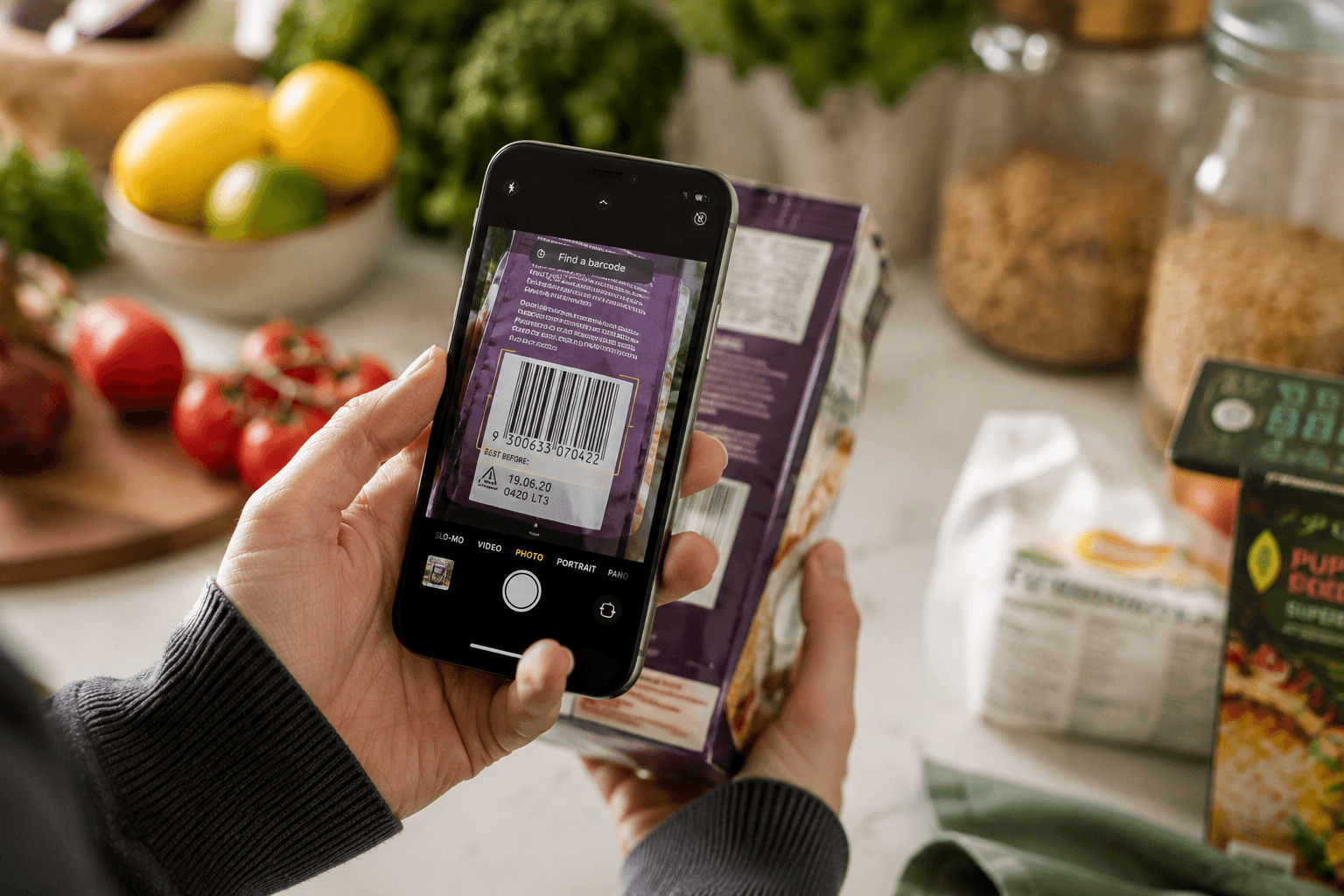
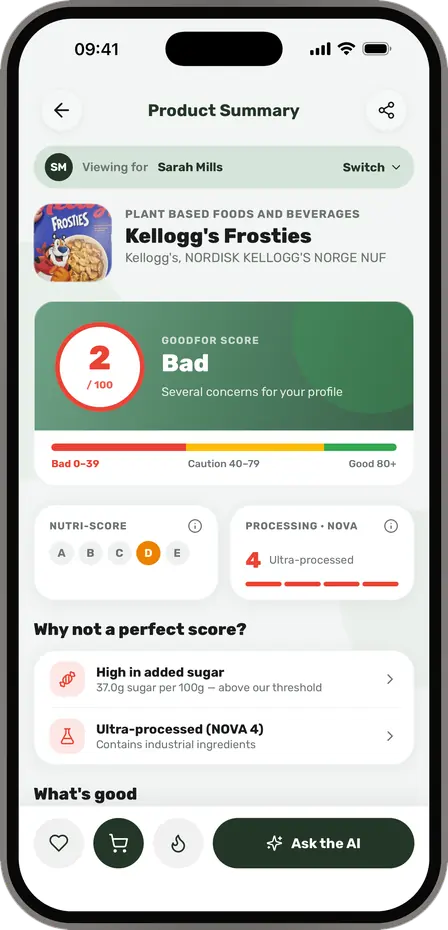
GoodFor shows the salt and saturated fat of a scanned bag of crisps, with the reasons behind the number. Each scan gives a 0 to 100 score alongside Nutri-Score (A to E) and the NOVA ultra-processing group (1 to 4), so one scan shows nutritional quality, processing and personal fit. The score uses nutrient levels per 100 g against official thresholds, and every deduction is listed.
NOVA groups food by how processed it is, from 1 (unprocessed) to 4 (ultra-processed). GoodFor flags the group on every scan.
Nutri-Score grades the overall nutritional quality of a food from A (best) to E, per 100 g. GoodFor shows it on every scan.
GoodFor is a UK food and drink scanning app for iOS and Android, used by thousands of users. Up to five family profiles can be switched in a tap. Each profile carries its own allergies, goals and a UK region setting, so a nut, dairy or gluten allergy triggers a warning on every scan. If a product does not fit a profile, GoodFor suggests a replacement in the same store. Scanning and scores are free to start.
Frequently Asked Questions
🛒 At your next shop for family crisps and snacks
- Check the pack size and find both salt per bag and per 100 g, whether you are reading Mr Chips nutrition or any other crisp.
- Divide the salt per bag by your child’s age limit to see the share of their day.
- Plan crisps as an occasional treat and fill the rest of the week’s snacks with fruit, plain rice cakes or popcorn.


Make safer everyday choices