




Key Takeaways
- Gherkins are low in calories but salty, with jarred UK products ranging from 0.63 g to 2.2 g of salt per 100 g, so the label matters.
- The NHS advises adults to eat no more than 6 g of salt a day, and one 62 g serving of some whole gherkins holds 0.73 g.
- For children aged 4 to 6 the daily salt limit is 3 g, and a 40 g serving of a sweet-vinegar jar uses nearly 10% of it.
- Treat gherkins as a condiment or topping rather than a vegetable portion.
- Compare salt per 100 g before you buy, and check the sugars line too on sweet jars.
🥒 What a gherkin is: a small cucumber pickled in brine or vinegar
Gherkins are cucumbers typically 3 to 13 cm long, pickled in a salty vinegar solution so they are tangy, crunchy and ready to eat straight from the jar. The word comes from early modern Dutch, where it meant a small pickled cucumber.
Most jar gherkins sit at the small end of that range, roughly 2.5 to 5 cm. They have bumpy, bright green skin and a firm snap.
They are made from young cucumbers picked while still small. That gives a firmer, snappier bite than the large, watery cucumbers sold fresh in the supermarket.
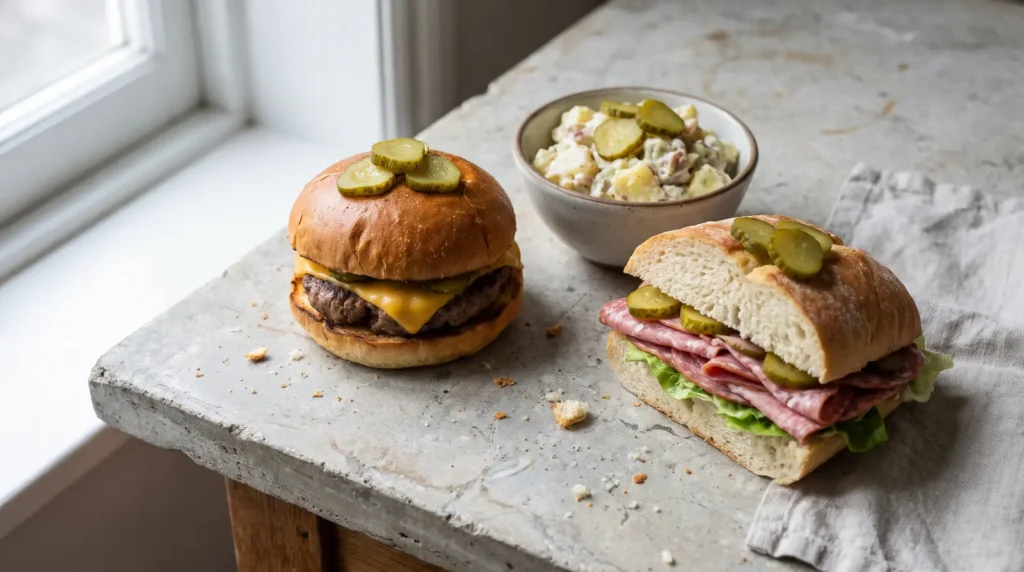
In the UK, “gherkin” means the small pickled cucumbers sold in jars. In the US the same product is usually called a “pickle”, so an American recipe asking for pickle slices on a burger means gherkin slices.
🥗 How pickles, cornichons and cucumbers differ in the UK
The table compares four products by what they are and how they are normally used, so you know which one a recipe or jar means.
| Product | What it is | Typical use |
|---|---|---|
| Cucumber | Fresh, raw vegetable with a mild flavour | Salads, sandwiches |
| Gherkin | Small cucumber pickled in vinegar or brine, sold in a jar | Burger and sandwich topping, cheese and charcuterie boards |
| Pickle | Any vegetable in vinegar or brine (UK), or a gherkin (US) | Condiment, snack, recipe ingredient |
| Cornichon | Small French pickled gherkin, often with herbs | Served with cold cuts |
What this shows: All gherkins are pickles, but not every pickle is a gherkin. Only fresh cucumber is eaten raw and unpickled. On a UK shelf, “pickle” can mean chutney-style Branston or pickled onions, so check the picture and the ingredient list before you buy.
Sweet gherkins have sugar in the brine. Savoury types are flavoured with dill, garlic or other herbs. Cornichons are usually flavoured with dill and tarragon and served with pâté and cold meats.
🧂 Nutrition: calories, salt and sugars per 100 g in UK jars
Across the jars below, salt runs from 0.63 g to 2.2 g per 100 g drained weight and sugars from under 0.5 g to 9.8 g. Energy is low everywhere. The British Heart Foundation also says pickled vegetables vary considerably in salt, so comparing labels is the only reliable method.
The table compares each jar per 100 g of drained gherkins, so the figures are fair to compare. Lower is better for salt, sugars and calories.
| Product | Style | kcal per 100 g | Sugars (g per 100 g) | Salt (g per 100 g) | Label |
|---|---|---|---|---|---|
| Tesco Sliced Gherkins | Sweet-style slices | 49 | 9.8 | 0.63 | Medium |
| Tesco Crinkle Cut Gherkins | Sweet-style slices | 51 | 9.6 | 0.64 | Medium |
| Sainsbury’s Pickled Gherkins in Sweet Vinegar | Sweet | 34 | 5.3 | 0.73 | Medium |
| Baxters Sliced Crunchy Sweet Gherkin | Sweet | 44 | 7.6 | 0.84 | Medium |
| Dawtona Kashubian Gherkins | Whole, savoury | 35 | 6.7 | 1.1 | Medium |
| Tesco Whole Pickled Gherkins | Whole | 19 | 2.1 | 1.17 | Low |
| Moryn Sour Gherkins | Sour | 10 | under 0.5 | 1.86 | Low |
| Opies Mini Gherkins | Mini | 23 | 2.9 | 2.2 | Low |
What this shows: The sliced and sweet jars have the least salt but the most sugar. Tesco Sliced Gherkins has 0.63 g of salt, under a third of the 2.2 g in Opies Mini Gherkins. Tesco’s sliced jar also has about five times the sugars of its whole jar (9.8 g against 2.1 g). Pick the jar with the lowest salt for your family, then check sugars if it is a sweet one.
Serving sizes are set by each manufacturer and are not recommendations. Tesco’s sliced gherkins list 0.23 g of salt for a 37 g serving, and other jars use different serving weights. That is why per 100 g is the fair comparison.
Check salt, not sodium. The British Dietetic Association says salt is roughly 2.5 times the sodium figure, so a sodium number looks much smaller than the salt it represents.
✅ Quick check:
- Read salt per 100 g first, not per serving.
- On sweet jars, read the sugars line too.
- Look at the salt number, not the sodium number.
- Use the jar’s own label, not a generic figure.
⚖️ Are gherkins healthy? Salt and portion size in a balanced diet
Gherkins add crunch and tang for very few calories, but their salt is high enough that the NHS lists pickles among foods to have “less often or in small amounts”, because too much salt raises blood pressure. The adult maximum is 6 g a day, about one level teaspoon.
The British Dietetic Association gives the child limits as 2 g for ages 1 to 3, 3 g for ages 4 to 6, 5 g for ages 7 to 10, and 6 g from age 11. For a six-year-old, that looks like this:
- A 62 g serving of Tesco whole gherkins holds 0.73 g of salt, which is 24% of the 3 g daily limit.
- A 40 g serving of Sainsbury’s sweet vinegar gherkins holds 0.29 g, nearly 10% of the same limit.
Both figures come before the burger, bread, cheese and ketchup are counted.
On the plus side, gherkins have far fewer calories than mayonnaise or extra cheese. That makes a few slices a useful flavour boost in place of a second layer of sauce.
Naturally fermented pickles can contain live bacteria. UK supermarket gherkins are preserved in vinegar, not fermented, so don’t expect a probiotic benefit from an ordinary jar.
⚠️ Watch out: Low calories do not mean low salt. A 100 g handful of Opies Mini Gherkins holds 2.2 g of salt, nearly three quarters of a four-to-six-year-old’s whole day. Put a few slices on a plate, not the jar on the table.
🧪 Why the brine makes jarred ones so salty
Gherkins are pickled in brine made of salt, vinegar and water, and the salt does two jobs: it preserves the cucumbers for months, and it gives the savoury, tangy flavour you expect from a jar. While the cucumbers sit in the brine, they soak up sodium from it.
That is why even a small portion carries a real amount of salt. It is also why a jar gherkin is nowhere near as low in salt as a raw one. A UK nutrition database lists raw gherkins at 0.03 g of salt per 100 g, against at least 0.63 g in the jars above.
Rinsing washes off surface brine, but no verified figure exists for how much salt it removes. It also washes away some of the flavour you bought the jar for.
💡 Top tip: If you are watching salt, rinse gherkins under cold water just before serving, then chop them small so a little goes further. Still count the label figure in full, and add up the salt in the bread, cheese and sauces on the same plate.
🍔 How to use them in family meals: burgers, sandwiches and more
Two or three slices do the job of a topping, because gherkins are a condiment and not a side vegetable.
- Burgers and sandwiches: a classic topping (McDonald’s and homemade alike), and they add tang to cheese or ham sandwiches.
- Cheese boards: they pair well with cheddar, crackers and cold meats.
- Salads: chopped, they lift potato salad, tuna salad and coleslaw.
- Relish: blend with onion, mustard and chopped herbs for a burger relish.
- Snack: fine in small amounts, but the salt adds up quickly.
Gherkins already season a dish, so there is no need to add extra salt to a meal that includes them.
🥗 Nutrition example: On burger night, three slices weighing about 30 g in total, from a jar at 0.63 g salt per 100 g, add about 0.19 g of salt. That is roughly 3% of an adult’s 6 g daily maximum, so a few slices cost little. The whole jar would not.
🏷️ Brands and how to compare labels on the UK high street
Branston and Haywards are the national brands, and Tesco, Asda, Sainsbury’s, Morrisons and others sell own-label jars. Many offer both sweet brines (added sugar) and savoury ones (dill, garlic or other herbs).
Compare salt and sugar per 100 g using the table above. Recipes differ even within one brand, and the words on the front of the jar do not tell you the numbers.
When you pick a jar, look for bright green, firm gherkins in clear vinegar. Cloudy liquid or soft gherkins mean the jar is past its best.
UK-grown gherkins are in season from June to October, but pickled jars are sold all year round.
🥶 Storage and shelf life: how long a jar lasts once opened
An unopened jar keeps up to a year in a cool, dry cupboard. Once opened, keep it in the fridge with the gherkins submerged in the brine, where it lasts three to six months.
Cloudy vinegar or gherkins that have lost their crunch mean quality is dropping, the same signs to look for in the shop. Don’t freeze pickled gherkins, because freezing makes them soft and mushy.
Fresh, unpickled gherkins or small cucumbers keep in the fridge for up to one week. If you have too many, pickle them rather than freezing them.
💡 Top tip: After each spoonful, press the gherkins back under the liquid and screw the lid on tightly. Use a clean fork every time, so nothing spoils the brine.
📱 How GoodFor Scores
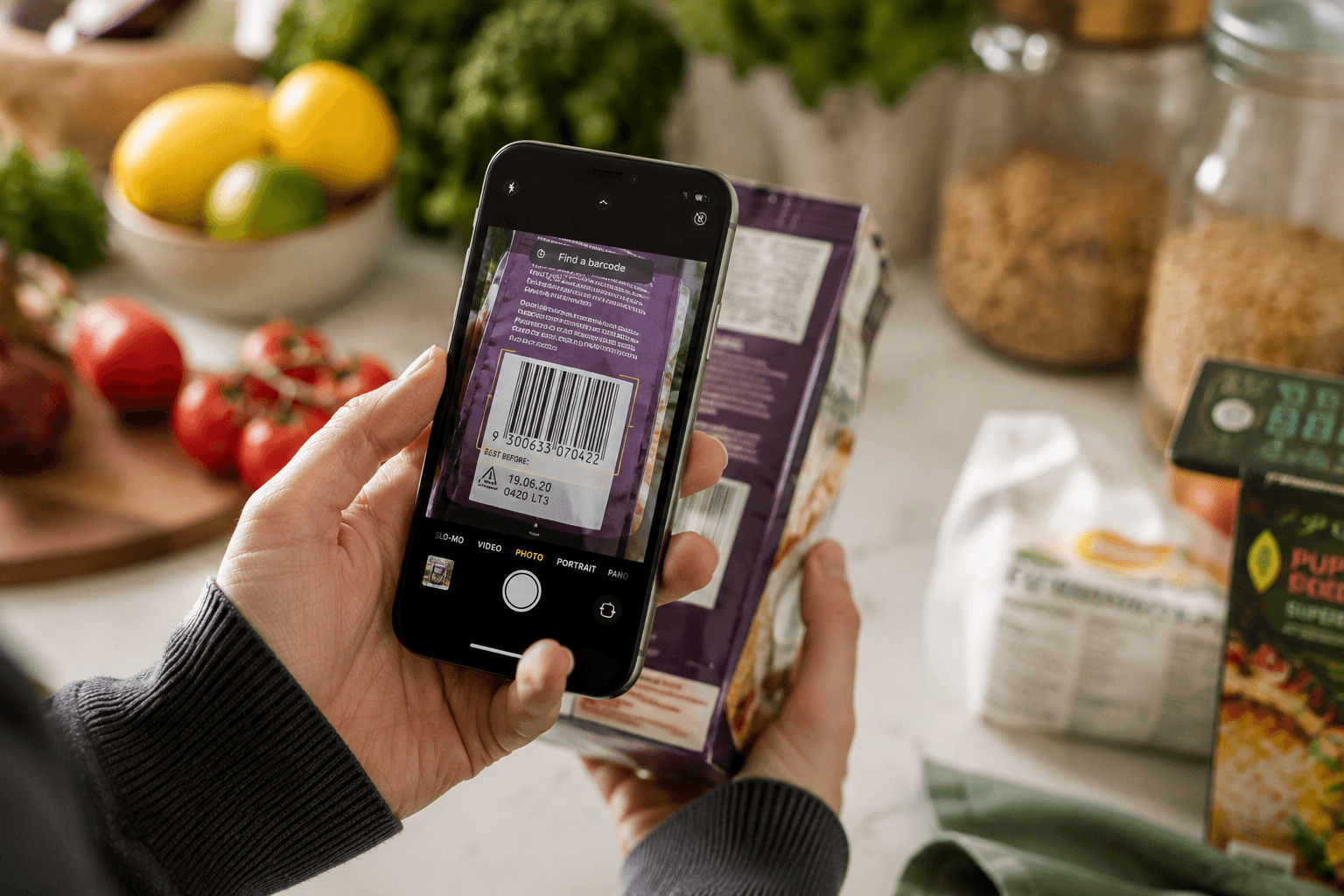
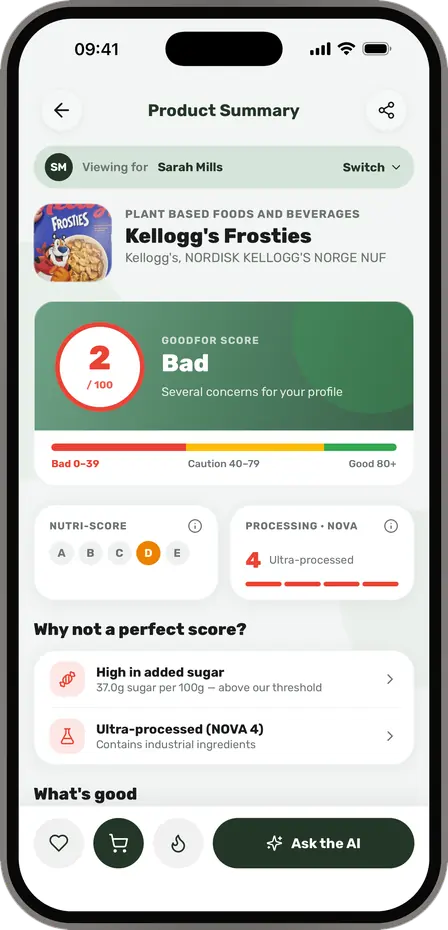
GoodFor is a UK food and drink scanning app used by thousands of users. Scan a jar and it shows the ingredients, salt, sugar and saturated fat, with the reasons behind the number.
Each 0-100 score draws on nutrient levels per 100 g against official thresholds, the degree of processing and additive risk ratings. Every deduction is listed so you can see why. The app also shows Nutri-Score and the NOVA processing group for the same jar.
NOVA groups food by how processed it is, from 1 (unprocessed) to 4 (ultra-processed). GoodFor flags the group on every scan.
Nutri-Score grades the overall nutritional quality of a food from A (best) to E, per 100 g. GoodFor shows it on every scan.
Family profiles personalise the score, for example for a child’s allergy or a health goal. Recipe import scores a recipe that uses gherkins, and Lumi, the in-app food coach, suggests alternatives that keep a person’s preferences and goals.
Frequently Asked Questions
At your next shop or family meal with gherkins
- Compare salt per 100 g on the labels and pick the jar with the lowest figure, checking sugars on sweet ones.
- Serve a few slices as a topping or side rather than the whole jar.
- After opening, store the jar in the fridge with the gherkins submerged in brine, and use a clean fork.


Make safer everyday choices