





Key Takeaways
- Choose rapeseed oil or olive oil for most everyday cooking, because both are low in saturated fat and fit UK heart-health advice.
- Limit oils and fats high in saturated fat, such as coconut oil (about 90%) and butter (about 51%), to support heart health.
- Use high smoke-point oils (200°C and above), such as refined rapeseed or sunflower oil, for frying and roasting to prevent breakdown and harmful compounds.
- Check the label for blended vegetable oils, because the type and proportion of oils used can change the saturated fat content significantly.
- Store oils in a cool, dark place with the lid tightly sealed and use them within 6 to 12 months of opening to keep them fresh.
🫒 The healthiest oils for everyday UK cooking: what to use and why
Rapeseed and olive oil are the safest everyday picks, because UK guidance says to replace saturated fat with unsaturated fat and both oils are low in saturates. Every oil is pure fat, but the type of fat, the heat tolerance and the flavour differ a lot.
Oils are made of three kinds of fat in different proportions:
- Saturated fat: solid at room temperature, as in butter, coconut oil and palm oil.
- Monounsaturated fat: liquid at room temperature, and very high in olive, rapeseed and avocado oil.
- Polyunsaturated fat: includes omega-3 and omega-6 fats, and is also liquid at room temperature.
Smoke point is the temperature at which an oil starts to break down and smoke.
Most shoppers are trying to answer three questions:
- Which oil is healthiest?
- Which should I use for frying and which for dressings?
- Does a higher price mean a better oil?
❤️ Cooking oils and your family’s health: what science and the NHS say
The NHS advises that men have no more than 30 g of saturated fat a day and women no more than 20 g, because too much raises LDL cholesterol (the “bad” cholesterol) and heart disease risk. Most vegetable oils are low in saturates. The exceptions are coconut oil, which Ohio State Health puts at up to about 90% saturated fat, and palm oil, at about 50%.
UK fat guidance says replacing saturated fat with unsaturated fat lowers LDL cholesterol and supports heart health. Your everyday oil is one of the easiest places to make that swap.
Saturated fat and heart health: what happens in the body
Saturated fat is the type that is solid at room temperature, such as butter, lard and coconut oil. Eating more of it than the limits above raises LDL cholesterol in the blood. Higher LDL is linked to a higher risk of heart disease, which is why the advice is to swap rather than simply cut.
Weight and energy: why all oils count
All oils are energy-dense, giving about 120 kcal per tablespoon whatever the type. The Eatwell Guide says even unsaturated oils should be used in small amounts. A healthier fat type does not cancel out the calories, so a swap only helps when it replaces another fat rather than adding to it.
Omega balance: why omega-3 from rapeseed oil matters
Rapeseed oil has about 9 to 11 g of alpha-linolenic acid (ALA, a plant omega-3) per 100 ml, the highest of the common cooking oils. Modern UK diets tend to be high in omega-6, which sunflower and corn oils supply, and low in omega-3. Rapeseed has a better omega-6 to omega-3 ratio than either, so it is the simplest everyday way to rebalance.
🥗 Nutrition example: One tablespoon is 15 ml. At 9 to 11 g ALA per 100 ml, a tablespoon of rapeseed oil gives about 1.5 g of omega-3. Sunflower oil supplies far less, so using rapeseed instead each day raises your omega-3 intake without changing the recipe.
🏷️ Rapeseed, olive, sunflower, coconut and vegetable oils compared by saturated fat
This table compares the saturated fat in nine Tesco oils, as stated on Tesco’s product pages. Lower is better. Figures are per 100 ml, except grape seed and coconut oil, which Tesco states per 100 g.
| Product name | Saturated fat (per 100 ml; grape seed and coconut per 100 g) | Main ingredient(s) | Label |
|---|---|---|---|
| Crisp ‘N Dry 100% Rapeseed Oil | 7.3 g | Rapeseed oil; dimethylpolysiloxane (E900) | High |
| Tesco Pure Vegetable Oil | 8.0 g | Rapeseed oil | High |
| Tesco Stir Fry Oil | 10.3 g | Sunflower oil 88%, sesame oil 10%, ginger extract | High |
| Tesco Pure Sunflower Oil | 11.0 g | Sunflower oil | High |
| Tesco Grape Seed Oil | 11.2 g | Grapeseed oil | High |
| Tesco Olive Oil | 13.1 g | Olive oil | High |
| Lee Kum Kee Sesame Wok Oil | 14 g | Soybean oil, sesame oil 30% | High |
| Carotino Mild & Light Cooking Oil | 14.3 g | Rapeseed oil 75%, red palm fruit oil 25% | High |
| Laila Coconut Oil | 87 g | Coconut oil | High |
What this shows: Crisp ‘N Dry rapeseed oil has the least saturated fat at 7.3 g, and plain olive oil has nearly double that at 13.1 g. Coconut oil is on a different scale at 87 g. For everyday cooking, pick the plain rapeseed or vegetable oil at the top of the table.
📑 What key studies, NHS advice and experts agree (and disagree) on
The NHS and the British Heart Foundation (BHF) agree that replacing saturated fat with unsaturated vegetable oils helps lower cholesterol and supports heart health. The NHS names rapeseed, olive, sunflower and vegetable oils as the choices to use, in small amounts. The BHF adds that there is no conclusive evidence that seed oils increase inflammation or cardiovascular risk, so there is no reason to avoid them.
Large systematic review: oil type and cardiovascular outcomes
A 2015 systematic review of 23 publications found no support for the idea that frying with vegetable oils raises cardiovascular risk. It reported that virgin olive oil reduced cardiovascular events in a large randomised trial. It also found that eating a lot of fried food was probably linked to weight gain, and that oil type might change that link.
NHS and BHF dietary guidance and its basis
Unsaturated oils and spreads are advised “in small amounts”, and saturated fats are to be limited. The advice rests on the cholesterol evidence above, not on any one miracle oil.
Where evidence is missing or experts still debate
Whether unrefined oils are healthier beyond flavour and antioxidants is still debated. No UK source in our research gives an oil portion for children or pregnancy.
🏷️ Reading oil labels in UK supermarkets: claims, E numbers and what matters
Read the named oils on the pack and then the saturates line, because a blend can hide a surprising amount of saturated fat. Carotino Mild & Light, for example, is 25% red palm fruit oil. Pre-packed foods must declare total fat and saturated fat, according to the British Nutrition Foundation, while monounsaturated and polyunsaturated fat are optional.
All nine oils in the table above are “high in saturates” by the UK traffic-light threshold of more than 5 g per 100 g. That is why the useful comparison is oil against oil. It is also why the regulated “low saturated fat” claim (0.75 g or less per 100 ml of liquid) will not appear on any of them.
The one E number in the table is E900 (dimethylpolysiloxane), which Crisp ‘N Dry lists after the rapeseed oil.
“Vegetable oil”, “rapeseed oil” and “cold-pressed”: what each means for your cooking
BBC Food reports that most own-brand vegetable oil on UK shelves is refined rapeseed oil, but the ingredient list is the only proof. “Cold-pressed” means the oil was extracted without heat. It keeps more flavour and natural antioxidants but usually has a lower smoke point, so it suits dressings better than frying.
“Light”, “natural”, “high omega-3” and other label terms decoded
“Light” on an oil can describe colour or mild flavour, not fewer calories or less fat. “Natural”, “pure” and “high omega-3” do not guarantee a lower-saturates oil or a heart benefit. Only the fat claims, such as “low fat” (1.5 g or less per 100 ml), have a legal threshold.
💡 Top tip: Ignore the front of the bottle and turn it round. Look at the ingredients for any named oil you do not want, such as palm oil. Then read the saturates line. Lower is better, and a blend can have a higher figure than you expect.
🛒 How to choose an oil for frying, roasting, baking and salads
Use refined rapeseed, sunflower or vegetable oil for frying and high-heat cooking, and extra virgin olive oil or cold-pressed rapeseed oil for dressings and drizzling. The BHF puts gentle sautéing at 120 to 150°C, shallow frying and roasting at 160 to 180°C, deep-frying at 175 to 190°C, and stir-frying or searing at 200 to 230°C. Refined oils have smoke points of 200°C and above, which covers most home methods.
This table compares the temperature at which each oil starts to smoke. Higher means it copes with hotter cooking. Smoke points vary by brand and how refined the oil is, so treat them as ranges.
| Oil | Smoke point (°C) | Best use |
|---|---|---|
| Refined rapeseed oil | 200 to 230 | Frying, roasting, baking |
| Refined sunflower oil | about 230 | Frying, roasting, baking |
| Vegetable oil (blend) | 200 to 230 | All-purpose |
| Refined or light olive oil | 200 to 210 | Frying, roasting, baking |
| Extra virgin olive oil | 160 to 190 | Dressings, drizzling, gentle sautéing |
| Refined coconut oil | about 230 | Baking, curries |
| Unrefined coconut oil | about 180 | Baking where you want a coconut flavour |
| Butter | about 150 | Baking, finishing dishes, gentle sautéing |
| Refined avocado oil | about 270 | Searing, stir-frying, grilling |
What this shows: Refined rapeseed, sunflower and vegetable oil all clear 200°C. Extra virgin olive oil and butter do not, so keep them for dressings and gentle cooking. Ghee can take high heat, but it is high in saturated fat.
- Decide what you are making: frying, roasting, baking or a dressing.
- For frying and high heat, pick a refined oil with a smoke point above 200°C: rapeseed, sunflower, avocado or vegetable oil.
- For dressings and drizzling, pick extra virgin olive oil or cold-pressed rapeseed, walnut or flaxseed oil.
- Read the saturates line and pick the lowest of the oils that suit the job, unless flavour is your priority.
✅ Quick check:
- Does this oil suit the heat I am cooking at?
- Is its saturated fat per 100 ml lower than the alternatives?
- Are any blends or added ingredients named clearly on the pack?
👩👧👦 Oil choices for children, diabetes, allergies and other needs
Neither the Eatwell Guide nor any source in our research sets a daily spoon limit for oil, for children or adults. The practical levers are how much you use and what else is in the bottle.
Choosing oils for children of different ages
Offer a varied diet cooked with small amounts of unsaturated oils. No UK source in our research gives a figure for the right amount at each age, so there is no spoon count to follow.
Type 2 diabetes and heart health: best oils to keep at home
No oil-specific figure exists for diabetes. The general advice is to favour unsaturated oils such as olive, rapeseed, sunflower and avocado over butter or saturated-fat-rich oils, and to keep energy-dense foods small because the calories still count.
Allergies, intolerances and blended oils
Plain single-oil bottles list one ingredient, but flavoured and wok oils add others. Tesco Stir Fry Oil includes sesame oil, and Lee Kum Kee Sesame Wok Oil is soybean oil with 30% sesame oil. Read the allergen line on any flavoured or blended bottle.
Cooking oil choices for vegetarian and vegan diets
Pure vegetable, rapeseed, olive, sunflower and coconut oils are all vegan. Only blends with butter or ghee need checking.
Managing weight: portion control and oil swaps
Measure oil with a spoon rather than pouring, because the 120 kcal a tablespoon adds up quickly. Swap a high-saturate fat for a lower one instead of adding the new oil on top.
🔄 Try instead: Pick up Crisp ‘N Dry 100% Rapeseed Oil instead of Laila Coconut Oil. A tablespoon has 1.1 g of saturated fat and 124 kcal, against about 12 g for coconut oil, with similar calories. Look for “rapeseed oil” as the ingredient. Scan both in GoodFor and the saturated fat shows before either goes in the trolley.
🔄 Swapping oils: better everyday choices from UK supermarkets
Swapping coconut oil (87 g saturates per 100 g) for Tesco Pure Vegetable Oil (8.0 g per 100 ml) cuts saturated fat roughly ten-fold in everyday recipes. Most “vegetable oil” bottles are rapeseed, so the low figure is typical, though a blend can differ.
- Coconut oil or butter for everyday frying: use refined rapeseed or plain vegetable oil.
- Sunflower oil for a better omega balance: use rapeseed, which also has less saturated fat (7.3 g against 11.0 g per 100 ml in the table above).
- A rapeseed blend with palm oil: choose the plain bottle. Carotino at 14.3 g sits closer to olive oil than to plain rapeseed, even though it is 75% rapeseed.
🚩 Common mistakes: the biggest oil myths and what to do instead
Choosing oil only by smoke point or “natural” claims, using a high-saturated-fat oil daily and reusing oil many times all carry risks for heart health or food quality. Price and origin do not improve the fat profile either.
Believing high smoke point means healthiest choice
A high smoke point tells you how an oil behaves in a hot pan, not how it affects your arteries. Heart-health advice looks at the fat profile: low saturated, high unsaturated. Avocado oil is the classic trap. It has the highest smoke point of the common oils, but that does not make it the best daily oil.
Using coconut oil for heart health based on claims
Coconut oil is about 90% saturated fat, and UK guidance says to use it sparingly rather than as your staple. “Virgin” or “natural” on the label changes the flavour, not the fat profile.
⚠️ Watch out: One tablespoon of coconut oil is about 13.5 g of fat, nearly all of it saturated. That is more than half of a woman’s 20 g daily limit in a single spoonful. Keep it for an occasional curry or bake, not the everyday pan.
Forgetting to check what “vegetable oil” is made from
Blends vary by brand, so read the named oils and the saturates line whenever you switch bottles, as described in the label section above.
Thinking expensive oils are always better for health
Price and country of origin do not show the fat type. The heart benefit comes from replacing butter or coconut oil, and the saturates line is the same test for a cheap bottle and an expensive one.
Reusing oil too many times without checking for changes
BBC Food warns that repeated heating forms potentially harmful aldehydes, even when the oil still looks clear. If you do reuse frying oil, do it only a few times. Strain the cooled oil through a fine sieve or muslin and store it sealed in a cool, dark place. Never top it up with fresh oil. Discard it once it darkens, smells off or smokes at a lower temperature than before.
🛍️ A simple oil plan: what to buy, how to cook and what to check this week
Buy one refined rapeseed oil for everyday frying and roasting, extra virgin olive oil for dressings, and keep coconut or sesame oil for occasional recipes where flavour matters.
This week, turn over the bottle you use most. Check the ingredients for blends and the saturates line against the table above. If butter or coconut oil is your default frying fat, swap it for the rapeseed bottle.
When you are choosing a bottle, GoodFor shows the saturated fat and the ingredients, including any palm oil in a blend, and flags soy for any family profile with that allergy.
How GoodFor Scores
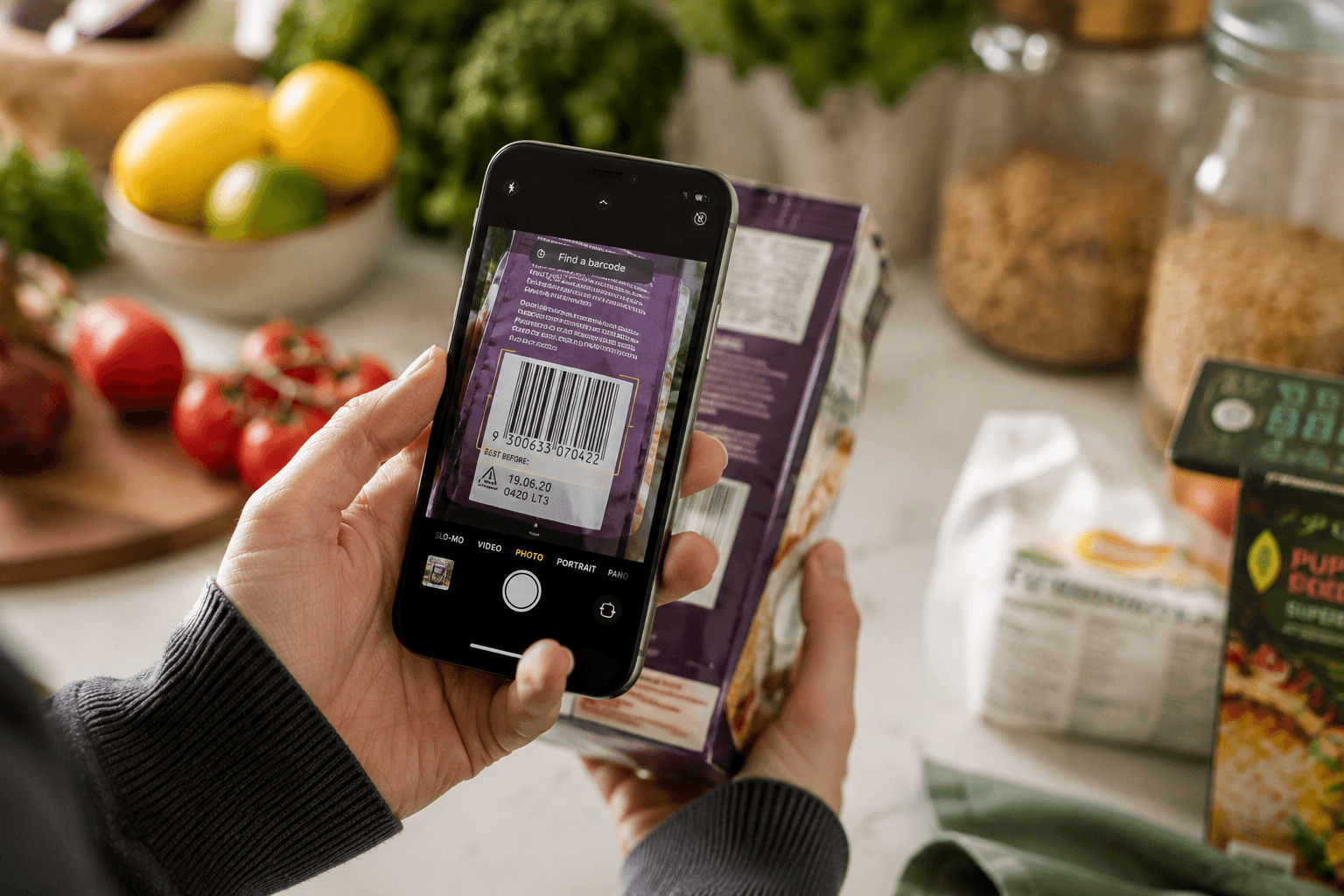
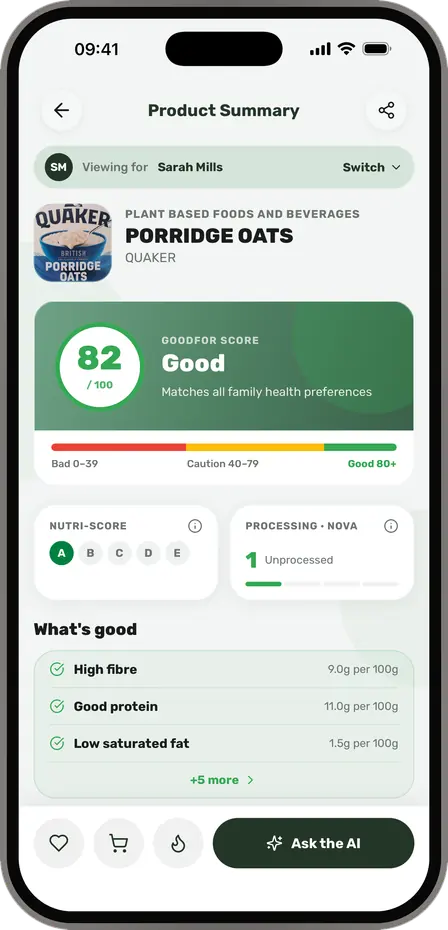
GoodFor is a UK food and drink scanning app used by thousands of users. When you scan an oil or a product made with one, it shows the ingredients, additives and saturated fat, so a blend or an E number such as E900 is visible. You get a 0-100 score alongside Nutri-Score (A to E) and the NOVA processing group (1-4), with every deduction listed. Scores draw on public research and regulatory data and are never influenced by brands.
NOVA groups food by how processed it is, from 1 (unprocessed) to 4 (ultra-processed). GoodFor flags the group on every scan.
Nutri-Score grades the overall nutritional quality of a food from A (best) to E, per 100 g. GoodFor shows it on every scan.
Frequently Asked Questions


Make safer everyday choices