




Key Takeaways
- Potassium is an essential mineral for heart and muscle function, and most UK adults need around 3,500 mg per day according to the British Dietetic Association.
- Foods high in potassium include bananas, potatoes, dried apricots, avocados, spinach, beans, lentils, fish, nuts and yogurt.
- UK food labels do not routinely list potassium, as it is not one of the mandatory nutrients under current labelling regulations.
- People with chronic kidney disease or taking potassium-sparing medications should follow personalised advice on potassium intake from their GP or renal dietitian.
- Boiling potatoes and other starchy vegetables and discarding the water can reduce their potassium content; roasting or steaming retains more potassium, as NHS hospital guidance states.
🍌 Foods high in potassium: UK list by food group
Dried apricots on UK shelves, such as Tesco Snack Pack Soft Apricots (1,880 mg per 100 g) and Whitworths Dried Golden Malatya Apricots (1,040 mg per 100 g), are among the top sources. Drying removes water but not the mineral, so dried fruit packs far more potassium into each mouthful than fresh fruit.
The table below compares potassium per typical portion, so the portion size is shown in every row. Higher means more potassium. For anyone limiting potassium, higher means more to watch. Label figures come from the pack; typical values for fresh foods are standard reference figures.
| Food | Typical portion | Potassium per portion | Notes |
|---|---|---|---|
| Tesco Snack Pack Soft Apricots | 25 g | 470 mg | Label figure, 1,880 mg per 100 g |
| Whitworths Dried Golden Malatya Apricots | 30 g | 312 mg | Label figure, 1,040 mg per 100 g; pack claims “high in potassium” |
| Tesco avocados (all reference products) | 80 g | 466 mg | Label figure, 583 mg per 100 g |
| Banana | 1 medium | about 360 mg | Typical value |
| Potato with skin | 1 medium | about 420 mg | Typical value; skin on |
| Spinach, cooked | 80 g | about 376 mg | About 470 mg per 100 g; raw is lower because it cooks down |
| Lentils, cooked | 150 g | about 555 mg | About 370 mg per 100 g |
| Salmon | 140 g fillet | about 504 mg | About 360 mg per 100 g |
| Almonds | 30 g | about 210 mg | About 700 mg per 100 g |
| Yogurt | 125 g pot | about 190 to 310 mg | 150 to 250 mg per 100 g; varies by product |
| Milk | 200 ml | about 300 mg | About 150 mg per 100 ml |
| Coconut water | 250 ml | about 625 mg | About 250 mg per 100 ml |
| Dark chocolate | 30 g | about 210 mg | About 700 mg per 100 g |
| Beef, pork or chicken | 100 g | 300 to 400 mg | Moderate source |
What this shows: A portion of lentils, coconut water, salmon or avocado gives more potassium than a banana, and a small handful of dried apricots matches one. If you want more potassium, these portions are an easy route. If you are limiting it, these are the foods to portion-control.
Dried figs and prunes sit alongside apricots as concentrated dried fruit, at roughly 700 to 1,500 mg per 100 g. UK hospital and dietitian leaflets also name tomatoes, chickpeas, beans, mackerel, tuna, cashews and peanuts as higher-potassium foods. Leaflets rarely give a figure for these.
🥗 Nutrition example: A 25 g serving of Tesco Snack Pack Soft Apricots at 1,880 mg per 100 g gives 470 mg. That is more than a medium banana (about 360 mg) from a handful of fruit. The whole 50 g pack holds 940 mg.
❤️ Why potassium matters for heart, muscle and nerve health
Potassium is an essential electrolyte involved in muscle contraction, normal nerve transmission and maintaining fluid balance. An electrolyte is a mineral that carries a small electrical charge, which is how nerves fire and muscles, including the heart, contract and relax.
Potassium also helps the body excrete sodium, which is why it is linked with blood pressure. The body does not manufacture potassium, so every milligram has to arrive through food.
Balance matters in both directions. Low potassium (hypokalaemia) and high potassium (hyperkalaemia) can each disrupt heart rhythm, which is why clinicians check blood levels before changing anyone’s intake. In healthy people with working kidneys, the body keeps blood levels steady across a wide range of ordinary diets.
🧮 How much potassium do adults and children need per day?
The UK recommendation for adults is 3,500 mg potassium per day, as stated by the British Dietetic Association. The US FDA sets a higher figure of 4,700 mg per day, but that is an American target and not UK policy.
For under-18s, UK official guidance gives no single verified child figure, so do not scale down the adult number.
Most people eating a varied diet of fruit, vegetables, beans and wholegrains reach 3,500 mg without counting. Vegetarian diets in the UK usually provide enough too. The SACN analysis of UK dietary surveys found vegetables and potatoes supply about 24% of adult potassium intake, so everyday staples do much of the work.
✅ Quick check:
- Eat fruit and vegetables every day.
- Include pulses or nuts in some meals.
- Don’t restrict potassium unless a clinician has told you to.
- Take supplements only on GP advice.
⚠️ Signs of low and high potassium: what to watch for
Potassium imbalance can cause symptoms ranging from mild muscle cramps to potentially life-threatening heart rhythm changes, but most people with healthy kidneys do not experience this. Neither pattern can be confirmed by symptoms alone. Diagnosis needs a blood test, and suspected imbalance should never be self-treated.
Signs of low potassium (hypokalaemia)
Fatigue, muscle cramp and occasional heart rhythm disturbance signal low potassium, usually caused by losses in vomiting, diarrhoea or certain medications rather than by diet alone. Other signs are weakness and constipation, with arrhythmia (irregular heartbeat) in severe cases. Diuretics and laxatives are the medicines most often involved.
⚠️ Watch out: Never buy or take potassium supplements because you feel tired or crampy. Those symptoms have many causes, and only a GP blood test can show whether potassium is the problem and what dose, if any, is safe.
Signs of high potassium (hyperkalaemia)
High blood potassium, most often found in people with reduced kidney function or on relevant medication, may show as muscle weakness or, if severe, abnormal heart rhythm. Tingling, nausea and a slow or irregular pulse can also occur. Often there are no symptoms until levels are severe, which is why people at risk have regular blood tests.
🏷️ Finding potassium on UK food labels
Potassium is not part of the mandatory “big 7” nutrients on UK labels (energy, fat, saturates, carbohydrate, sugars, protein and salt). It appears only when a manufacturer lists it voluntarily or makes a nutrient claim about it. Under retained EU law, a pack that claims “high in potassium”, as the Whitworths apricot products do, has to show the figure.
So an empty space on the nutrition table does not mean a food is low in potassium. Dried fruit snacks, some breakfast cereals, sports drinks and salt substitutes are where you are most likely to see a figure.
The ingredient list is the other place to look. Potassium sits in additive names such as potassium sorbate (a preservative, found in the Tesco Soft Apricots) and potassium chloride (a salt replacer). NHS renal leaflets tell people on restricted diets to search lists for the word “potassium”. Ingredients appear in descending weight order, which shows what a product is mostly made of but not how much potassium it holds.
Fresh fruit, vegetables, meat and fish carry no label at all. For those you need a reference table or tracking tool.
📱 How to track potassium intake if it’s not shown on the label
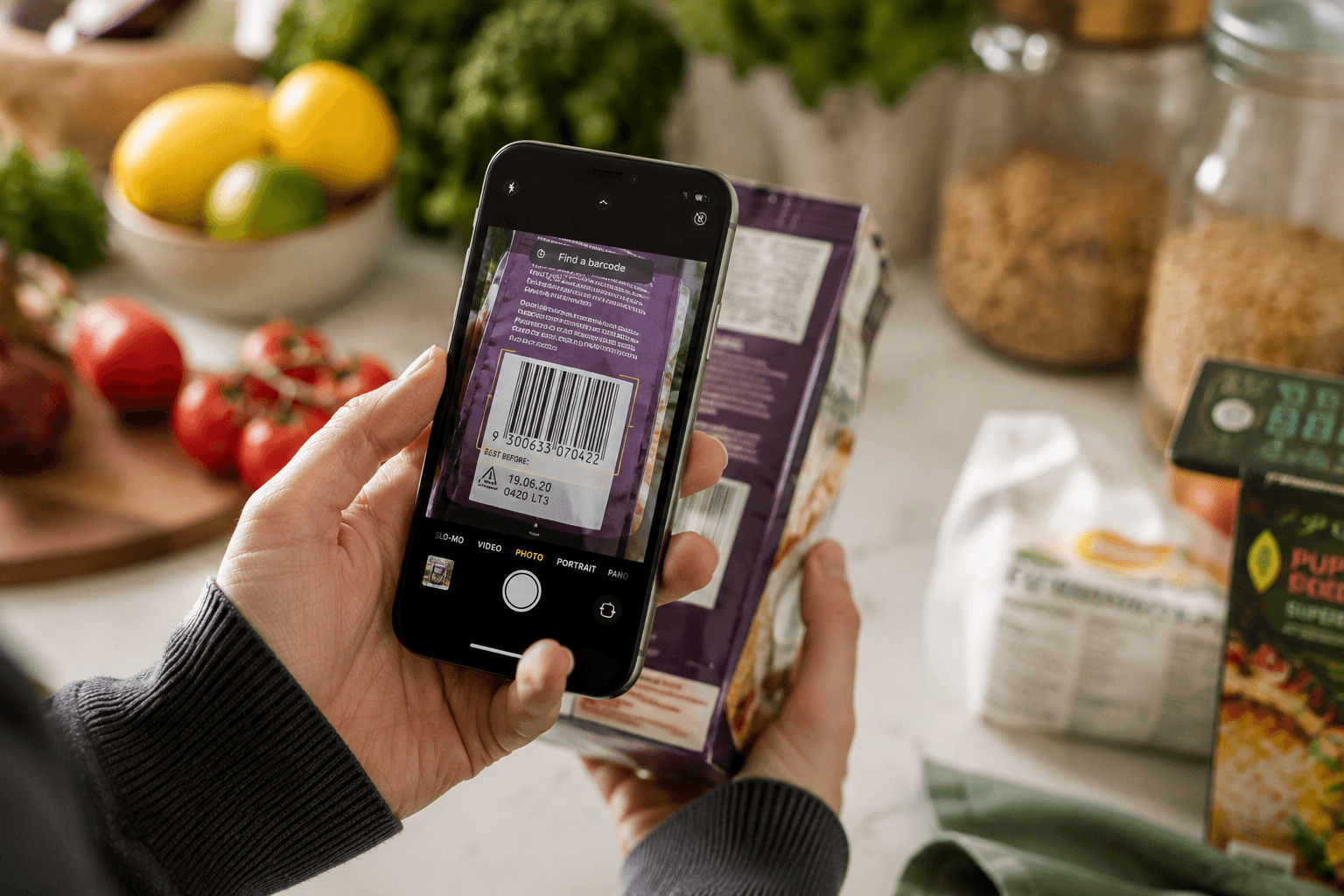
The UK composition tables used by professionals include potassium for most foods, but they are hard for shoppers to use. GoodFor is a UK food-scanning app that lets you log foods by barcode scan or by photo, and it shows nutrient detail where data is available. When a clinician has asked you to raise or limit potassium, keep a running total in three steps:
- Scan the barcode or search for the food in the tracker.
- Log the portion you actually ate, not the pack’s serving.
- Check the cumulative potassium alongside the other nutrients for the day.
Logging is also useful for anyone simply trying to eat more fruit, vegetables and pulses, not only people on restricted diets.
💡 Top tip: Log fresh foods by weight on a kitchen scale for the first week. Portion size drives the total far more than the food choice, and a medium potato (about 420 mg) can vary by 100 g or more.
🚫 Who should limit potassium and why clinicians advise it
Potassium restriction is usually needed only for people with diagnosed chronic kidney disease (CKD stages 3 to 5), those on dialysis, or people taking certain medicines such as ACE inhibitors or potassium-sparing diuretics. NHS and renal leaflets reserve restriction for these groups.
When kidneys cannot excrete potassium properly, it builds up in the blood, and the danger is a disrupted heart rhythm. A healthy adult does not carry this risk, so no one needs to cut potassium-rich foods without a clinical reason.
A renal dietitian turns the blood result into practical rules: which foods to cut, which portions to keep and which cooking methods to use, such as boiling potatoes. Those limits are individual, so do not copy a friend’s list or a leaflet’s numbers. If your GP has mentioned your kidneys or blood potassium, ask for a dietitian referral before changing what you eat.
🔄 Cooking, preparation and label swaps to manage potassium
Boiling potatoes, sweet potatoes or certain other vegetables in plenty of water and discarding the water is recommended in UK renal dietary guidance to reduce potassium intake. The mineral leaches into the water. Roasting, steaming and microwaving keep more potassium in the food, so avoid them for starchy vegetables if you have been told to restrict. NHS leaflets do not give a percentage reduction.
🔄 Try instead: Pick up boiled potatoes (peel, chop small, boil in plenty of water, pour the water away) instead of jacket or roast potatoes. Boiling pulls potassium into the water, which roasting keeps in. On the pack, look for plain potatoes with no “potassium” in the ingredients. Scan any ready-made potato product in GoodFor and it shows the ingredients, so you can spot potassium-based additives before it goes in the trolley.
🥜 Better options for different diets: family meals, allergies, plant-based or lower potassium
Many plant-based protein sources such as lentils and beans are naturally high in potassium, so people who are restricting may need smaller portions, while everyone else benefits from them as part of a varied diet. Unsalted nuts and seeds also supply potassium unless an allergy rules them out.
For allergies, pulses can stand in for nuts. Calcium-fortified soya drinks can replace dairy, though their potassium may differ from cow’s milk, so check the per-100 ml figure if you are limiting it. White rice, pasta and boiled vegetables are the staples clinical plans often build around, and they suit the whole family at the same table.
🥗 Nutrition example: For a tree-nut allergy, 30 g of almonds (about 700 mg per 100 g) gives about 210 mg. Swap in 150 g of cooked lentils (about 370 mg per 100 g) and the portion rises to about 555 mg, so lentils are safe for the allergy but give more potassium. Check the portion if you are also limiting it.
🚩 Common potassium mistakes and myths
Ingredient lists are the place to look for hidden potassium, because the nutrition panel usually leaves it out (see the label section above). Search for the word “potassium” in additives rather than assuming a blank panel means none.
Low-sodium salts such as LoSalt often replace sodium chloride with potassium chloride, so they are not a safer choice for anyone restricting potassium.
Bananas get too much credit. Potatoes, pulses, dried fruit and the other foods in the table above matter just as much, and a banana is not the only food to watch.
Jacket and boiled potatoes are not equal, because preparation changes how much potassium reaches your plate. Check how a food was cooked before counting it.
🛒 A practical potassium plan for your week: food shop, portions and meal ideas
Build meals around starchy staples, at least five portions of fruit and vegetables a day and a regular protein, and boil root vegetables if potassium restriction applies to you. Three meals show the mix:
- Breakfast: oats with milk and banana.
- Dinner: white fish with boiled potatoes, carrots and green beans.
- Dinner: chickpea curry with white rice.
Renal plans, for anyone told to restrict, use these portions: 80 g of fruit, three to four tablespoons of vegetables per meal and 200 ml of milk per serving. For restriction, swap white rice or pasta for potatoes, and boiled for roasted vegetables. Everyone else can use the same meals with larger portions of fruit, vegetables and pulses.
Before shopping, plan the week’s pulses, fish and starchy foods, and tick off any potassium-based additives on the labels you buy. In GoodFor you can log the week’s meals and see your potassium total alongside your other nutrients where data is available.
📊 How GoodFor Scores potassium in food
GoodFor shows potassium for logged and scanned foods where data is available, drawing on food databases to fill the gap when the label is blank, as it is on most products. GoodFor gives general nutrition information, not medical advice.
Potassium sits alongside the rest of the picture. The 0-100 score weighs nutrient levels per 100 g against official thresholds, the degree of processing, additive risk and the person’s own profile, with every deduction listed so you can see why. Each scan also shows Nutri-Score and the NOVA processing group.
NOVA groups food by how processed it is, from 1 (unprocessed) to 4 (ultra-processed). GoodFor flags the group on every scan.
Nutri-Score grades the overall nutritional quality of a food from A (best) to E, per 100 g. GoodFor shows it on every scan.
Frequently Asked Questions
At your next food shop or meal plan, check these for potassium
- Add dried fruit, avocados, lentils, or potatoes with skin to your trolley for a strong potassium boost at meals.
- For anyone limiting potassium, pick boiled potatoes and white rice over roast potatoes, and check packs for “potassium” in the ingredients.
- Review a week’s meal plan to include a mix of fruit, vegetables, pulses and protein, matching portions to any dietary advice you have.


Make safer everyday choices